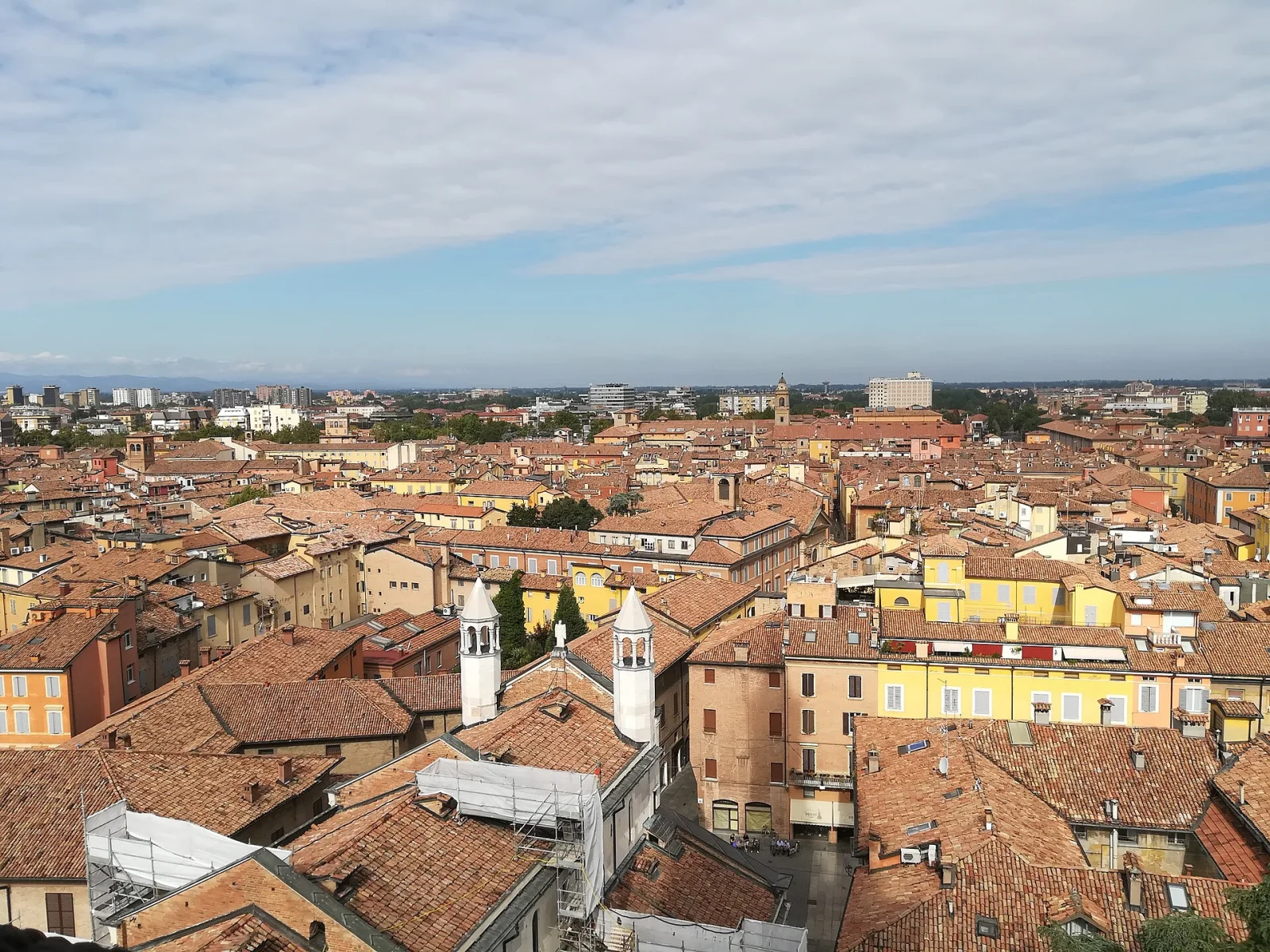
The Friars Minor in Modena were outside the city, in a marshy and unhealthy area; in 1244 they obtained leave to move inside the walls, onto ground called the field of grass, and there they began to build this church, dedicated to Francis a few years after his death. The first record of the convent outside the walls is of 1221.
What to see
The building is Emilian gothic: bare brick, tall aisles, slender piers and narrow windows, without the stone that in other regions softens the lines. At the end of the left aisle stands the sculptural group by Antonio Begarelli, a Deposition of full-length figures modelled in terracotta and arranged as though on a stage.
Begarelli was the great Modenese sculptor of the sixteenth century, and Vasari reports that Michelangelo, before his terracottas, said that if that clay were to become marble it would be bad news for the antique statues. It is an exaggerated judgement, as workshop judgements are, but it shows how far that way of working clay was held equal to sculpture in stone.
Visiting
The church is in corso Vittorio Emanuele II, ten minutes on foot from the cathedral; free entry with hours tied to services and closures in the early afternoon. Half an hour.
Our editors' tip
Look at the material before the figures: it is the same clay as the bricks around you. In the whole Po plain there is no marble, and the sculptors made masterpieces out of the earth under their feet, fired in the same kilns as the houses. It is an entire school born from a lack.