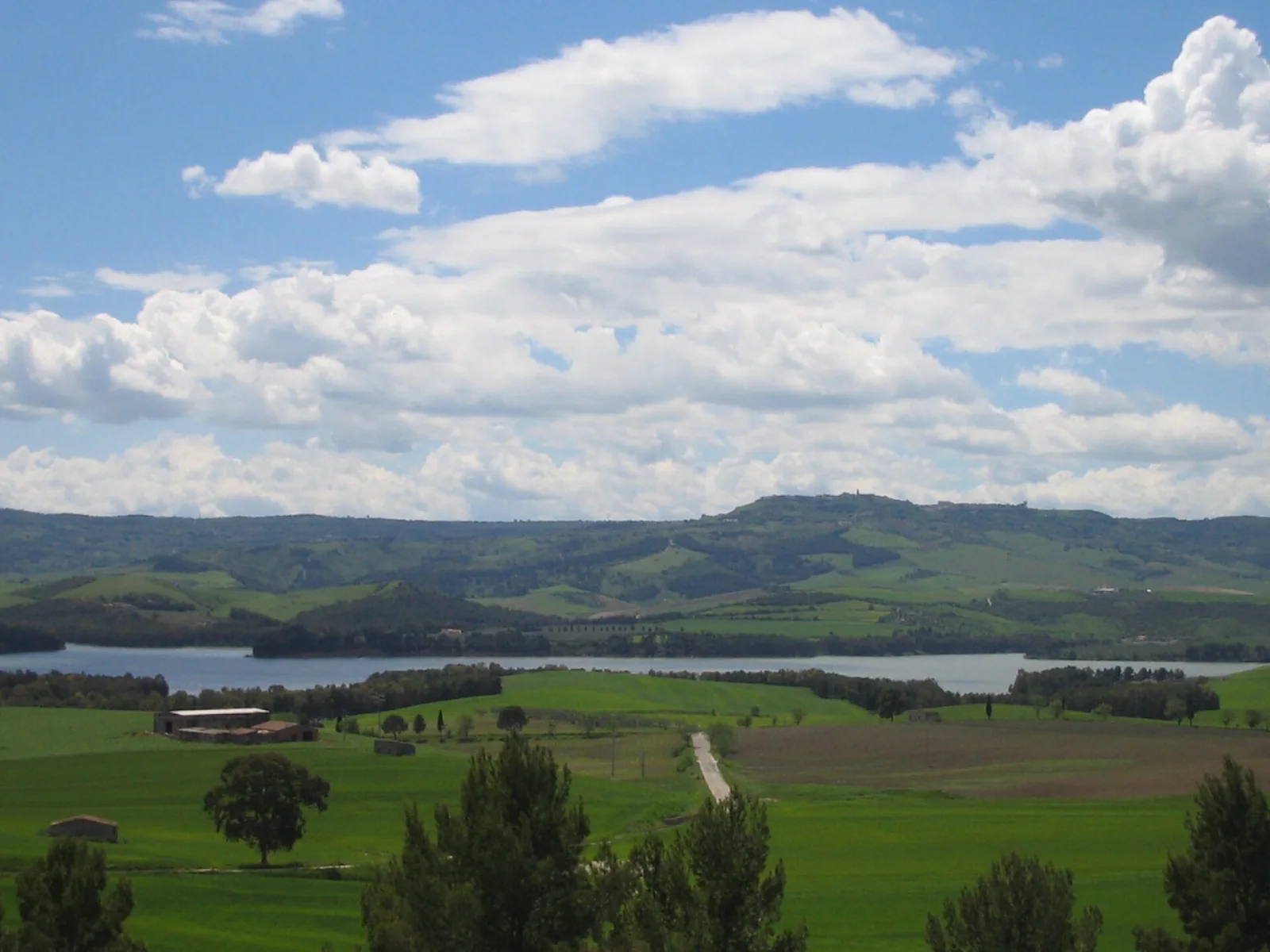
On 27 December 2000 Gianfranco Lionetti picked up, on the shore of the lake, the first pieces of the fossil skeleton of a Pleistocene whale, originally about 27 metres long. The lake, though, is man-made: it is the reservoir created between 1950 and 1957 by damming the Bradano to irrigate the fields, with money from the Marshall Plan. Waterbirds arrived at once, and everything else followed: a wildlife protection oasis in 1976, WWF management from 1989 and, in 2000, the regional reserve, 1000 hectares across the municipalities of Matera, Miglionico and Grottole.
What to see
About 180 bird species have been counted on the water, many of them rare, and the good moment is the wintering season or the migration passage. There are grey herons, little egrets, great crested grebes and coots; in winter come the great white egret, the cormorant, the pochard, the wigeon, the shelduck, the greylag goose and the ferruginous duck. Among the raptors, red kite, black kite and buzzard are common, with the odd osprey, while an Egyptian vulture shows up now and then along the walls of the ravine. The symbol of the oasis is a small bird, the penduline tit.
On land the landscape changes fast. A belt of replanted woodland of Aleppo pine, cypress and eucalyptus runs around the lake, and between the trees and the water appear meadows that flood and re-emerge according to the level of the reservoir. Upstream the river has poplars, willows and tamarisks; downstream of the dam the Bradano slips into a ravine at times 50 metres deep, which since 1991 has been part of the Murgia Materana park and of the UNESCO heritage. The mammals include porcupine, badger, beech marten, wildcat and the occasional otter.
Visiting
You arrive from the Lago San Giuliano junction on state road 7, some ten kilometres outside Matera. The two shores are not alike: the left one, on the Matera side, is flatter and slopes gently down to the water; the right one, towards Miglionico and Grottole, is undulating and steeper. Take binoculars: without them, of those 180 species you will see very few.
Our editors' tip
Close the day in town, at the Domenico Ridola national archaeological museum: since December 2022 a multimedia section called Giuliana degli Abissi has been showing the first restored pieces of the whale, the humerus of the right limb and the tympanic bulla. The fossil got there in 2013, after a dig finished in 2011 and a journey inside custom-made wooden crates.