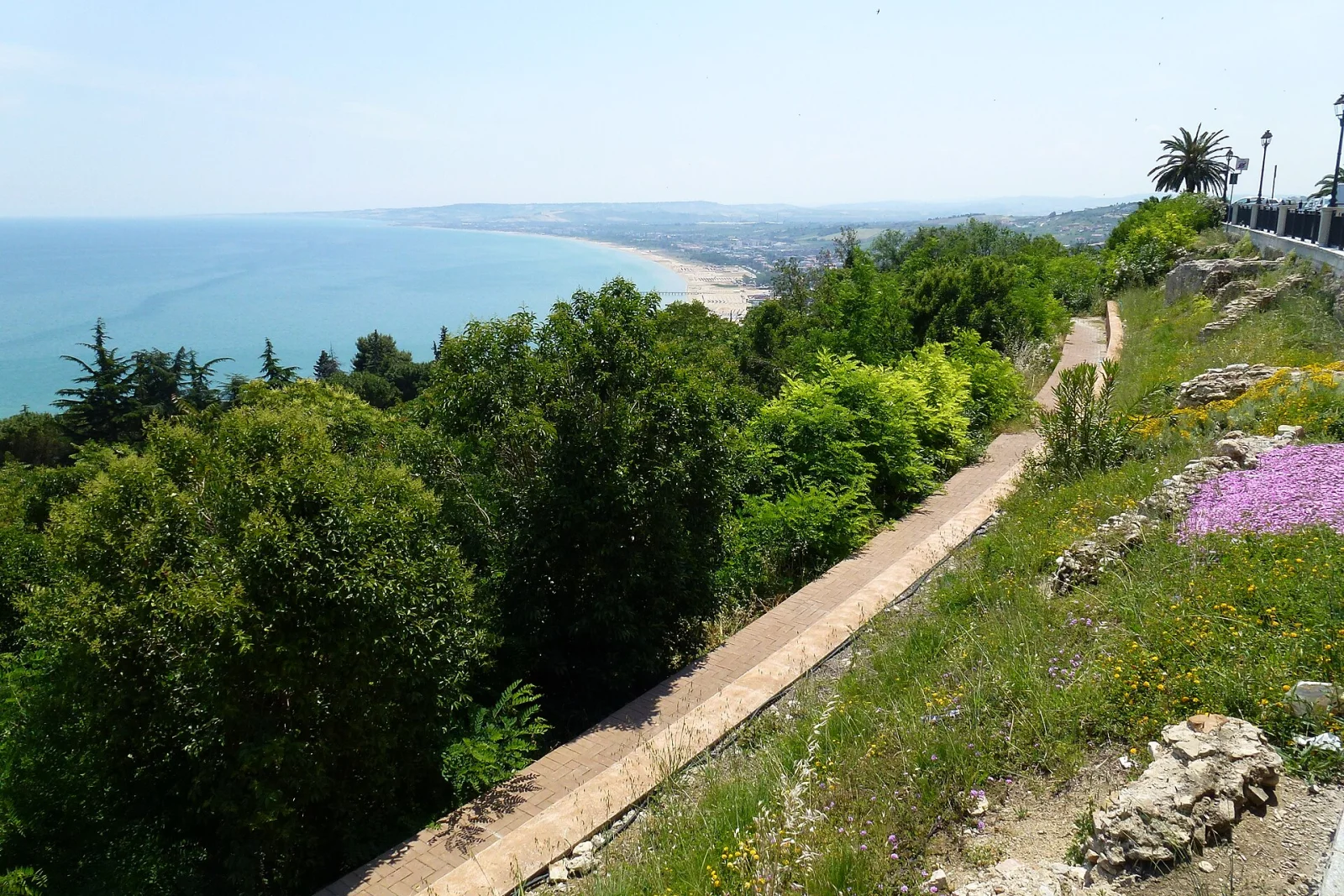
The Marina di Vasto regional nature reserve protects a strip of shore three kilometres long and 180 metres wide, between the municipalities of Vasto and San Salvo. Established in 2007 by a regional law, it covers 57 hectares, 49 of them in Vasto and 8 in San Salvo, and is part of the Natura 2000 network as a site of Community importance and a special area of conservation. To the north-east it is bounded by the Adriatic; to the south-west by the built-up area behind the dunes, parallel to the railway. It is considered one of the last natural and semi-natural beaches left in Abruzzo.
What to see
The beach is a transitional environment between sea and land, with plants adapted to sand and to extreme conditions, such as sea spurge and sea bindweed. Two watercourses, the Buonanotte stream, which separates Vasto from San Salvo, and the San Tommaso ditch, create wetlands and brackish areas. Beyond the Buonanotte, on the San Salvo side, is the Mediterranean botanical garden.
Among the birds the most important for the reserve is the Kentish plover, which nests here and is regarded as an umbrella species, that is, a species whose protection safeguards the whole environment; grey herons, black-winged stilts, avocets, little egrets, cormorants and grebes have also been sighted. The mammals living here include the fox, the hedgehog and the weasel; among the amphibians is the green toad, among the reptiles the pond turtle.
Visiting
The reserve is crossed by the cycle and pedestrian path of the Adriatic cycle route, and marked trails run through its various sectors. A substantial part of the beach is occupied by bathing establishments. Rules and access should be checked with Vasto town council.
Our editors' tip
Along the path the sequence of plants on the dunes is easy to read: those most exposed to salt spray, such as sea rocket, are towards the shore; further back come sand couch-grass and marram grass, which hold the sand together.


