In 1269 Charles of Anjou granted this village in fief to Sordello da Goito, the troubadour whom Dante meets in the Purgatorio and who prompts some of his harshest lines about a divided Italy. Sordello, however, did not enjoy it: he died almost at once, and the king assigned Civitaquana to Bonifacio di Galiberto. One of the great names of medieval poetry was therefore lord of this village for a few months, and in all likelihood never saw it. Almost two centuries later, in 1458, king Ferrante of Aragon gave the lordship to Laudadio De Lagmyniano, justiciar of Abruzzo, and that family's palace can still be seen on the main square.
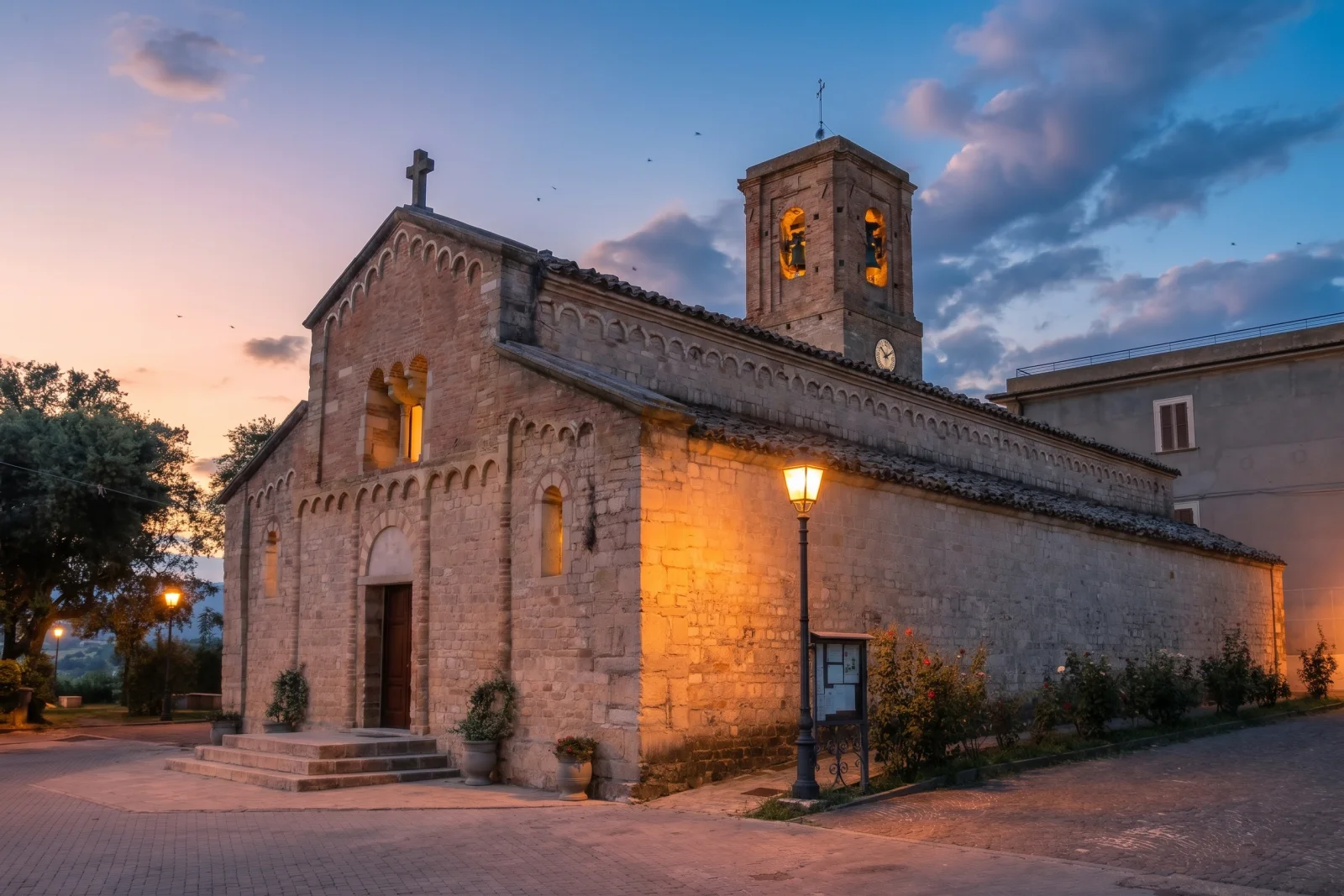
The monument of the village is the church of Santa Maria delle Grazie, which is a national monument: built in the twelfth century, in the nineteen thirties it was restored by stripping away the baroque additions. It has three naves without transept and three apses, the façade is ordered by pilaster strips recalling the Lombard Romanesque, and the portal is flanked by two Romanesque columns; inside are the groin vaults and, in a lunette, a fresco of Christ Pantocrator. Not far off, in the area of today's Colle Scurcola, stood the castle of Sculcola, whose story says a great deal about how borders worked back then: in 1086 the Chieti count Trasmondo gave it to the bishop of Chieti, although the castle lay within the county and the diocese of Penne; in 1095 the Norman Robert of Loritello, who governed coastal Abruzzo, confirmed the grant in perpetuity; and in 1111 its lord was at the meeting held at the abbey of San Clemente a Casauria to redraw the arrangements after the Norman conquest. A castle given by the count of one diocese to the bishop of another, over the head of the one it actually belonged to.
Straight-line distances from the town centre. Tap a point to open its page.
Near Civitaquana
The closest destinations covered by our editors, with straight-line distance.


Places to see within 25 km
Outside Civitaquana, but an easy day trip away.