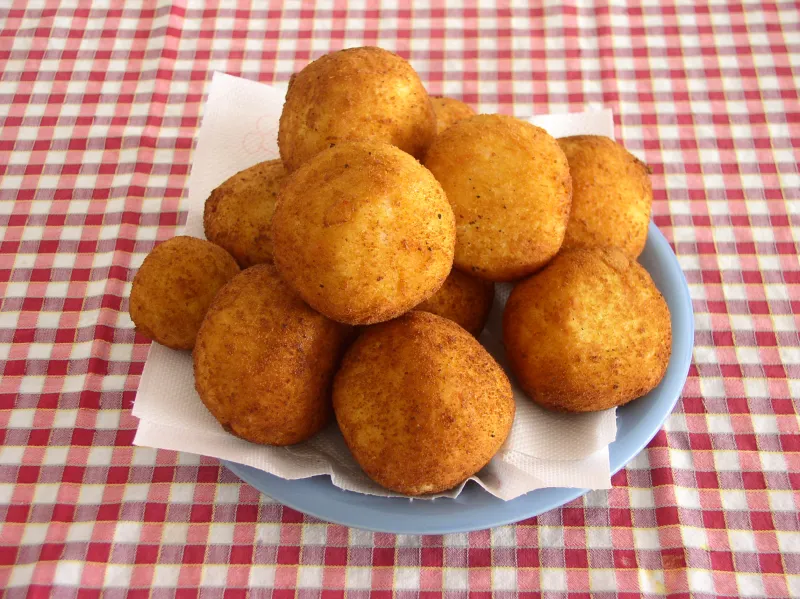
In Catania the arancino has a point: a cone that, the city says, recalls Etna, with ragù and peas hidden in saffron rice under a fried breadcrumb crust. The two classic versions are ragù and butter, with ham and mozzarella; rosticcerie make many more, from pistachio to cuttlefish ink.
Rice reached Sicily with the Arab rule between the 9th and 11th centuries, together with saffron. The first written mention dates from 1857, in Giuseppe Biundi’s Sicilian-Italian dictionary, which records «arancinu», masculine, as a sweet rice dish shaped like an orange: the Catania name has the dialect on its side. In 2016 the Accademia della Crusca ruled that arancina and arancino are both fine, and convinced nobody in Catania.
It is eaten standing up, hot, in bars and rosticcerie all over eastern Sicily, from Messina to Ragusa. On 13 December, Saint Lucy’s day, tradition says no bread or pasta is touched and the fry shops work from dawn.