Everyone comes to Barumini for the nuraghe, and almost nobody goes into this church. It is a pity, because it is a good example of Sardinian late gothic, the kind brought to the island by the Aragonese: it was built after 1541, and its square-shafted bell tower can be picked out from far off.
What to see
The interior has three naves, divided into three bays by round arches that come down on eight pillars of grey trachyte, the volcanic stone of this part of Sardinia. Over the naves there are no vaults but a single wooden roof with exposed beams: a cheap and dry solution, which leaves the stone to do all the work.
The cross vaults, set on pointed arches, are found instead in the presbytery, built in 1661, and in the raised chapels at the sides. Behind the presbytery opens a quadrangular apse added some twenty years later, covered by a vault on an octagonal base. Four more chapels complete the plan.
Visiting
The church is in the centre of Barumini, a few minutes on foot from the museum and the ticket office of the archaeological site; hours tied to services. Twenty minutes.
Our editors' tip
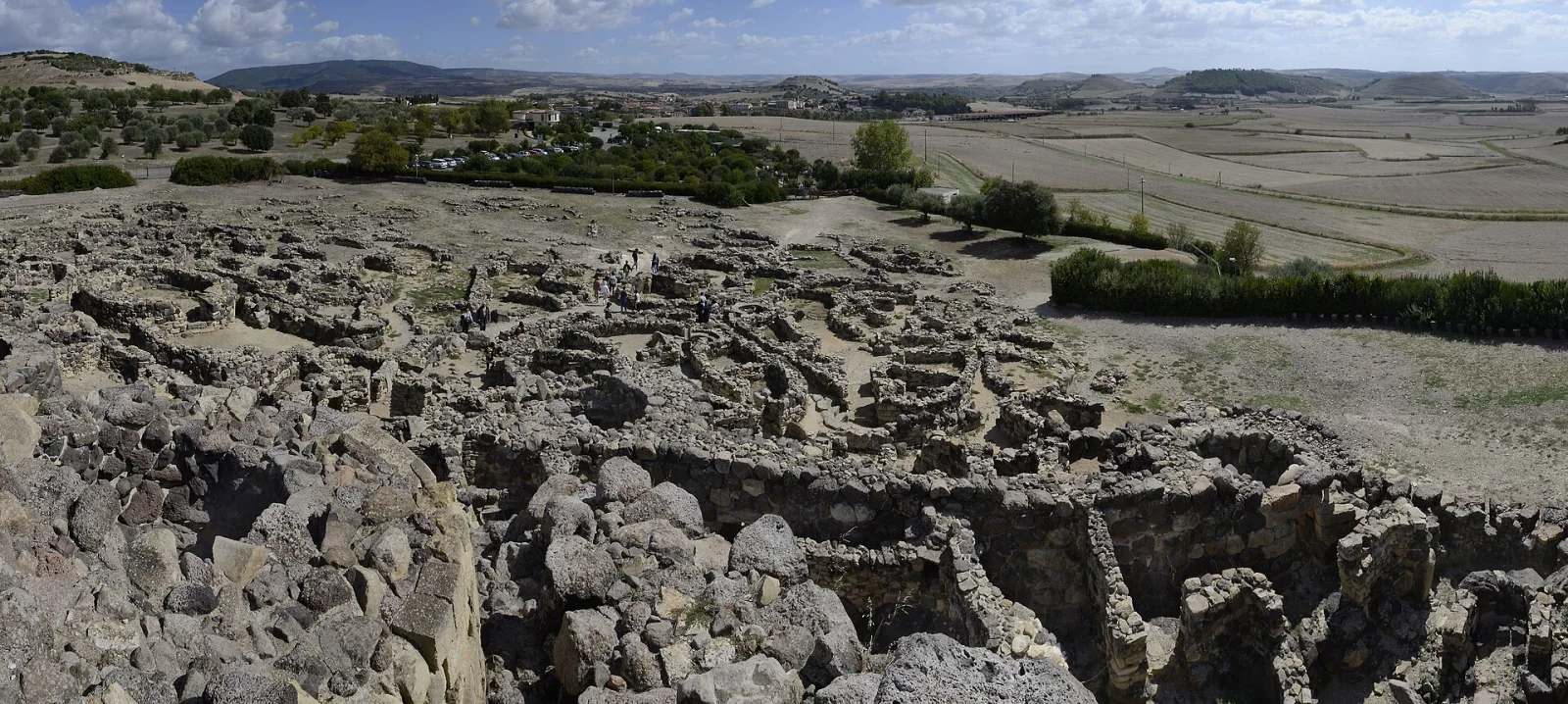
Walk the stretch that separates the nuraghe from the village and then come in here. Between the two buildings lie three thousand years and barely a kilometre: people never left this point of the Marmilla, they only changed the way they set one stone on another.