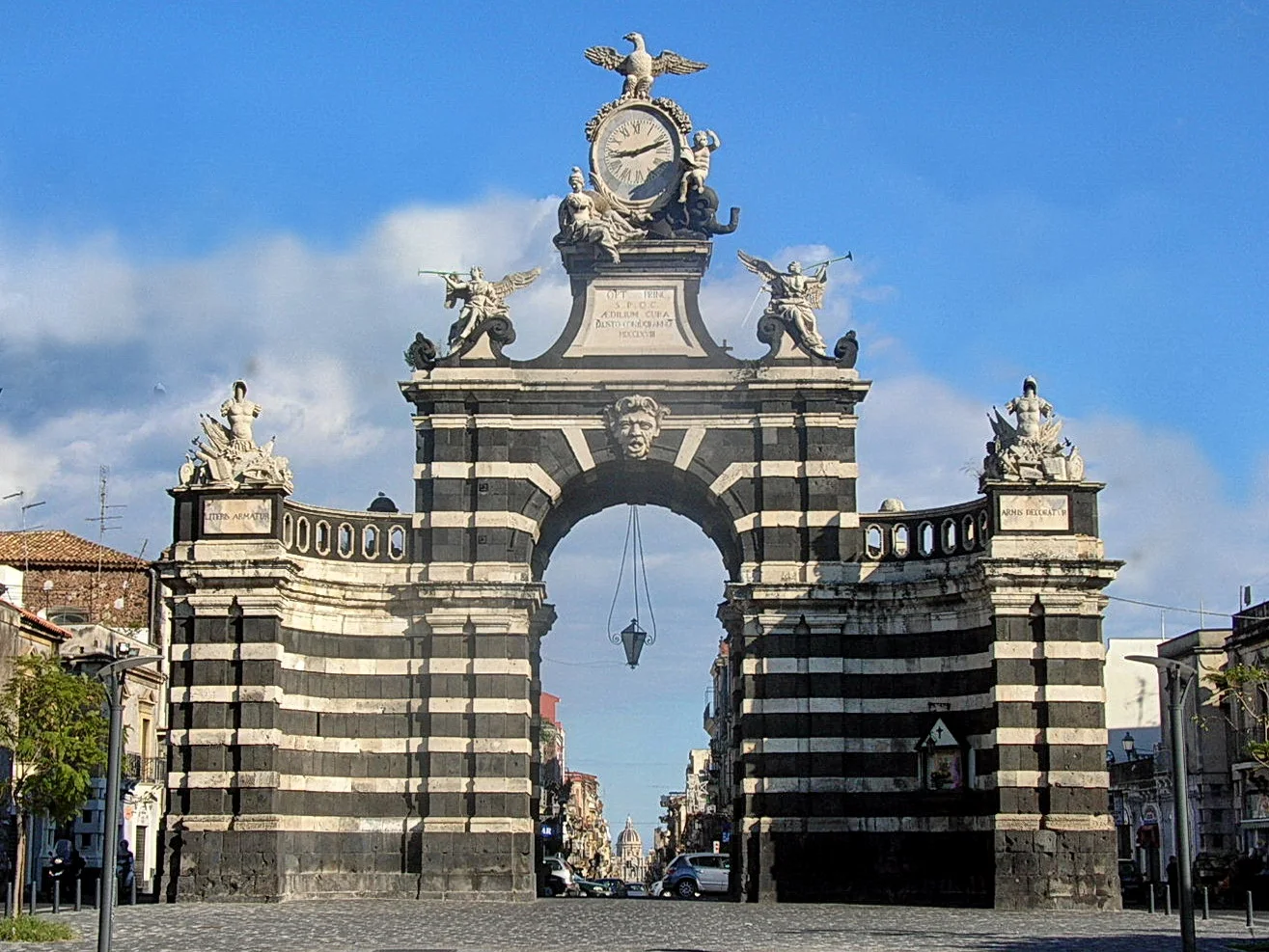
This triumphal arch celebrates a disaster. It was built in 1768 for the centenary of the eruption that a hundred years earlier had buried the whole western zone of the city, and on the tympanum, towards the east, there is a phoenix rising from the flames with a scroll: Melior de cinere surgo, from the ashes I rise better.
What to see
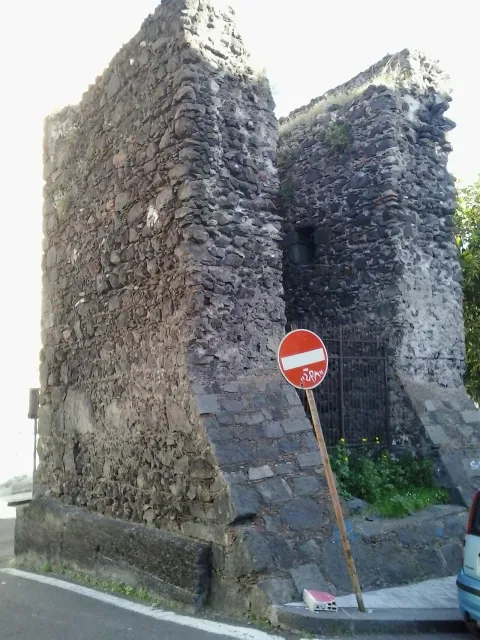
The arch is the work of Stefano Ittar and Francesco Battaglia and was called Porta Ferdinandea, in honour of Ferdinand of Bourbon and Maria Carolina of Habsburg-Lorraine, who married in that period; after 1860 it was named after Garibaldi. It stands between piazza Palestro and piazza Crocifisso, at the end of via Giuseppe Garibaldi, in the quarter the people of Catania call 'u Furtinu: the name recalls a small fort built in the seventeenth century by the viceroy Claude Lamoral, prince of Ligne, after the eruption of 1669 had struck the whole western flank of the city, destroying the medieval walls. Of that fortification, which stood south of piazza Palestro, only a gate survives today, in via Sacchero.
The building alternates white stone of Syracuse and blocks of dark lava stone, and the decorative programme reads from the bottom upwards. On the second level are two angels with trumpets; on the third two trophies of arms, with sculpted weapons and armour, and two inscriptions that answer one another: Litteris armatur and Armis decoratur, armed with letters and adorned with arms. At the top, at the centre of the arch, a clock surrounded by allegorical symbols, among them an eagle and an elephant, which is the emblem of Catania. Some buildings connected to the gate were demolished in the nineteen-thirties.
Visiting
It is in the open and always accessible, at the end of via Garibaldi, off the main tourist axis: you reach it walking down from the cathedral along the street of the same name. A quarter of an hour, and it is worth arriving on foot to grasp how long that street is.
Our editors' tip
Look at what is at the centre of the arch: a clock. Originally in that spot, the most visible of the whole monument, there was a marble bust of King Ferdinand, the man the gate was named after. The king lost first his face and then his name, replaced by a piece of civic equipment and by another dedication. It is the cheapest way a city has of changing its mind about whom it wants to celebrate, and it happens more often than one thinks: before taking a monument's subject for granted, it is worth asking who was there before.