Castello Ursino ★
A 13th-century Hohenstaufen castle in Catania, now home to the city's Civic Museum and art collections.

 Squares Piazza del Duomo e Fontana dell'Elefante The core of Catania, known for its lava stone elephant and the 4th-century Roman baths hidden 5 meters below.
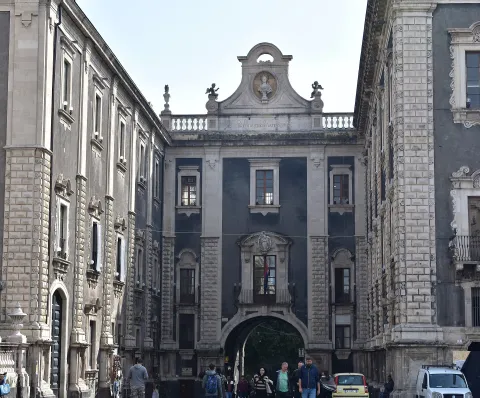
  Churches Monastero dei Benedettini Europe's second-largest Benedictine monastery, this UNESCO-listed complex is a triumph of Sicilian late-baroque design.
 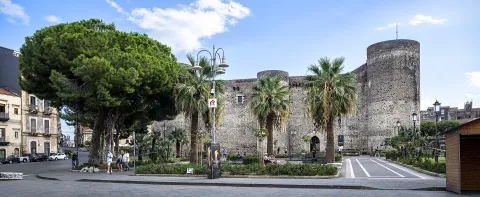 Castles Castello Ursino A 13th-century Hohenstaufen castle in Catania, now home to the city's Civic Museum and art collections.
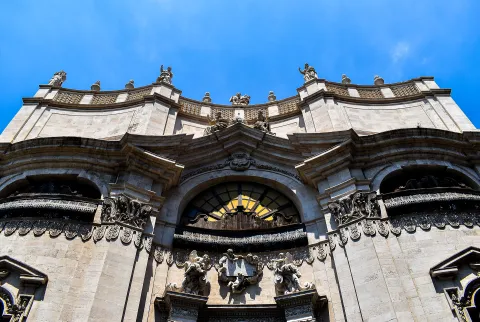
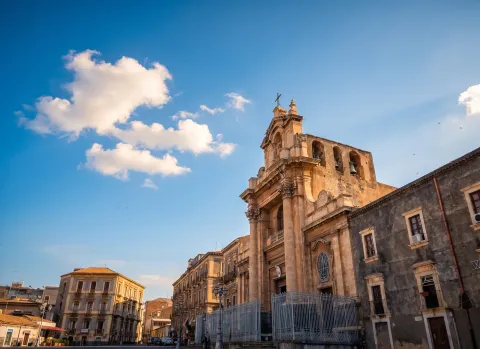
  Churches Basilica Maria Santissima dell'Elemosina Late Baroque basilica in Catania rebuilt after 1693, renowned for its facade designed by Stefano Ittar.
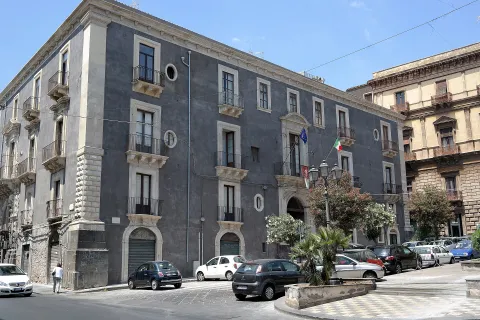
 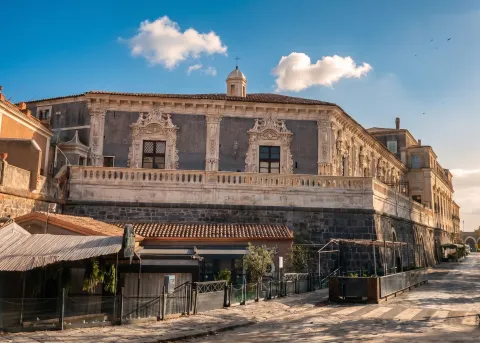 Castles Palazzo Biscari The Biscari princes' palace, built on the walls of Charles V, and its Rococo ballroom.
 94 places covered in Catania Grouped by type, most important first.
No place with that name: try fewer letters.
A 13th-century Hohenstaufen castle in Catania, now home to the city's Civic Museum and art collections.
The Biscari princes' palace, built on the walls of Charles V, and its Rococo ballroom.
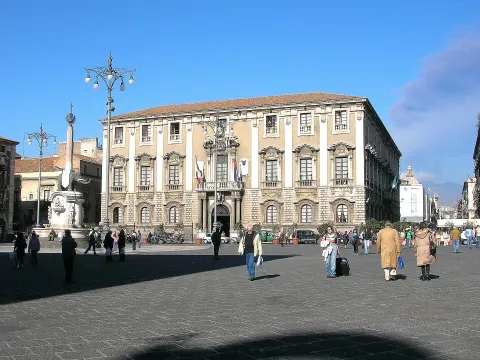
Catania's black and white town hall, with the lava-stone Liotru in front.
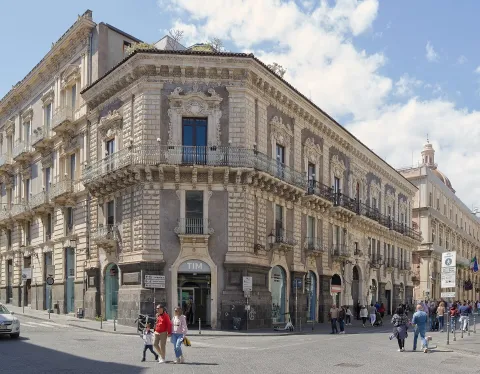
The palace on the Quattro Canti, destroyed twice and twice rebuilt.
The house where Bellini was born, which lost its main doorway.
The arch that celebrates the centenary of the eruption that buried the city.
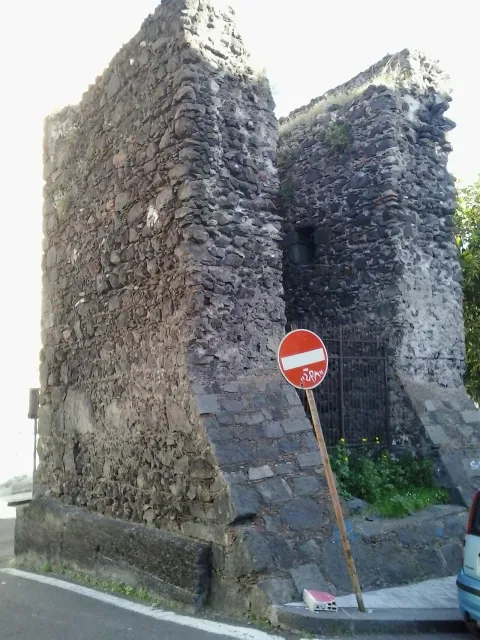
The medieval tower of Catania, left on a traffic island.
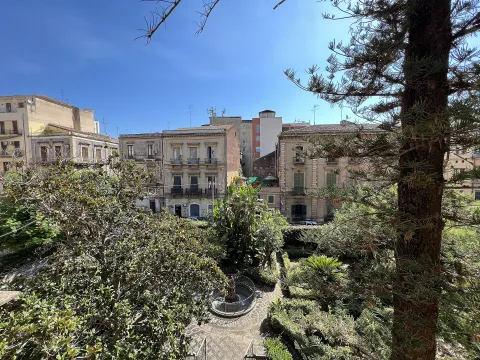
The palace whose hanging garden rests on the city walls.
A Milanese palace on via Etnea, with three names and no open door.
The gate of a Spanish viceroy who once gave via Etnea its name.
When Catania took Bellini's name, Palermo had to give one up.
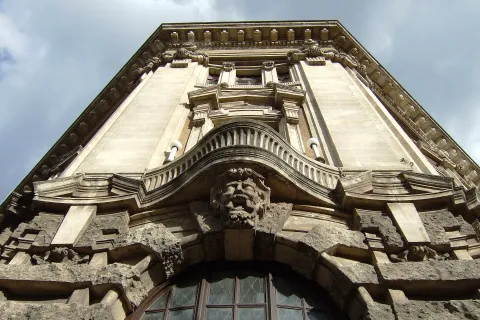
The post office with the plan reversed: light to the public, centre to the mail.
To dance before the king they covered an Assumption with an Aurora.
The tall windows at the top were there to light the operating room.
A hundred years of cars in the same room, under a baron's flat.
The house engineer Majorana built shortly before Ettore was born.
Catania's second-largest hanging garden, above via dei Crociferi.
A private 1907 liberty building on via Umberto, off every itinerary.
The neo-Moorish palace Malerba signed three years before his liberty one.
The palace a doctor built at his own expense and gave to the city.
The classical palace Catania built for a school of accountants.
The painter Abate's house, Tommaso Malerba's last language.
The house the architect Tommaso Malerba built for himself.
The baron's palace Carlo Sada took nineteen years to build.
The floral villa on viale Rapisardi, and Catania's two Malerbas.
Ernesto Basile's only work in Catania, and it was never lived in.
The gothic-orientalising villa turned into a university office.
The block Fichera built to be let out floor by floor.
The Rizzari palace, built over a Greek and Roman public area.
The palace of two brothers, one of whom never moved in.
Catania's archbishop's seminary, founded in 1572, destroyed in 1693 and reinaugurated in 1951.
Europe's second-largest Benedictine monastery, this UNESCO-listed complex is a triumph of Sicilian late-baroque design.
Late Baroque basilica in Catania rebuilt after 1693, renowned for its facade designed by Stefano Ittar.
Designed by Vaccarini, this Catania Baroque church features yellow marble altars and 18th-century stucco statues.
Baroque church in Catania rebuilt by Stefano Ittar in 1723 over the ruins of an ancient temple.
Baroque church on Via dei Crociferi in Catania, rebuilt after 1693 to a design by fra' Angelo Italia.
A landmark Baroque church in Catania known for its Angel's Staircase and complete Tuccari vault frescoes.
Catania's third-largest church features a monumental facade by Francesco Battaglia and centuries of Carmelite history.
Built in 1442 in Catania, this church features Renaissance sculptures by Antonello Gagini and an 18th-century facade.
The 18th-century Baroque church on Via Etnea in Catania, designed by architect Francesco Battaglia.
The oval church on via Vittorio Emanuele, modelled on Borromini's San Carlino.
A historic Dominican church in Catania housing Renaissance sculpture by Antonello Gagini and artworks from 1531.
The Poor Clares' church with a loggia for watching the Sant'Agata procession.
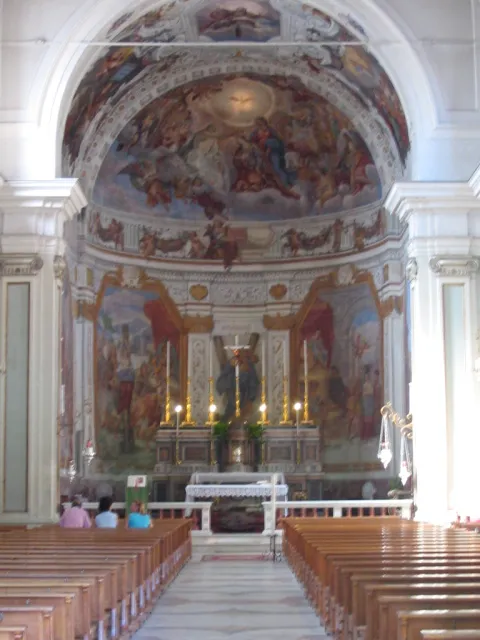
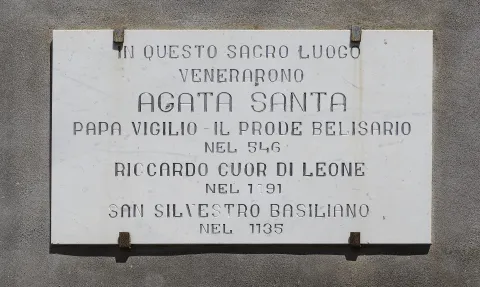
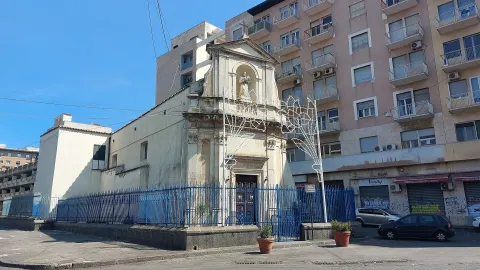
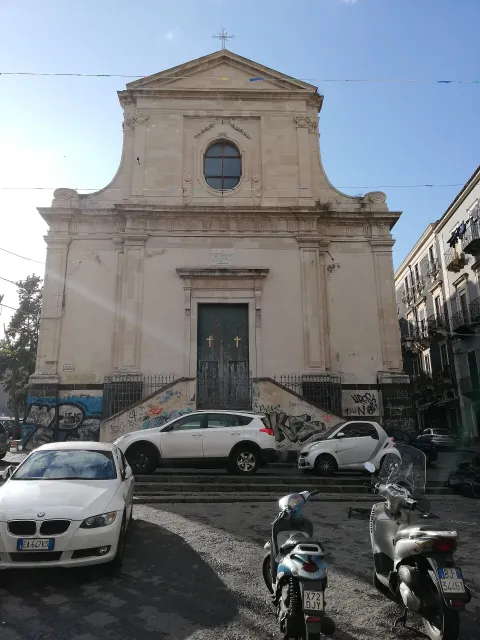
The remains of the co-patron's church, destroyed by the bombs.
Four different saints on one stretch of street by the old harbour.
Built in 1669 for refugees of Mount Etna, this church features a detailed fresco cycle of Saint Agatha's martyrdom.
Catania's first cathedral from 380 to 1094, preserving Saint Agatha's original Roman-Byzantine sarcophagus.
The Holy House of Loreto remade to scale inside a Catania church.
Built in 262 AD inside a lava cave, San Gaetano alle Grotte preserves Catania's early Christian underground church.
Catania's own defenders levelled these friars' first church.
The church of the brothers who assisted those condemned to death.
A baroque oratory passed to the Greek Orthodox parish of Catania.
The Madonna who gave a viceroy his bearing, and the baths behind.
Six bells older than the church itself, in a square in Cibali.
The church that took its name from the lighthouse sanctuary of Marseille.
The church built around an image found abandoned in Picanello.
A parish built on top of the crypt of the executed at the Fortino.
The neo-Gothic church copied from a French alpine sanctuary.
The Augustinian convent the town burned after the plague of 1577.
Windows, tabernacle and silver frontal made by a Dominican friar.
The 2nd-century Roman Theatre of Catania, built over ancient Greek foundations and fed by the subterranean Amenano.
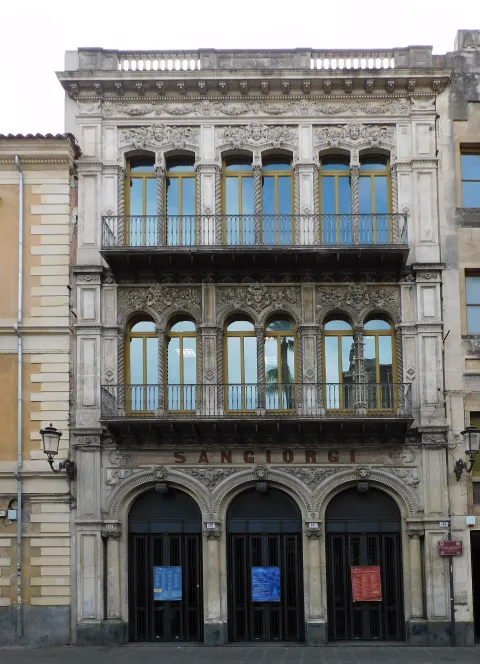
Catania's opera house, opened in 1890 with Bellini's Norma: 1,200 seats and legendary acoustics.
The remains of Sicily's largest Roman amphitheatre, constructed in Catania during the 2nd century AD.
Prince Biscari's museum, which arranged its finds by provenance.
The theatre where a leading lady took the leading man's part.
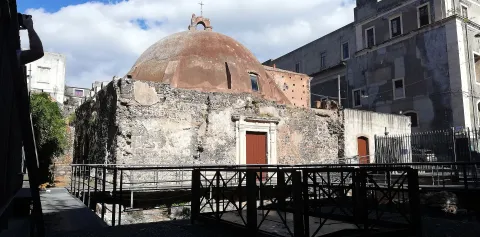
Under a Byzantine church, the baths everyone took for a Pantheon.
Former 19th-century sulfur refinery in Catania redeveloped into a major museum and exhibition complex.
The elephant Menelik II gave the king, and the king gave to Catania.
The 1955 cinema and theatre also signed by Marcello Piacentini.
The Roman hot room mistaken for centuries for a town hall.
The museum showing only figurative contemporary art, in a convent.
The university museum born from ten finds donated by Paolo Orsi.
The science museum inside the old Caruso Torrisi sulphur refinery.
The cinema that became a theatre when the subscribers multiplied.
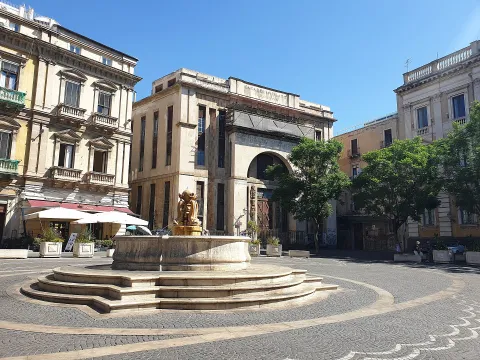
The core of Catania, known for its lava stone elephant and the 4th-century Roman baths hidden 5 meters below.
The fountain ordered against a famine, then moved to the outskirts.
The square where four bronze lampposts tell four legends.
Four dolphins, two real and two copies, in front of the Teatro Massimo.
By the station, the daughter of the Ceres exiled to the Borgo.
Thirty-two Roman columns put back to work holding up four palaces.
The viaduct the city fought and the ministry imposed on it.
The obelisk and the four shell valves at the centre of piazza Cutelli.
The statue to a republican, raised before any monument to the kings.
The Roman amphitheatre ten metres below the level of via Etnea.
The square built in imitation of the aqueduct the city demolished.
The baroque square under the canvas of the Fera 'ô Luni.
Founded in 1858, the Catania Botanical Garden preserves exotic plants, succulents, and rare Sicilian endemics.
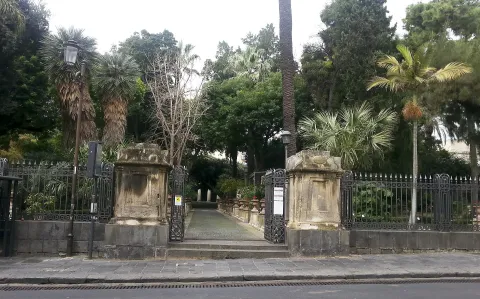
Catania's oldest public park, developed from an 18th-century labyrinth owned by the Prince of Biscari.
The garden whose sea was taken away in four stages.
What is left of a drained marsh, still a fixed stop for migrants.
Catania's largest park, opened sixty years after the first plan.
The lake made by one lava flow and buried by another.
Lighthouse built in 1896 on Catania's lava coast, automated since 1951.
Roman baths from the 1st century, rediscovered in 1997 beneath the Sapuppo houses in Catania.
Arancino · Pasta alla Norma
24 places to stay · top rated: Terrazza Sant'Agata Penthouse 9.8 · Palazzo Marletta Luxury House Hotel 9.6
Next up: Feast of Saint Agatha, Wednesday 3 February
Nearest airport: Catania Fontanarossa, 4 km away
The closest destinations covered by our editors, with straight-line distance.