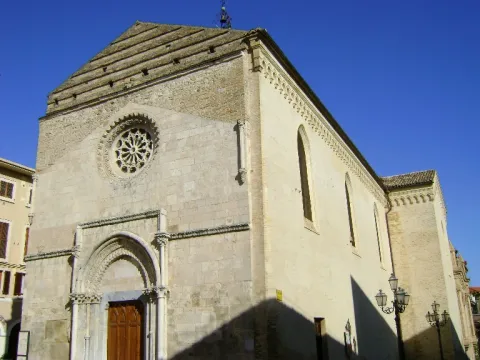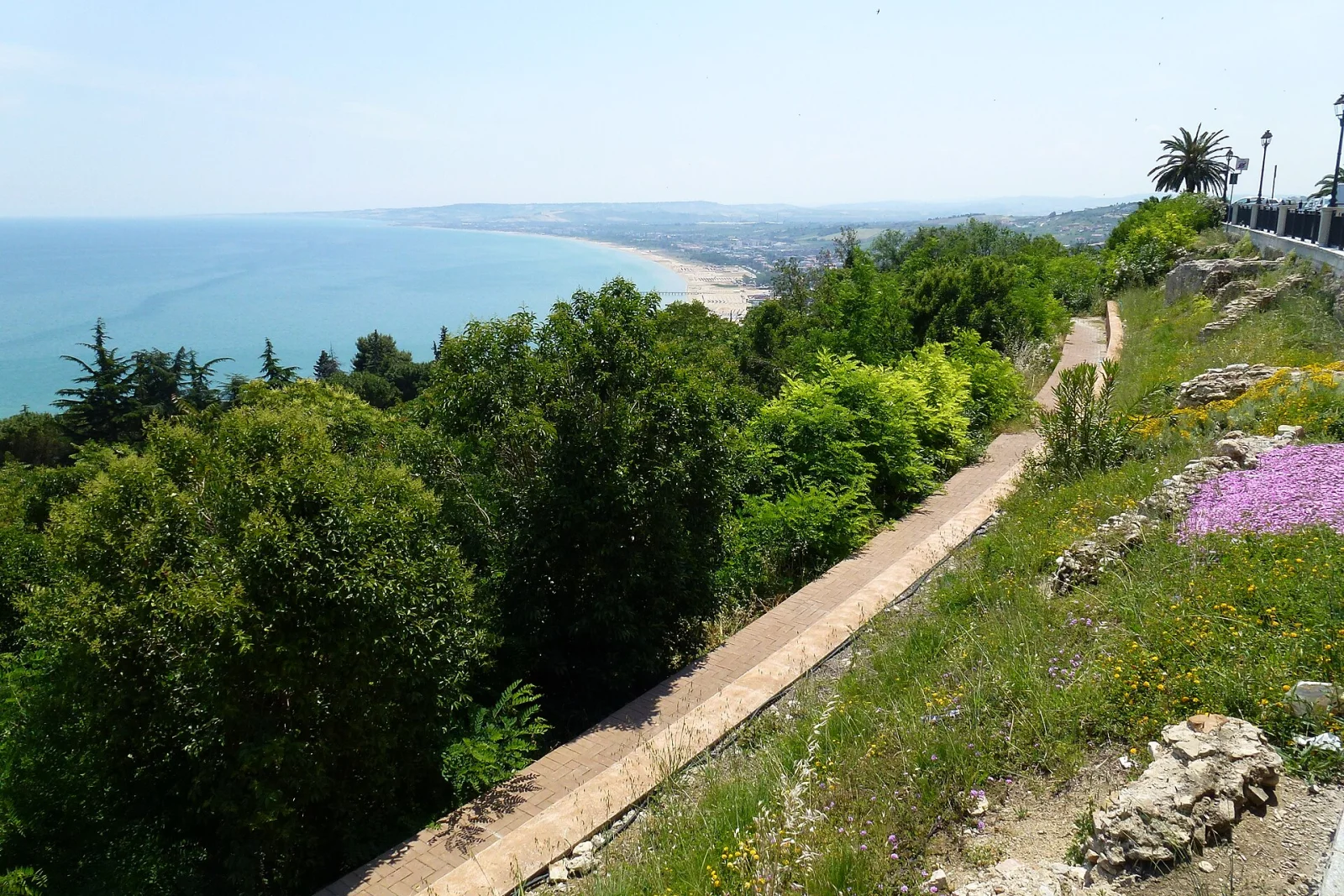
Palazzo d'Avalos, in the historic centre of Vasto, was the residence of the Marquises of Vasto until 1806. The first record dates from 1427: a deed, reported by the seventeenth-century chronicler Nicola Alfonso Viti, in which the condottiere Giacomo Caldora, feudal lord of the town, compensates the Augustinian friars for having used part of their garden. In the fifteenth century Flavio Biondo called it «superbissimo». When Vasto passed to the d'Avalos, the family preferred this palace to the castle and made it the centre of the town's government. In 1566 the Ottoman raid led by Piyale Pasha sacked it and destroyed much of it; it stayed in ruins until 1573, and the rebuilding, carried forward by Cardinal Innico d'Avalos d'Aragona, was finished towards the end of the century.
What to see
The front on piazza Lucio Valerio Pudente is that of the sixteenth-century rebuilding, in a style then in use in Rome: windows topped by pediments, a cornice on modillions, rusticated cornerstones. The portal, whose jambs and part of the carved archivolt have come back to light, has instead a depressed arch in the Durazzo-Catalan manner, that is, late Gothic. The north side, on piazza del Popolo, reflects eighteenth-century Naples and is attributed to Mario Gioffredo; the east side has two projecting wings with loggias that carry terraces at the level of the main floor. To the south is the garden, where remains of the Caldora building have re-emerged.
Since 1974 the palace has belonged to the town council and houses the civic museums: the Archaeological Museum, with many Roman finds; the Pinacoteca, born from the donation of the Palizzi brothers in 1898, with works by Filippo Palizzi, Francesco Paolo Michetti and Gabriele Smargiassi; the Museum of Historic Costume; and a gallery of contemporary art formed around the Paglione-Olivares donation, with Italian and Spanish artists.
Visiting
The palace is visited through its museums; opening times, tickets and the sections open should be checked with Vasto's civic museums or with the town council.
Our editors' tip
In 1630 the gold-lined cabinet on the main floor hosted Maria Anna of Habsburg, who was crossing Abruzzo on her way to marry the King of Hungary. Later Cesare Michelangelo d'Avalos added a grand staircase, a theatre and the cistern in the courtyard: plays were staged in the theatre until 1832, when the last performance was given in honour of King Ferdinand II of Bourbon.