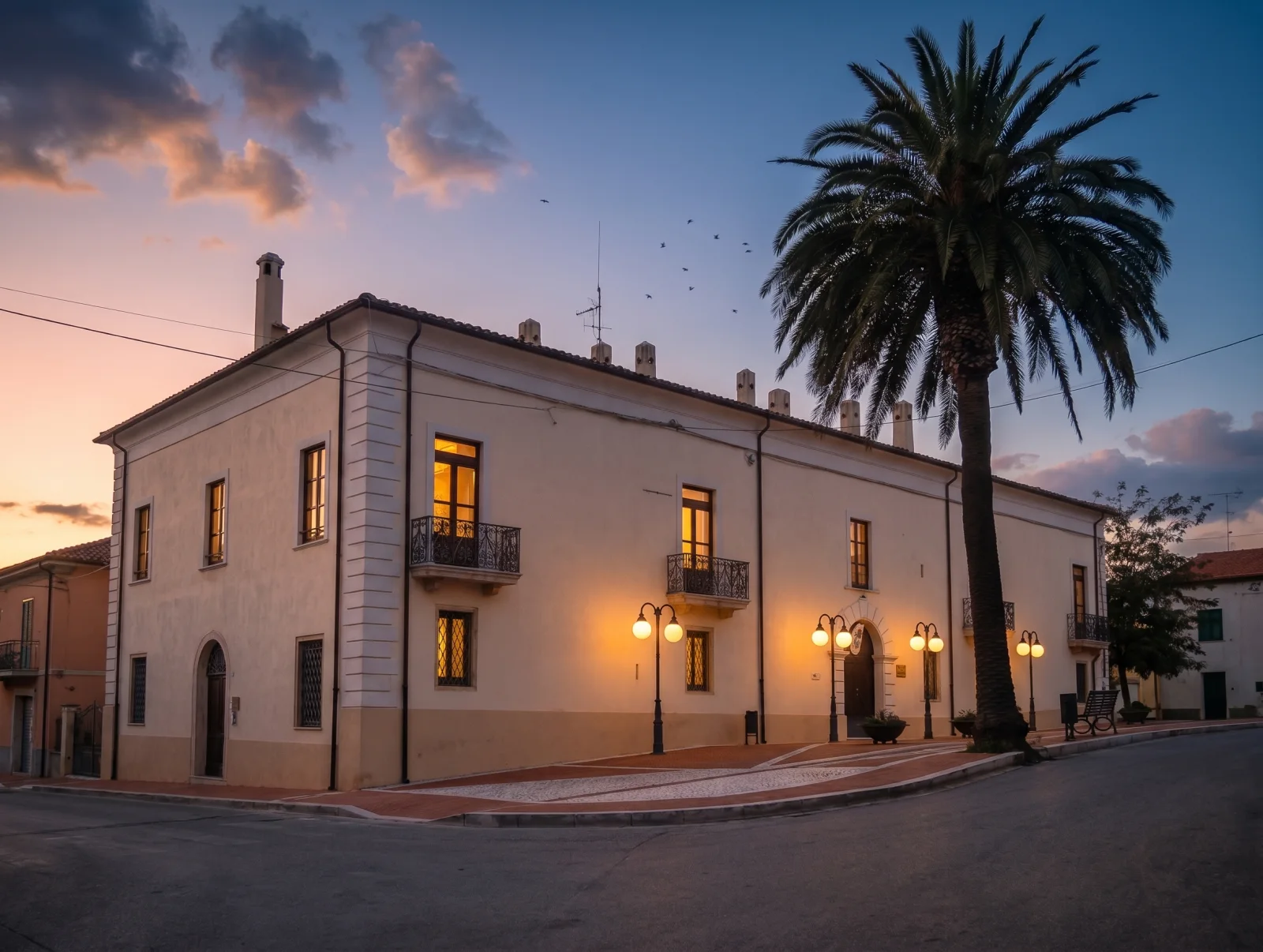
The name speaks not of islands but of asylum: around the year 900 the emperor Leo VI allowed political exiles to settle on this coast, and the place was called Asylon, the land where nobody could be pursued. The diocese that grew out of it kept the Greek rite until 1818.
On the sea, at Le Castella, the Aragonese castle stands on a strip of land that looks as if it were floating. A little further on, at Punta Cannone, you can see the Greek quarries from which the column drums of the temple of Hera Lacinia were probably cut. The coast, thirty-seven kilometres of coves and rocks, is a protected marine area. There are 15,827 residents.
Straight-line distances from the town centre. Tap a point to open its page.
Near Isola di Capo Rizzuto
The closest destinations covered by our editors, with straight-line distance.


