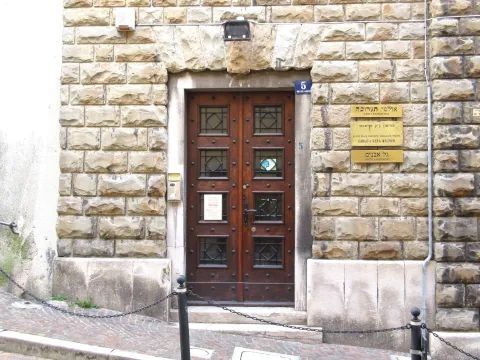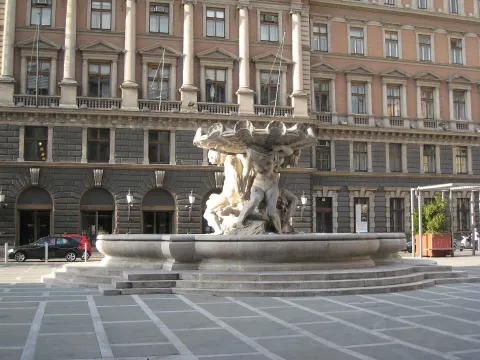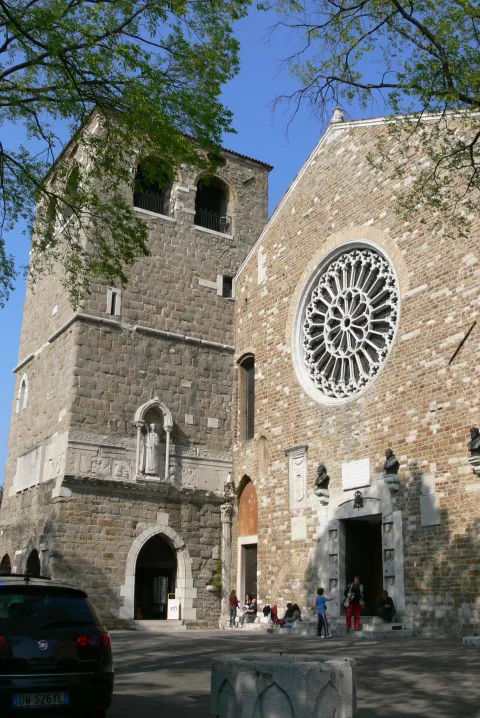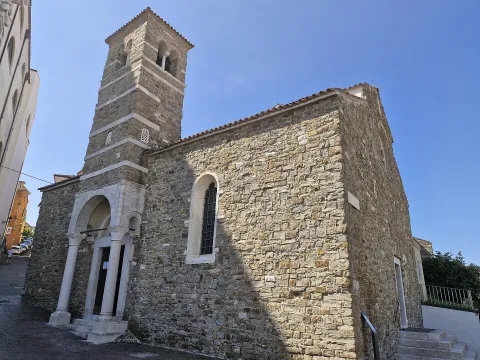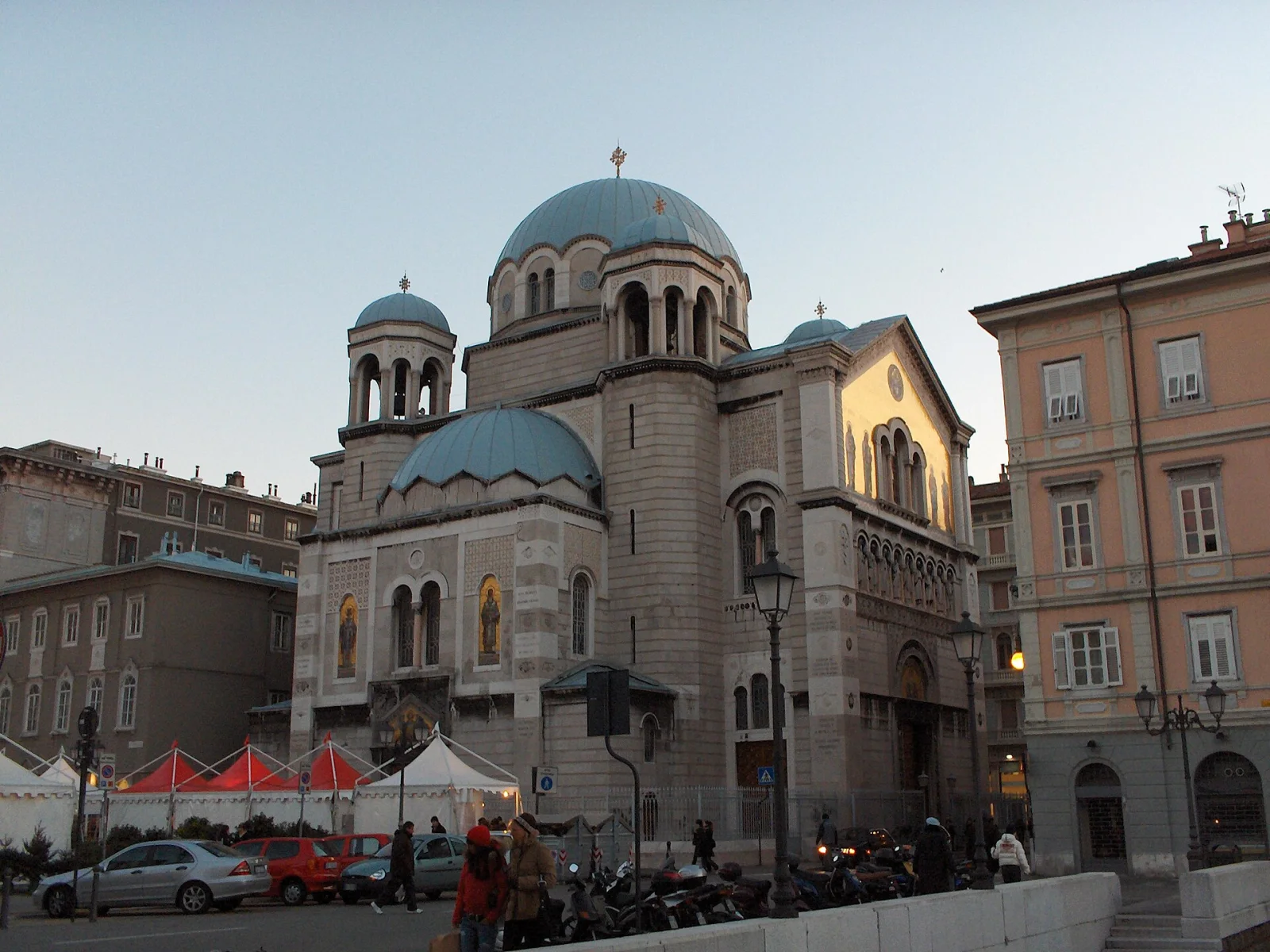
Trieste was a free port, and the merchants who settled there brought their own churches: within a few blocks around the Canal Grande stand a Catholic parish church, a Greek Orthodox temple, the synagogue and this great Serbian church. The Serbian Orthodox community already had a building in 1753; the present one was built to their commission in 1869.
What to see
The architect Carlo Maciachini designed a complex in Byzantine taste, with the central dome higher than the four bell towers and the blue caps that can be picked out from far off above the roofs of the Theresian quarter. The outer walls are faced with mosaics, and on the front stand nine large statues, carved by a Milanese sculptor.
The interior follows the eastern liturgy, with the iconostasis separating the altar from the faithful, the silver, the chandeliers and the icons; the church keeps objects given by the Serbian families of the city, who were among the richest in the port. It is an Orthodox building put up with the means and manners of Austrian nineteenth century, and the mixture shows.
Visiting
The church is in via San Spiridione, on the Canal Grande, five minutes from piazza Unità; free entry with short hours, closed during services, and suitable dress is asked for. Half an hour.
Our editors' tip
On the way out, walk for five minutes counting the places of worship: Catholic, Greek Orthodox, Jewish, Serbian Orthodox, and further on the Protestant one. No Italian city has so many in so little space, and it is the direct consequence of an economic choice: a port without customs draws people from far away, and those who come bring their religion with them.