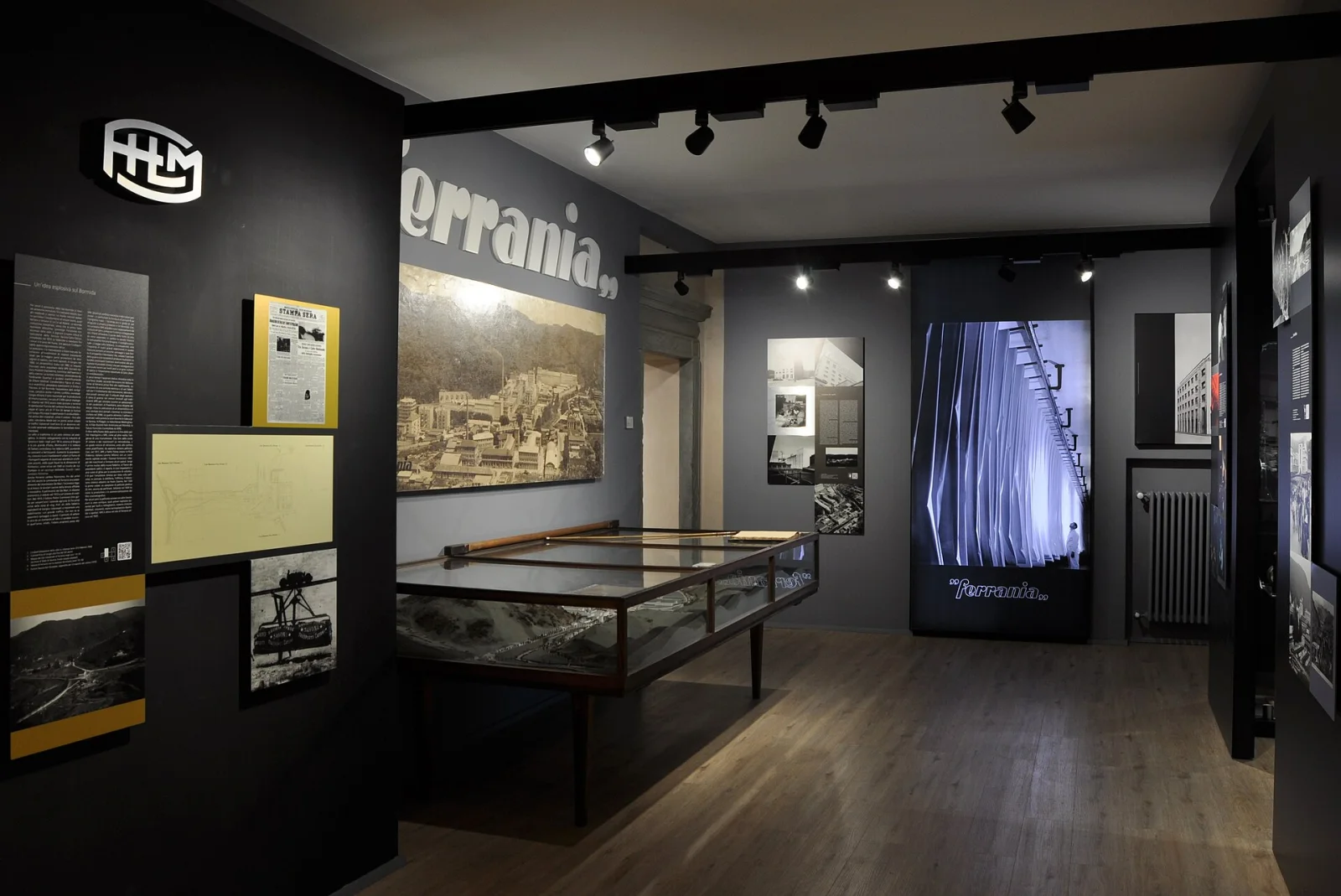
On the second and top floor of Palazzo Scarampi, on piazza Savonarola, have ended up the delivery ledgers, the measuring instruments and the reels that came out of a plant which for decades was the only one in Italy making photosensitive material for photography and radiography. The Ferrania Film Museum opened in 2018 and tells the story of FILM/Ferrania/3M, the works in the village of Ferrania that carried the name of a small Val Bormida settlement into the world history of cinema, photography and chemical research.
What to see
The route is split into six themed rooms, and every title states its angle: “La fabbrica sensibile”, on the machines and the know-how of the workers; “Made in Ferrania”, on products, markets and advertising; “La fabbrica del cinema”, on Italian motion picture film; “Filmisti! La fabbrica sociale”, on housing, families and after-work life; “Adelasia”, on the company's environmental choice; “Dalla parte della cultura”, on writings, images and the archive.
The cases hold film stock, machinery and processing tools, blown-up prints, advertising magazines you can leaf through and panels explaining the plant department by department. What gives all of it a voice are the audiovisual accounts of the workers themselves, from the war years to recent decades. The material comes from the factory's photographic archive, from the Archivio Giuseppe Reggio and from the Fondazione 3M, which handed over photographic and cinematographic items, several patents, the advertising archive of the fifties and sixties and the run of the magazine “Ferrania”.
Visiting
The museum is in the old centre of Cairo Montenotte, not in the village of Ferrania: the address is Palazzo Scarampi, the same building that houses the F. C. Rossi public library. You go up to the second floor; outside the palazzo an open-air display gathers some of the bulkiest relics of the plant. Created at the wish of the town administrations with support from the Fondazione De Mari, Ferrania Technologies and the Fondazione 3M, it is run by a social cooperative that puts on exhibitions, screenings and talks: check the calendar before setting out, because opening times follow whatever is on.
Our editors' tip
We would begin with “Filmisti! La fabbrica sociale” and only then move to the technical rooms: understanding first how people lived in the factory housing makes all the rest far clearer, the machines, the patents, the figures. And if you have an hour to spare, ask about the magazine “Ferrania”: leafing through it is the quickest way to see how the company presented itself to the country.