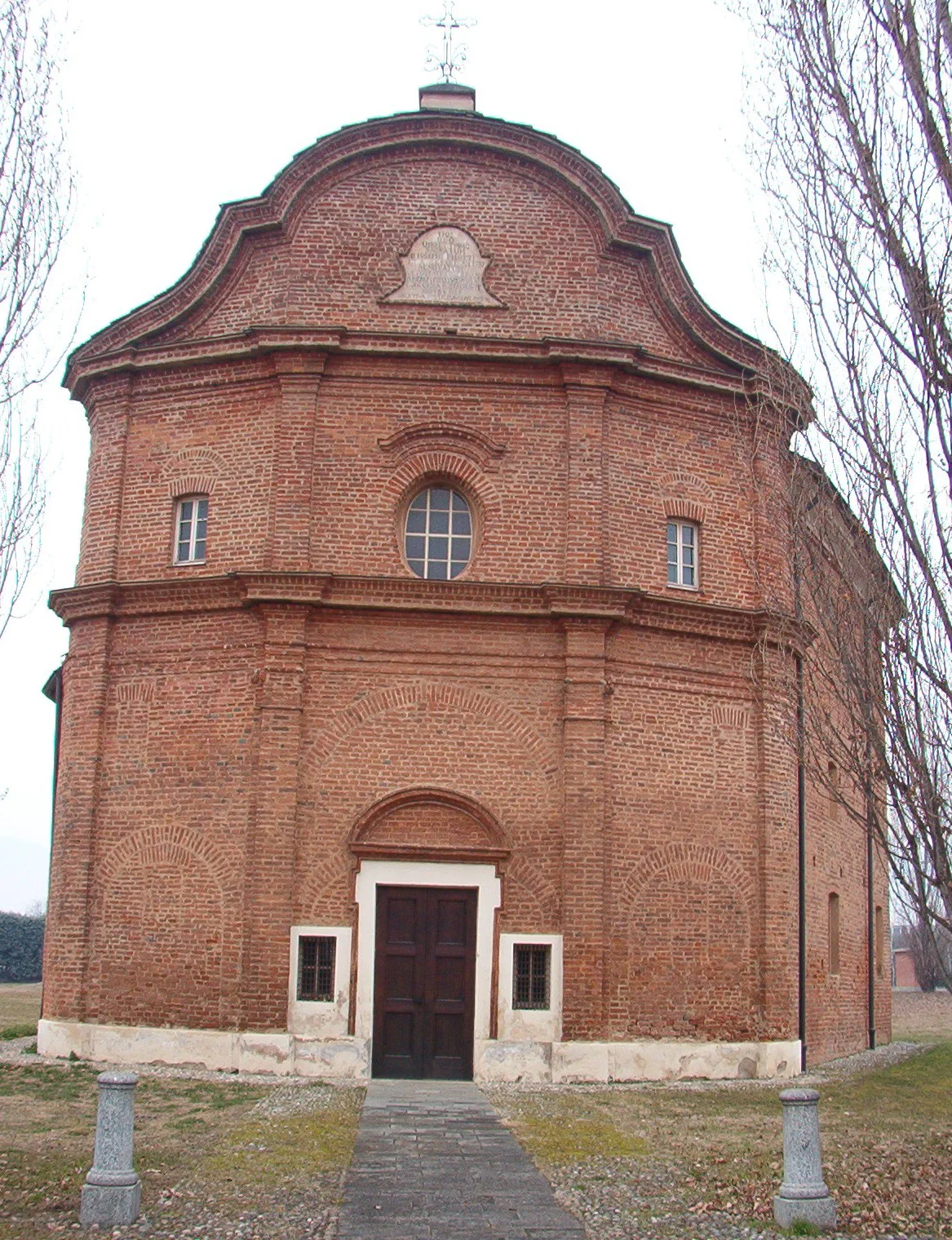
In 1810 a Turin merchant, Giacomo Pio Juva, had a summer house with a crenellated tower built in the middle of his farm. The battlements, at that date, defended nothing: they were a disguise. It is the typical gesture of the nineteenth-century middle class, which bought the nobles' land and then built itself a castle to look as if it had always been there.
What to see
The little palace stands in the Cascina Pascolo Nuovo, along the road to Airasca. The farm is documented from 1628, when the community of Volvera sold it to a count Piossasco: he was the governor of Pinerolo who a few years later had to capitulate before Richelieu's troops. It then passed to another Piossasco, an arquebusier of the duke of Savoy and holder of the collar of the Annunziata.
At the end of the eighteenth century the property went to a charitable foundation of Villastellone, set up by a rich merchant who gave work and lodging to the destitute; unable to manage it, the foundation sold it on, and that is how the Juva arrived. Along with the house, Giacomo Juva had the tower built and a bell tower with its bell.
Visiting
The complex is at Volvera, in the plain south-west of Turin, along the provincial road to Airasca; it is private property attached to a working farm, so you look at it from outside, from the road. A quarter of an hour.
Our editors' tip
Look at the fields in front and try to picture rice in them. Between the eighteenth and nineteenth centuries part of this land was a paddy, risera in Piedmontese, and a map of the mid eighteenth century also shows a large vineyard in front of the farm. The Turin plain no longer resembles itself: it changes crop every two generations, and the ditches are the only thing left to tell you so.