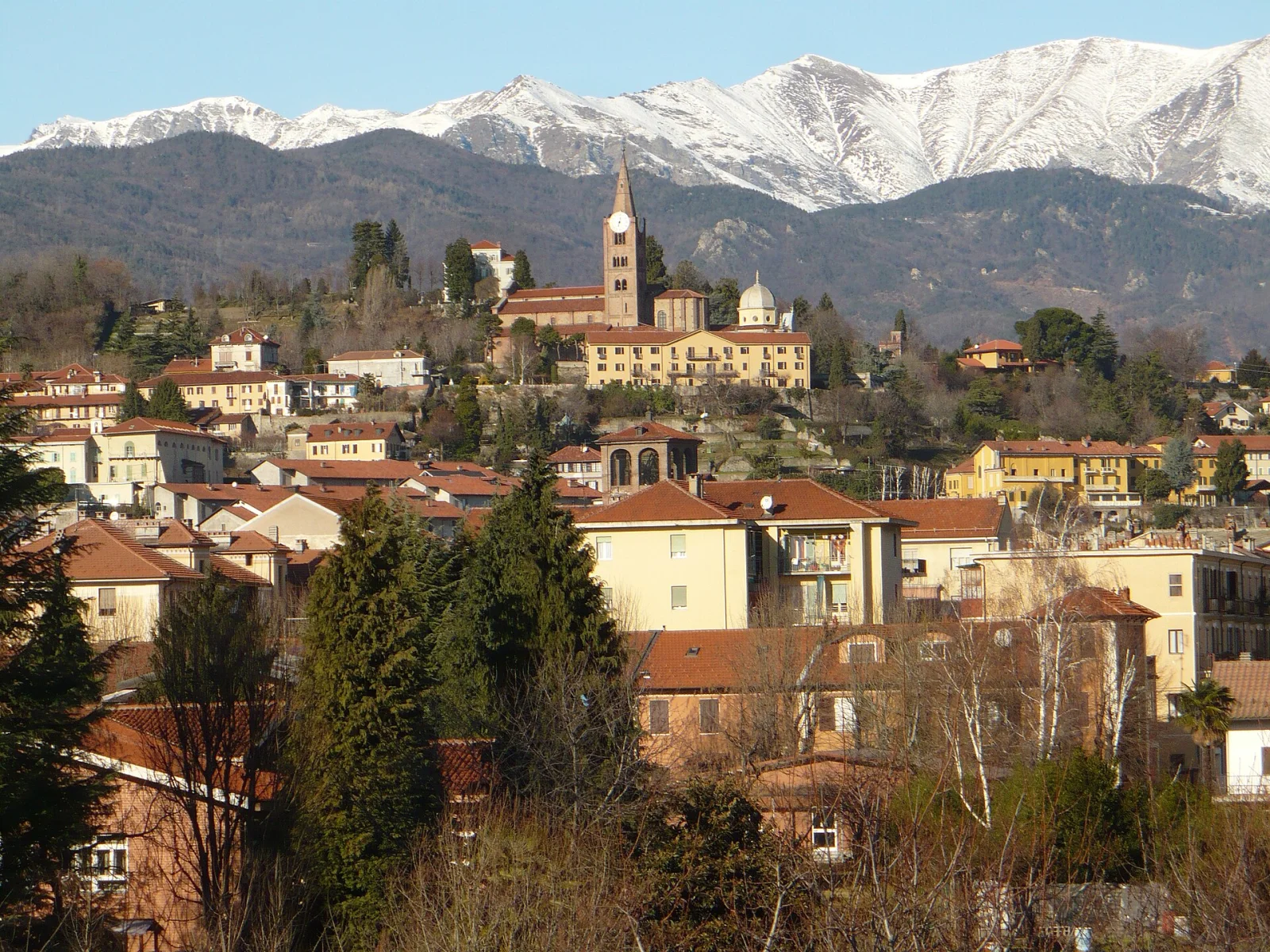
For a hundred and twenty-three years Pinerolo was a capital: from 1295 to 1418 it was the centre of the Savoy-Achaea holdings in Piedmont, with a famous school of notaries, the painters Beltrami and Canavesio, and from 1475 — on the initiative of a Frenchman, Jacottino de' Rubeis — a thriving printing trade. The palace of the princes of Achaea is still there. Then the city fell to France, and cardinal Richelieu charged Vauban, the greatest military engineer of his day, with turning it into the stronghold that was to secure France's control of northern Italy: walls remade, castle rebuilt, citadel enlarged, and only two gates left, the gate of France and the gate of Turin. Part of the same reckoning is a thing less often told: many artisan workshops were demolished and the workers moved to Lyon, whose industry grew at the expense of Pinerolo's.
The Donjon, the fortress, served as a prison too: here Louis XIV sent his enemies, and Nicolas Fouquet, the disgraced superintendent of finances, ended up here as well. And here legend places the Man in the Iron Mask, the prisoner without a face, whom the town re-enacts in costume every other October, with a monument on the hill of San Maurizio. Then came the cavalry: the military school of Pinerolo, attended by officers from half the world, is where captain Caprilli invented natural horsemanship, and the riding hall that bears his name is the third largest covered manège in Europe after those of Moscow and Vienna; the museum of the Cavalry Arm keeps its saddles and standards. The basilica of San Maurizio watches over the roofs from above, the Gothic cathedral and the arcaded streets make the drawing room. Galup has been baking its low glazed panettone for a century, and the Olympic valleys begin here.