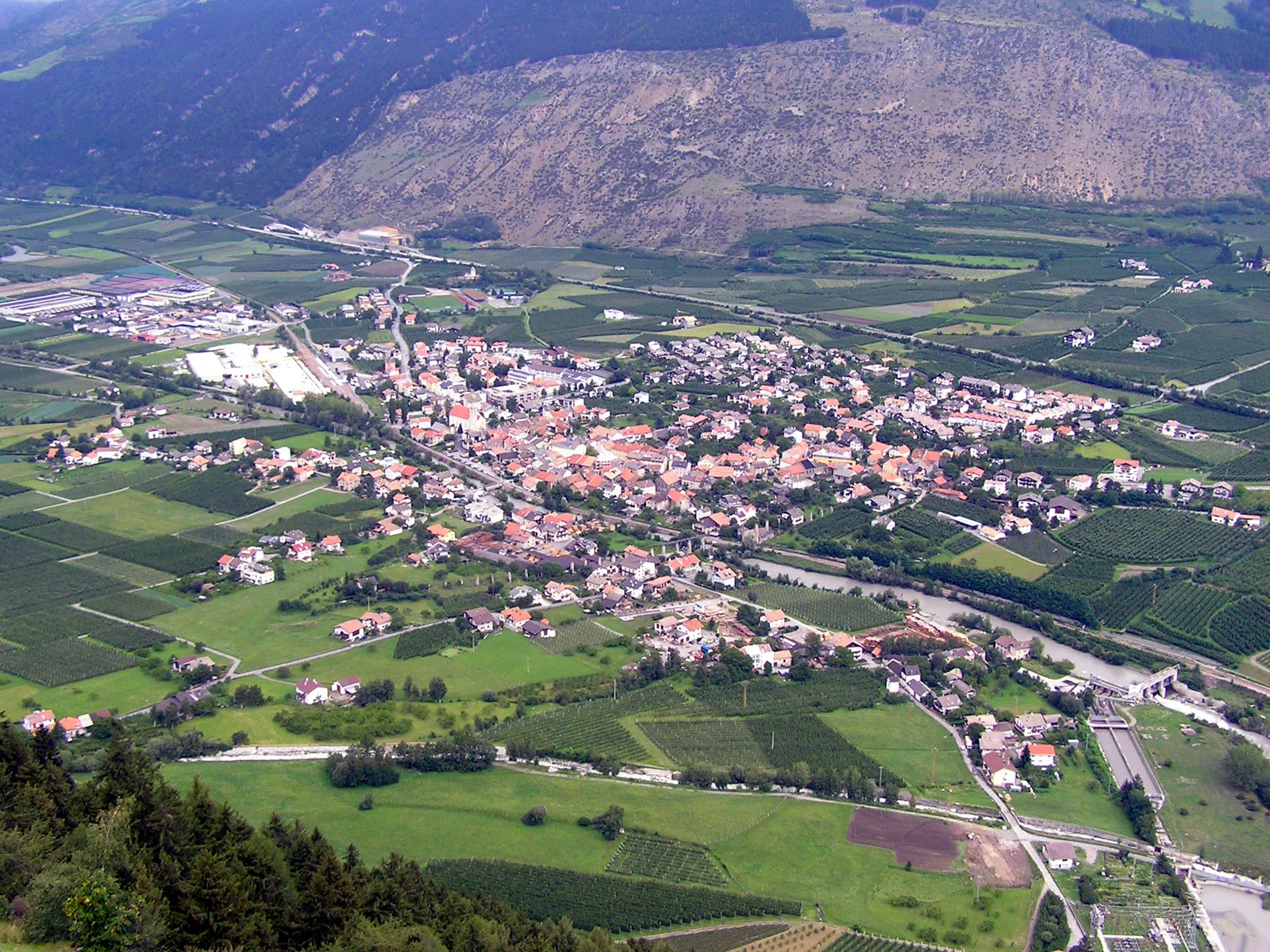
The village is white and black, and its arms say so: a hammer and two chisels, red, on a field striped white and black, that is the veins of the marble. Lasa marble was already prized by the Romans, though systematic quarrying began only in the early twentieth century, and a railway of its own, a flat stretch and a very steep funicular, brings it down from the quarries on the south side of the valley. The Walther von der Vogelweide in Bolzano is Lasa marble; and so are the headstones of the American war cemeteries of the Second World War: between 1949 and 1962 more than ninety thousand were delivered, and to this day a damaged stone is replaced only with another of the same marble.
The other stone story is that of the raised aqueduct that crossed the village, six hundred metres long and up to some thirty metres high: a fire destroyed it in 1907, and only the stretches across the Adige remain. On the second of May 1945, in the last days of the war, the Wehrmacht shot nine people here in reprisal for an attempted theft of ammunition from the powder magazine of Cengles. Today the valley also grows apricots, and almost everyone here speaks German.
Straight-line distances from the town centre. Tap a point to open its page.
Near Lasa
The closest destinations covered by our editors, with straight-line distance.


Places to see within 25 km
Outside Lasa, but an easy day trip away.