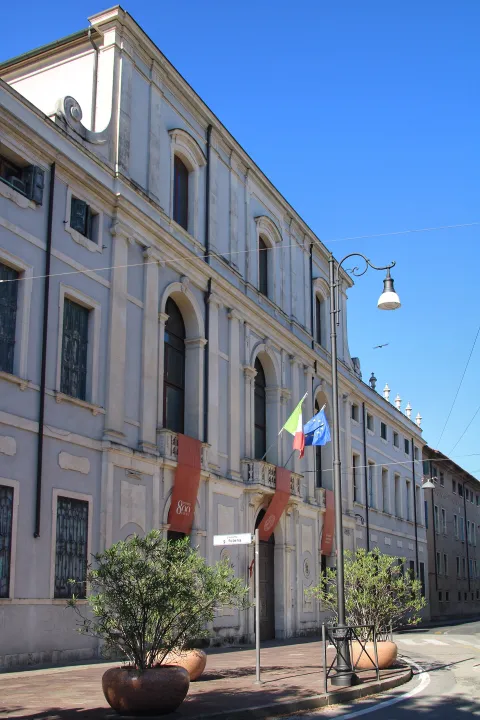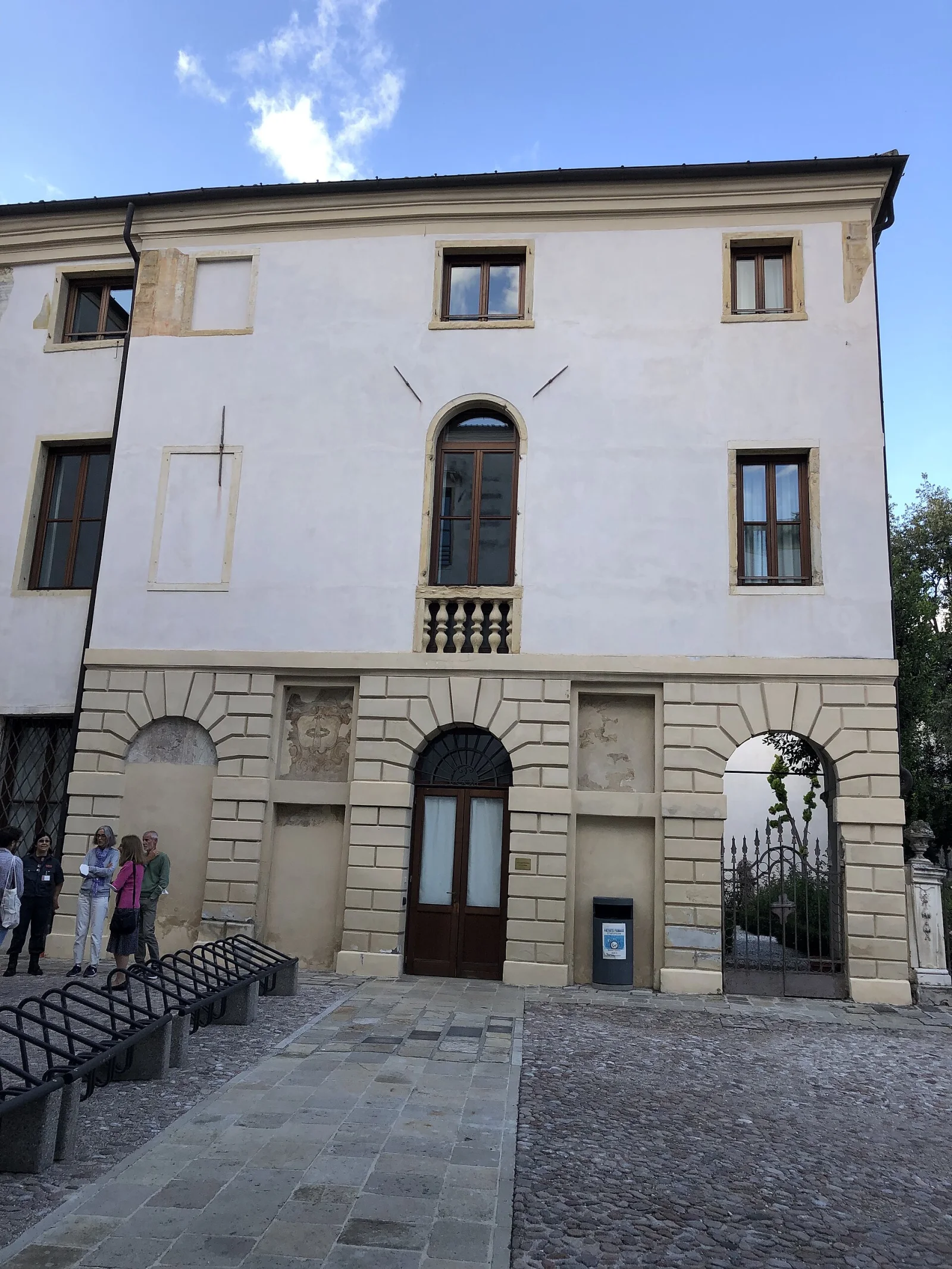
Palazzo Selvatico Luzzato Dina, also known as Palazzo Luzzato Dina, is today the seat of the Department of Historical and Geographical Sciences of Antiquity of the University of Padua, at the end of a chain of ownership spanning six centuries.
What to see
The building was acquired on 6 May 1406 by Antonio Selvatico, founder of a family that kept it for about three centuries, gradually expanding the original complex with the purchase of adjoining houses and land. The most important work is owed to the physician Benedetto Selvatico (1574–1658), who from 1610 enlarged the residence, building the grand rooms of the piano nobile — today the History Library — and renewed the main façade, giving the palace the appearance still recognisable today; in later decades the family carried on with further decorative campaigns and the construction of an additional wing «behind the cathedral».
In 1738 a marriage shifted the Selvatico family's interests toward another palace, on Via dei Tadi, beginning a slow detachment from the original residence, which in the 19th century passed to Pietro Selvatico Estense; he sold it in 1852 to the brothers Beniamino and Pellegrino Dina, who, having no heirs of their own, left the estate and surname to the children of their sister Enrichetta, married to a Luzzatto — hence the present name. In 1989 Augusta Luzzato Dina, left without heirs after her son's death, donated the palace to the University of Padua, which restored it to house the department.
Visiting
The palace today houses university offices and libraries; there is no regular access to the historic rooms, and it is worth asking the Department before planning a visit.
Our editors' tip
As you pass the palace, consider the long chain of private owners who passed it down for six centuries before it became, almost by chance, a shared asset of the whole university community.