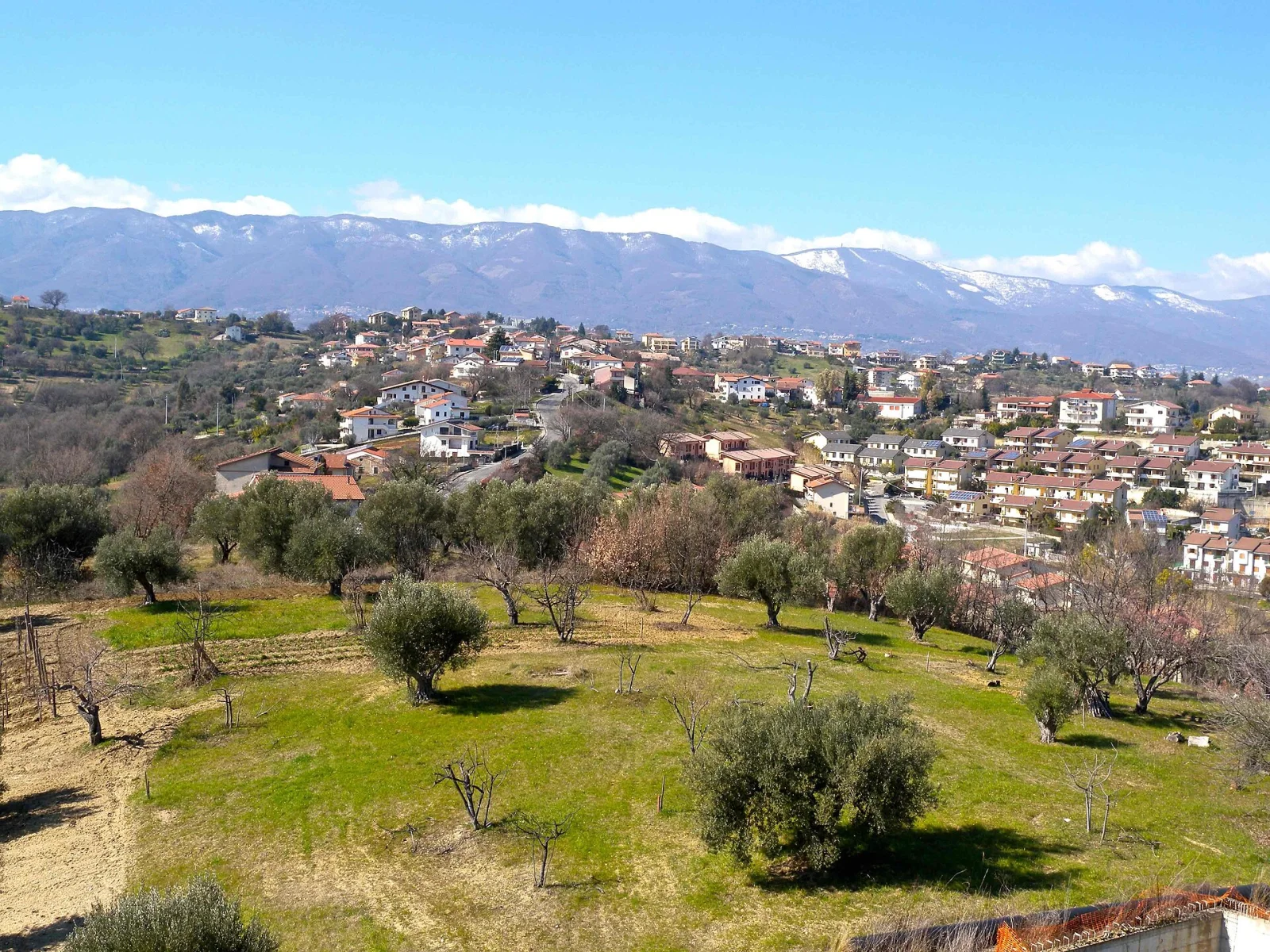
The Norman Castle stands in the historic centre of Rende, on the hill from which you look over a good part of the Crati valley. It was built for Bohemond of Hauteville, and completed in 1095: it was the first step of a wider project, imagined by his father Robert Guiscard, a defensive line for the whole valley, from Bisignano to Cosenza. From here Bohemond prepared his departure for the First Crusade, in 1096. The castle then passed to the Swabians, the Angevins, the Aragonese and the Adorno counts; in the modern age it became the noble palace of the Alarcón y Mendoza and the Magdalone, and from 1922 to 2011 it was the town hall of Rende.
What to see
The shape of the hill already made it hard to approach, and the Normans did not even dig a moat, as was otherwise their custom: the walls, two metres thick, were enough, together with the watchtowers, four today but originally perhaps five, with many arrow slits. In the courtyard a large cistern was built for rainwater, to be used during sieges. Inside are displayed the coats of arms of the two families who lived there.
Since 2012 the castle has been the home of the Bilotti Museum of Contemporary Art, born of the donations of Roberto Bilotti Ruggi d'Aragona: painting, sculpture, photography, installations and video art. In the permanent display are works by Andy Warhol, Mario Ceroli and Luigi Ontani, and by younger artists such as Pietro Ruffo: his is the large wooden tank, covered with the pages of a Jewish prayer book cut into the shape of scarabs.
Visiting
The museum's times and tickets should be checked with the town council of Rende; alongside the permanent collection there are temporary exhibitions.
Our editors' tip
The castle's three towers ended up in the town's coat of arms. The people of Rende already carried them on their banner in 1222, when they went to Cosenza for the inauguration of the cathedral, in the presence of Frederick II. In the town the castle also has a nickname: the «Gigante di Pietra», the stone giant.


