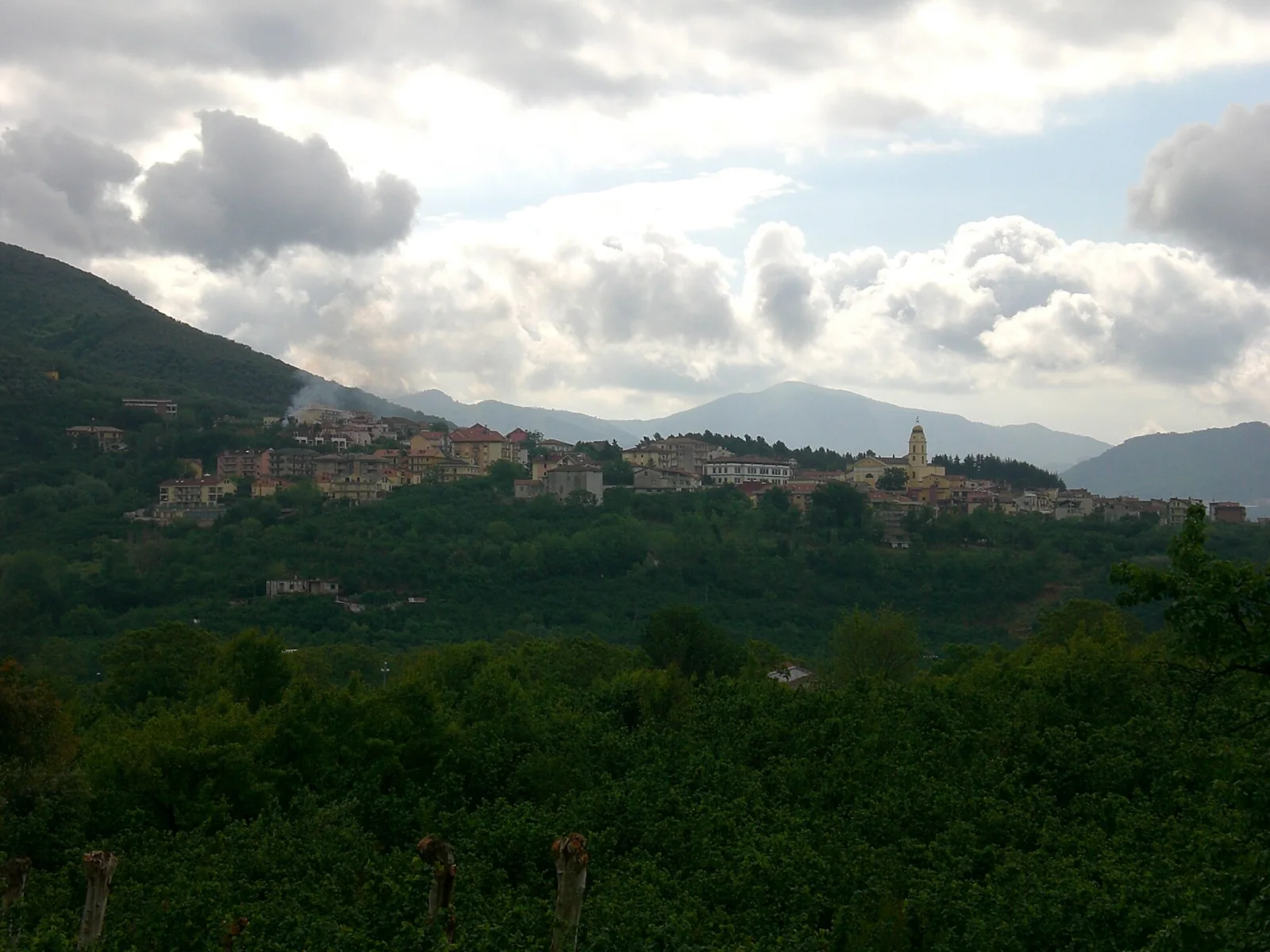
The chief village of this municipality carries a severed head in its name. When the Romans got the better of the Picentini and destroyed Picentia, its inhabitants left the plain and went up the mountain slopes; up there they gathered around a temple that Sulla had raised to Jupiter, beside which the legionaries had set the heads of the statues of Janus and Juno, cut off in contempt. From that head of Janus, Caput Jani, the name of the largest hamlet seems to derive: Capitignano, which is still the seat of the municipality. It is the same movement one finds across half of southern Italy, people leaving the flat land and putting themselves safely up high, except that here the memory stayed attached to a trophy of humiliation.
In the name of the municipality the hamlets are six, and today the frazioni are four: Capitignano, Malche, Prepezzano and Sieti, which has kept the look of a medieval village. Administratively, for a century and a half this was a piece of San Cipriano: it belonged to its circondario under the Bourbons and to its mandamento under the Kingdom of Italy, and in 1929 it was suppressed outright and absorbed into San Cipriano Picentino. It took its autonomy back in 1944, while the war was still going on.
Straight-line distances from the town centre. Tap a point to open its page.
Near Giffoni Sei Casali
The closest destinations covered by our editors, with straight-line distance.


Places to see within 25 km
Outside Giffoni Sei Casali, but an easy day trip away.