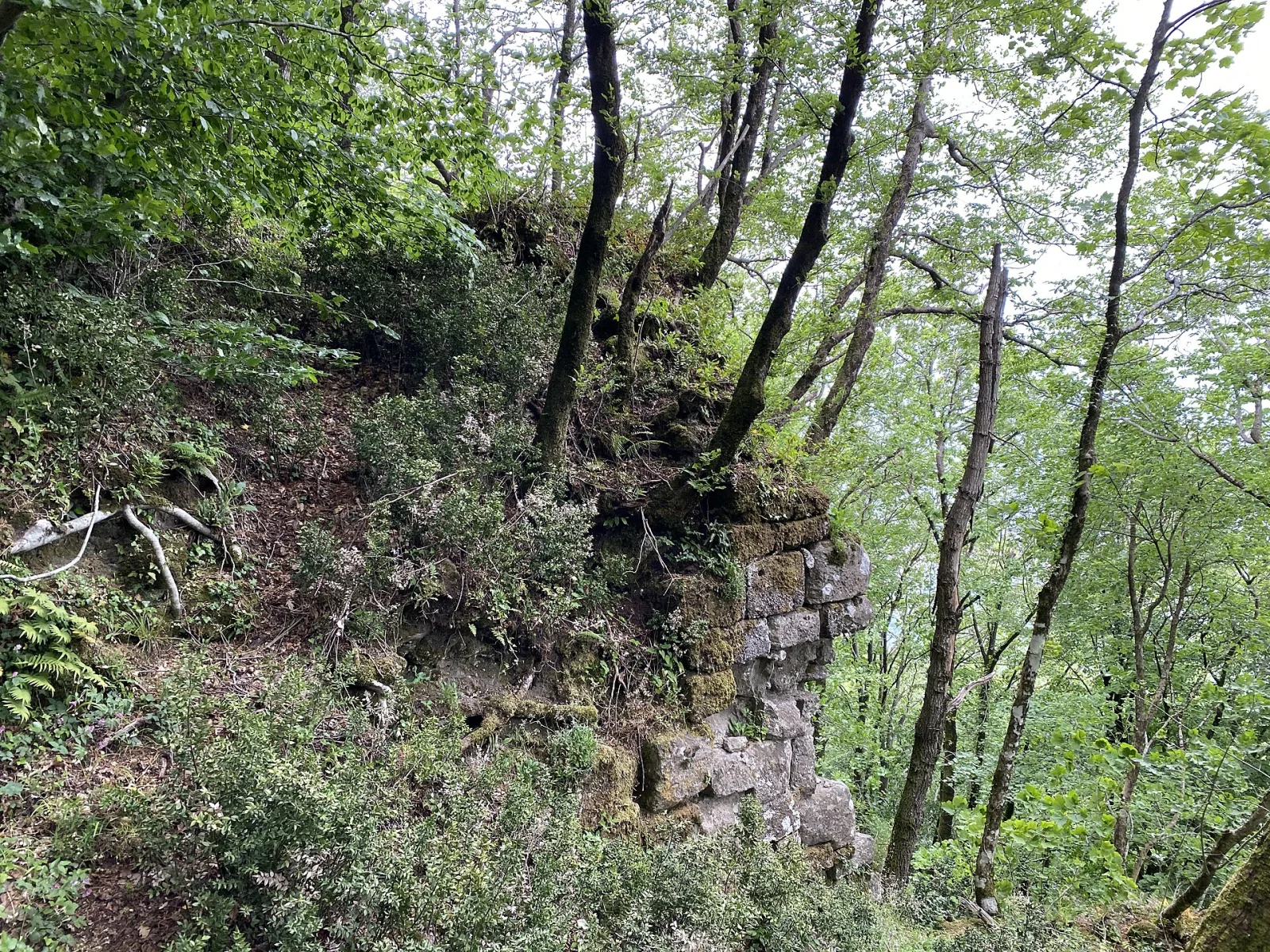
The name comes from one or more villas of the Roman gens Arria: Arianum, then Larianum. The place first appears in a document of 1140, when the territory belonged to the monastery of Grottaferrata, which had granted it in emphyteusis to the counts of Tusculum for three generations; when the contract expired, the land of Lariano «with tower, rocca, servants, handmaids and all its appurtenances» was still being unlawfully held, and the monks had to appeal to pope Innocent the Second. From then on the fortress on the Maschio d'Ariano was fought over for two centuries by the counts of Tusculum, the Annibaldi, the Savelli and above all the Colonna: in the conclave gathered at Viterbo in 1269 the Church claimed it, calling it praetiosa, precious. Pope Gregory the Ninth had included it among the castellanies of the Church in 1235, and pope Clement the Fourth had made a Templar knight, friar Raimondo, its castellan.
The end came with the war between pope Eugene the Fourth and the Colonna. Excommunicated and stripped of their goods, the Colonna would not yield, and while the pope's eight thousand foot were retaking Albano, Castel Gandolfo, Zagarolo and even Palestrina, the castle of Lariano held out. The pope then sent four thousand foot to besiege it, with eight hundred more soldiers from Velletri led by Paolo Annibaldi della Molara; the defenders barricaded themselves with their weapons in the church of San Silvestro, but with no help from any house they had to capitulate. On 26 October 1433 the sindaci Nardo Di Stefano and Cola di Nardo came out of the castle in surrender. The castle was burned and razed to the ground, and the territory was given by Eugene the Fourth to Velletri in thanks for its help. In 1493 pope Alexander the Sixth assigned even the ruins to Velletri for good. From that punishment Lariano emerged only in 1967, when it ceased to be a hamlet of Velletri and became a comune.