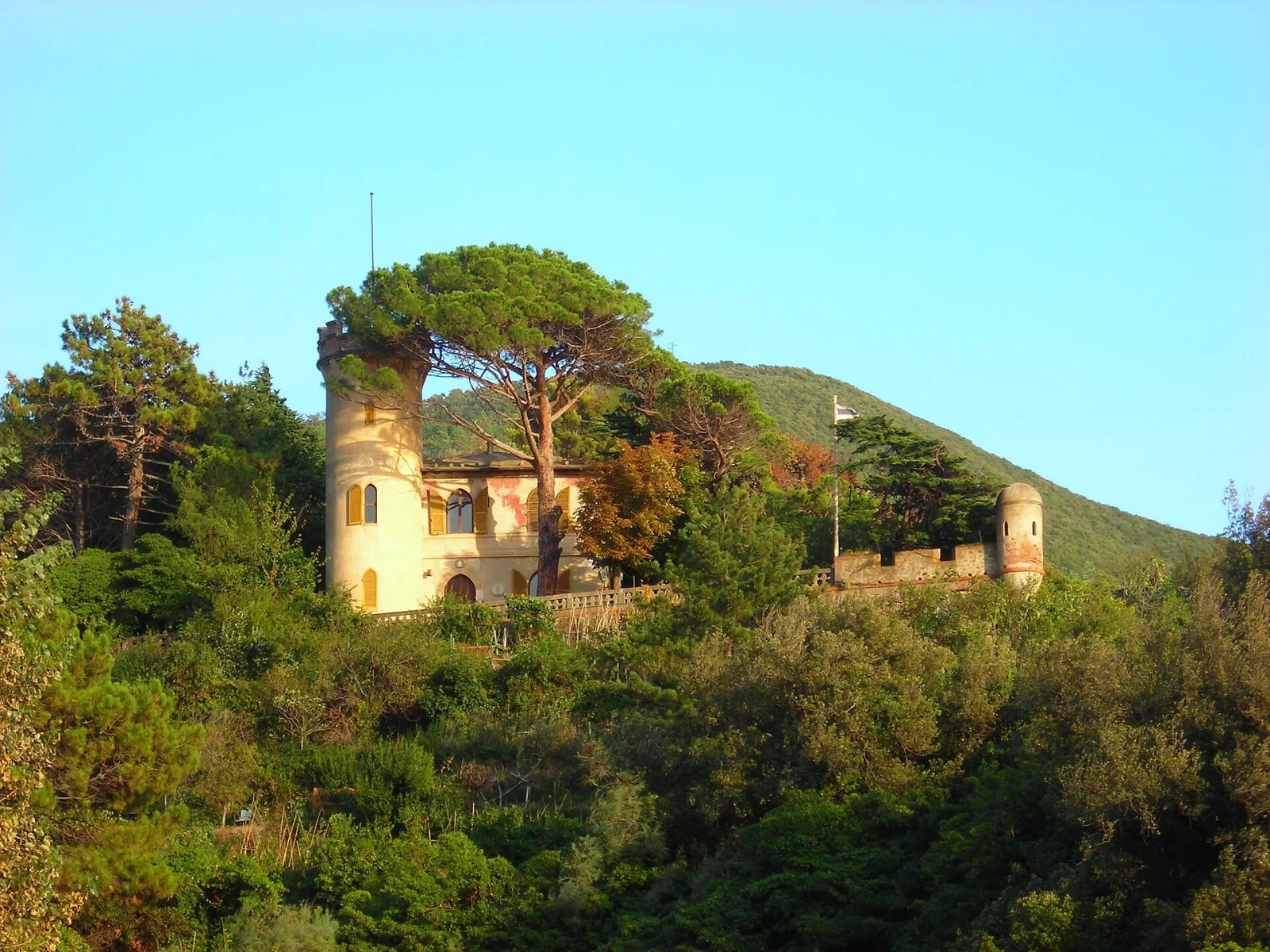
Historians have never agreed on when this tower went up: some put it around 1130, while a study by Valeria Polonio printed in Chiavari in 2012 moves it a good four centuries later, to the sixteenth. Its job, though, was never in doubt. The Republic of Genoa wanted a lookout up there to watch the sea east of Moneglia and raise the alarm when the wrong sails appeared on the horizon.
What to see
It is a ruin today, and it helps to know that before climbing. The Villafranca fortress-tower stands on the first slopes east of the village, in a commanding position, and what survives is masonry that was tampered with and partly pulled down. It was always the lesser of Moneglia's two castles: Monleone, on the other side of town, was larger and counted for more in the Republic's ledgers.
Its test came in 1564, when corsairs who had just sacked and stripped nearby Lavagna turned up here and the tower took part in the defence of the village. Before the Second World War the owner of the day, Luigi Burgo, had the building restored; the war then damaged it again, and worse. A short walk from the ruins stands Villa Maria, a nineteenth-century house that repeats a few of the tower's architectural ideas.
Visiting
You reach it from the village, heading east and uphill: the tower sits just above the houses, so this is no mountain expedition. Safety works carried out by the council reopened the site to the public, but they are recent and there is no visiting calendar to take for granted; a phone call to the town hall before you set off saves a wasted climb. Anyone expecting furnished halls will be disappointed. Anyone looking for the spot from which this stretch of coast was watched will not.
Our editors' tip
We always pair it with Monleone in the same morning: Villafranca first, then the other castle, and the difference in scale between the two garrisons becomes obvious without reading a word. And we go up in the low light of late afternoon, when the sea to the east takes on the colour the sentry on duty saw last before dark.