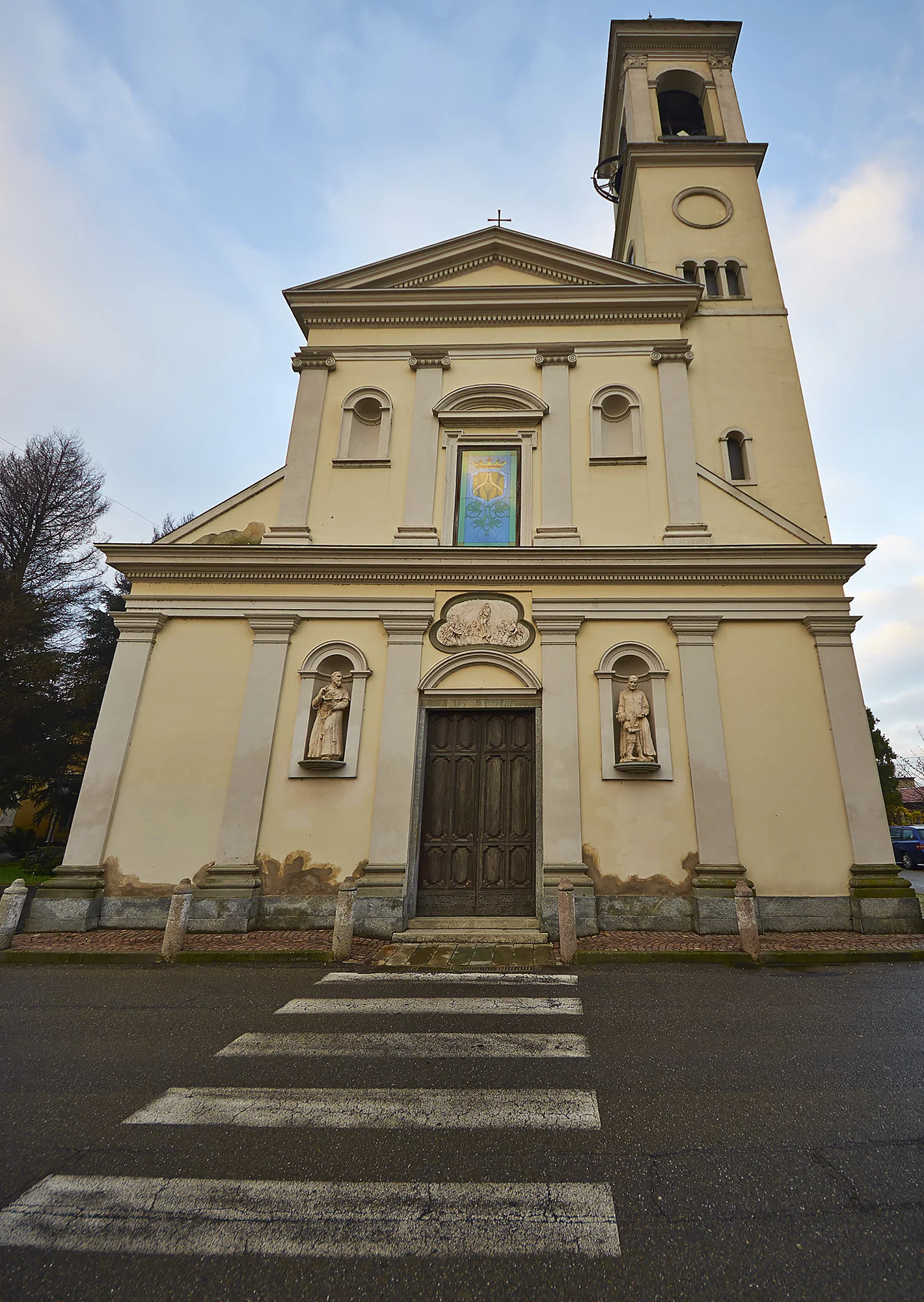
Until 1894 the village was called Calcababbio. The name, probably born as a nickname, comes from the verb calcare, to tread, and the dialect babi, toad, an animal that abounded here: "tread on the toad". By the royal decree of 23 December of that year it became Lungavilla, that is "the long-shaped village", because the old name had been judged unseemly; a legend has it that the new one came from an exclamation of king Umberto I who, passing through, is said to have cried: "Oh, che longa vila!". The toad, however, has not gone away: the municipal arms still bear a foot treading on it, beside a perspective view of the village.
The first news comes from a document of 1250, a list of lands of the Duchy of Pavia; in the fifteenth century the fief belonged to the Fregoso of Genoa, but in 1493 it was bought by Bergonzio Botta, a Pavian and ducal minister, whose family held it to the end — from 1613 under the name Botta Adorno — and saw it raised to a marquisate in 1663. In August 1836 a cholera epidemic decimated the population: it ended after three days of prayer called by the parish priest don Bellingeri, closing with a procession and a perpetual vow to the Madonna, and ever since the village remembers it every 22 August with the "day of the vow". In 1859 its territory was the scene of the fighting of the battle of Montebello. Today the municipality runs the Parco Palustre, a reserve of spring-fed waters.
Straight-line distances from the town centre. Tap a point to open its page.
Near Lungavilla
The closest destinations covered by our editors, with straight-line distance.


Places to see within 25 km
Outside Lungavilla, but an easy day trip away.