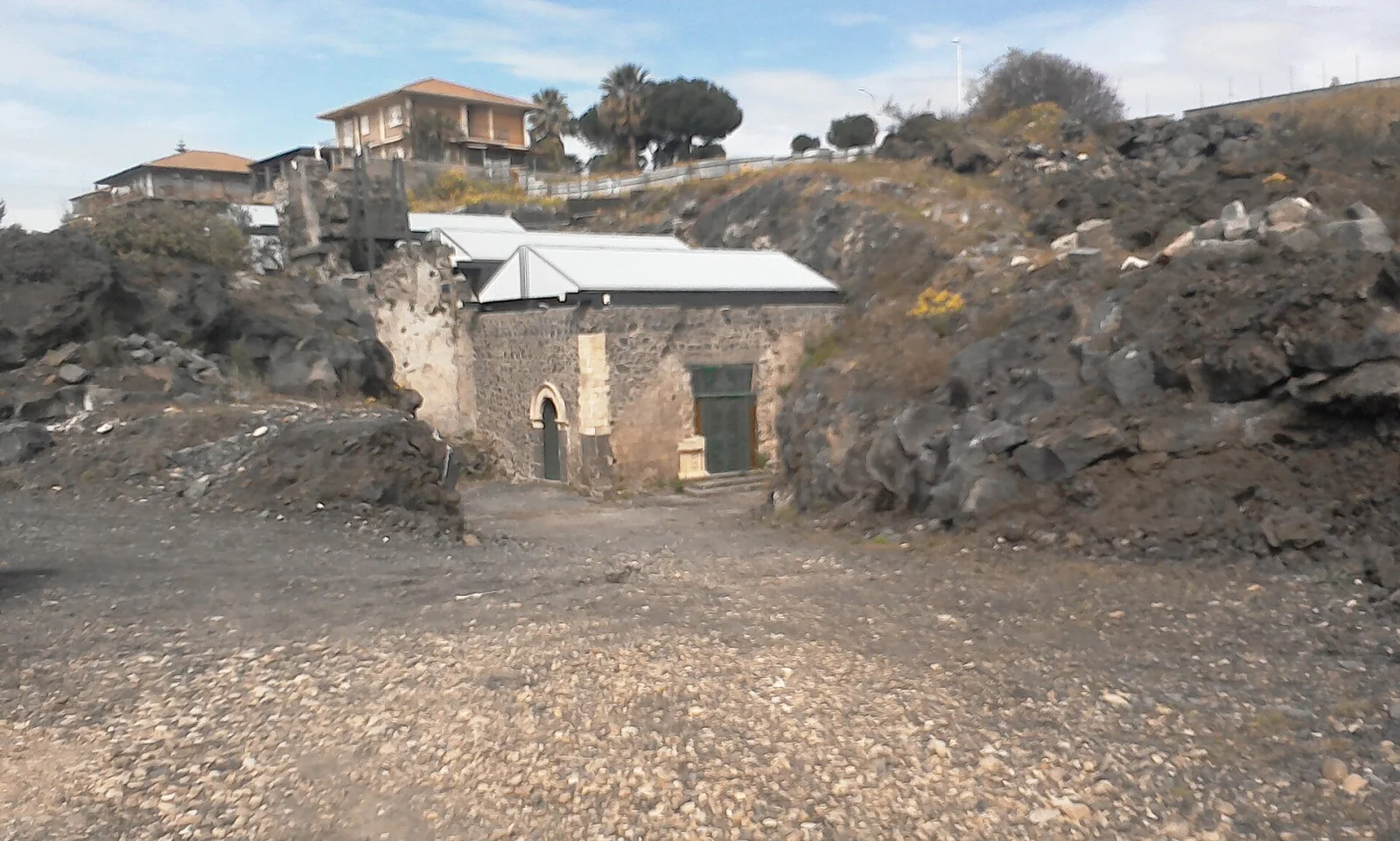
Campanarazzu is the site of the old town of Misterbianco, destroyed in March 1669 by the eruption of Etna and further damaged by the earthquake of January 1693: the lava covered almost everything, and little of the old town is visible. The earliest documents record its founding around 1300, about three kilometres north-east of the present centre, around a white monastery, the Monasterium album, now vanished, which gave Misterbianco its name; the name Campanarazzu seems linked to that monastery's bell.
What to see
After the disaster the people abandoned the place and rebuilt the town further down the slope, and Campanarazzu was overgrown by vegetation. In the second half of the twentieth century the municipality began to restore its value, and since 2009 excavations have brought part of the remains to light; in 2016 the mother church was found, well preserved but without roof or doors, which were then rebuilt with modern materials to protect it, together with objects dating from after the fourteenth century. On 21 February 2025 the archaeological site was inaugurated and opened to the public.
A few hundred metres away is a small park with a children's playground and a wood that has grown over the rocks that once formed the old town, open all year during set hours.
Visiting
According to the sources the site can usually be visited on Sunday mornings, but days and times should be checked beforehand with the municipality.
Our editors' tip
Among the objects saved from the destruction was a bell, which was hung on a sturdy olive tree halfway between Misterbianco and Campanarazzu, at the point where the lava had stopped: the place was named «Aliva m'pittata».


