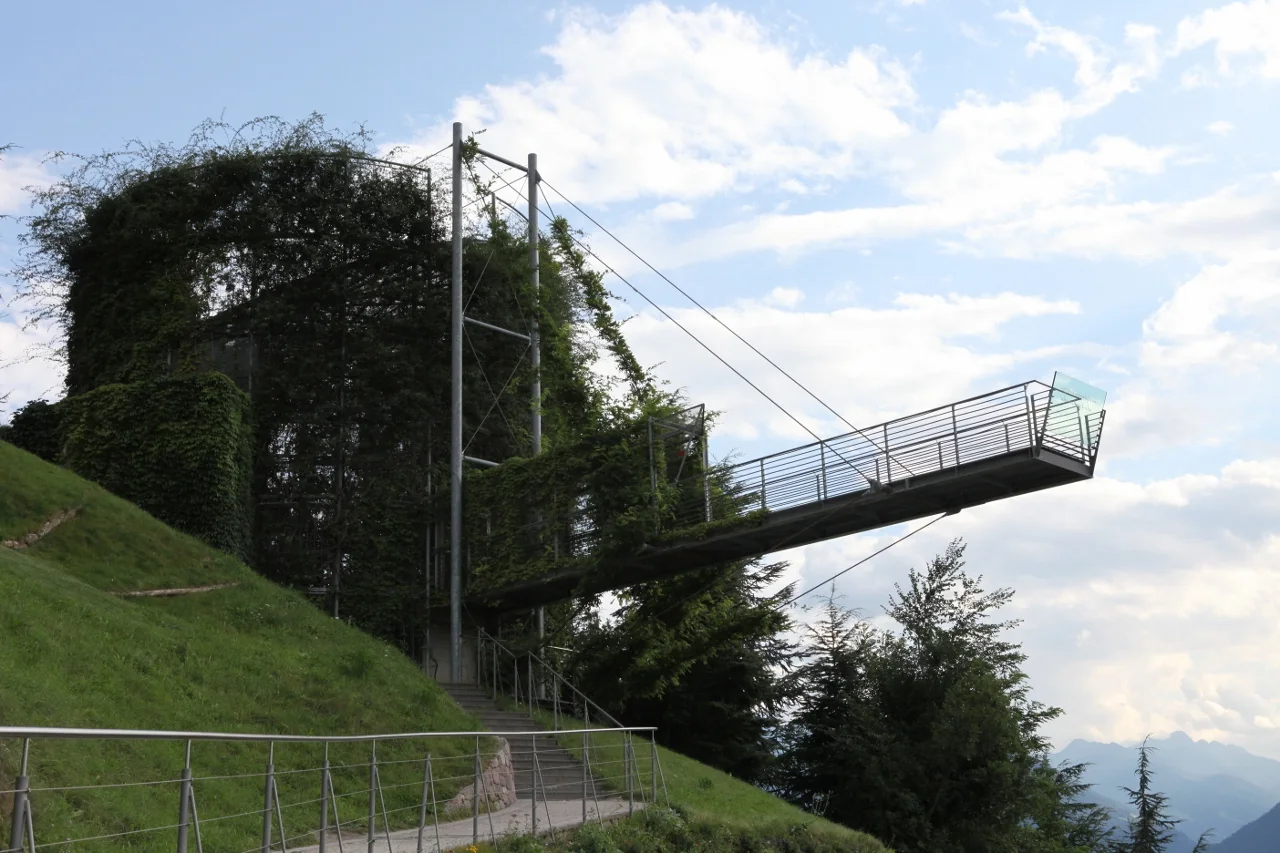
The Gardens of Trauttmansdorff Castle are Merano's botanical garden, on the grounds of the castle of the same name. A first garden was laid out around 1850 by Count Joseph von Trauttmansdorff, during the restoration of the castle. Empress Elisabeth of Austria, Sissi, stayed in Merano in 1870 and 1889, and after her assassination in Geneva in 1898 a bronze bust in her memory was placed in the gardens. When the castle was put to other uses, the original garden disappeared: today's is entirely new, planted between 1994 and 2001, the year it opened to the public.
What to see
There are about eighty gardens, with local and exotic plants arranged by region of origin. The Forests of the World bring together conifers and deciduous trees from the Americas and Asia; the Oleander Steps also have an ancient olive tree; the Sun Gardens gather the cultivated plants of the Mediterranean, cypresses, figs, vines, lavender and an olive grove presented as the northernmost in Italy. The Water and Terraced Gardens include a formal Italian garden, an English garden and a garden of the senses, and the Landscapes of South Tyrol show the old vegetation of the Adige valley.
There are also an aviary, a Japanese alluvial forest, rice terraces, tea plantations and Aesculapian snakes in their own habitat, which came from the Alpine zoo of Innsbruck. Inside the castle is the Touriseum, the provincial museum of tourism, which tells in Italian, German and English the history of tourism in Tyrol from the late eighteenth century to today; on the second floor are the historic rooms where Sissi spent her holidays.
Visiting
The gardens are reported to open daily in the warmer months, with an admission fee, and are easily accessible to people with disabilities: dates, times and tickets should be checked on the official website.
Our editors' tip
The Touriseum's route begins in a gorge between rock walls where an overturned carriage lies, a reminder of the risks faced by nineteenth-century travellers. Further on, in the collection of period posters, look for those by Franz Lenhart of Merano, a poster artist very active in the Dolomite area between the twenties and the fifties.


