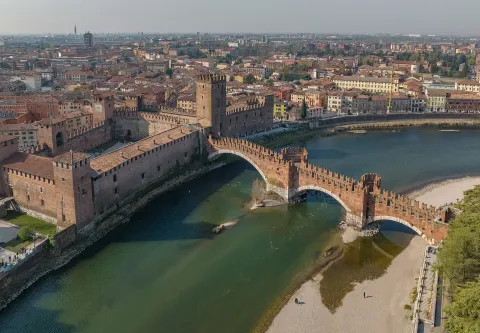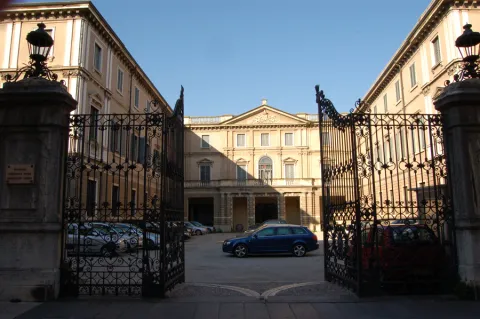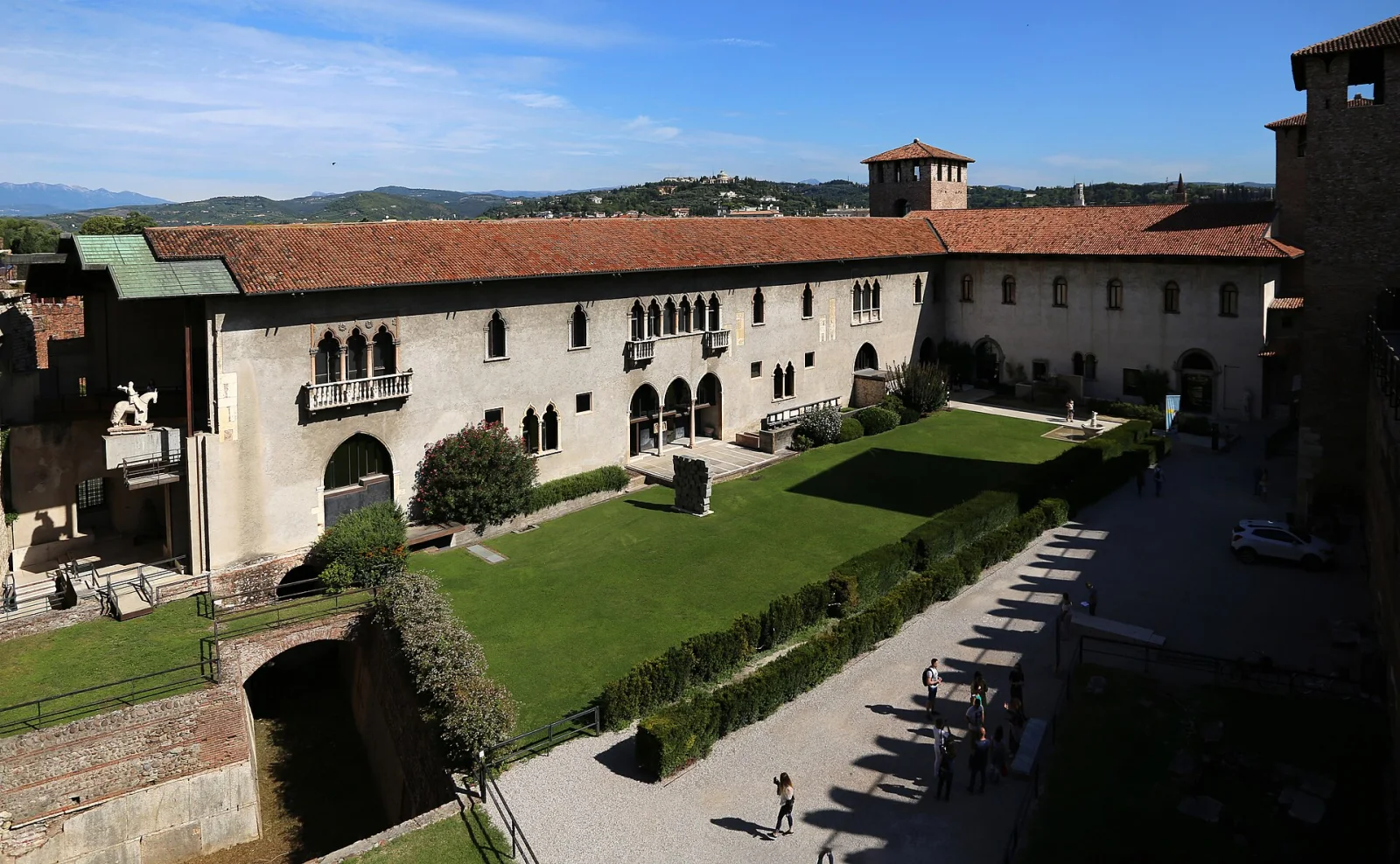
A Scaliger castle restored by Carlo Scarpa is, for anyone who loves architecture, a pilgrimage: at Castelvecchio, between 1958 and 1974, the Venetian architect invented the modern way of putting the ancient into the old, with iron walkways, floors of Prun stone that do not touch the walls, windows cut where they were needed and every statue on a plinth designed for it. The castle had been built by Cangrande II in 1354 as a refuge against the Veronese more than against enemies, with the bridge over the Adige for escape; Napoleon made it a barracks, the city in 1924 a museum in medieval style, the bombs of 1945 split it open. Scarpa left every period visible, including his own.
What to see
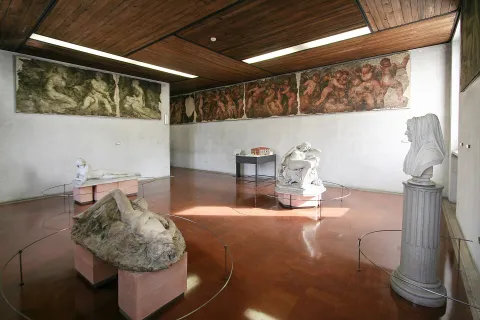
Fourteenth-century Veronese sculpture in the ground-floor rooms of the Galleria, with the Master of Sant'Anastasia and his tufa Crucifix, the saints Cecilia and Catherine, the saints with peasants' faces on thin stone supports; then painting: the Madonna of the Rose Garden by Stefano da Verona, Pisanello's Madonna of the Quail, the Bellinis, Mantegna's Holy Family, Girolamo dai Libri, Veronese, Tintoretto and a small Rubens, as well as the weapons, the Lombard goldwork and the bells of the city. Some of these paintings, seventeen, were stolen at gunpoint in 2015 and found the following year on the Ukrainian border: all of them came back.
The piece everyone photographs is the equestrian statue of Cangrande I, removed from his tomb outside Santa Maria Antica and placed by Scarpa on a concrete bracket high up, in the void between the Reggia and the Galleria, with that big-dog smile you see from below, from the walkways and from the courtyard. The Prun stone, the iron, the concrete and the Scaliger bricks around it are the museum as much as the works.
Visiting
Castelvecchio is on Corso Cavour, five minutes from Piazza Bra and the Arena; a civic museum with its own ticket and the Verona Card. The route is long, some thirty rooms on several levels with stairs and walkways: two hours, with the Scaliger bridge to cross at the end, rebuilt after the Germans blew it up.
Our editors' tip
Look at Cangrande from every point Scarpa forces you to look at him from: from below, from the walkway, from the window of the Reggia, from the side. He changes expression every time, and it is the way the architect teaches you to visit the rest. And before leaving, look for the details: the handles, the joints, the staggered steps of the entrance. In no other Italian museum is it so worth looking at the floor.