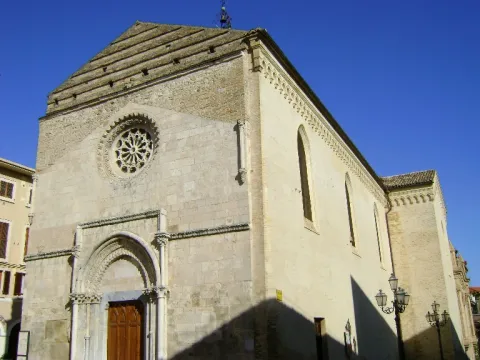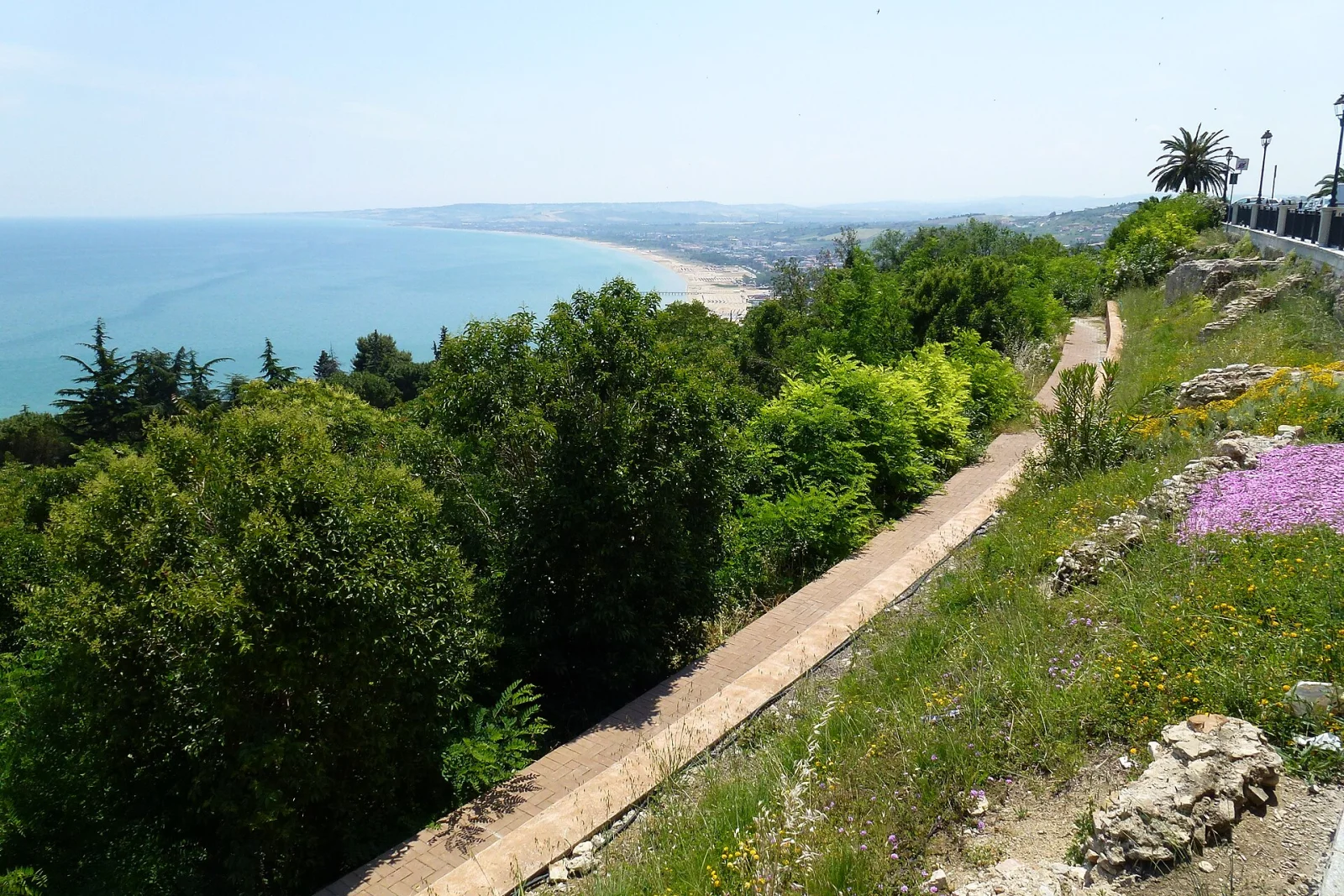
The church of Santa Maria delle Grazie, also called Madonna delle Grazie, stands at the end of via Adriatica, in Vasto, in the area of the landslide of 1956, facing the viewpoint that bears its name. The date of construction, 1536, is given by an inscription on the arch of the façade. It is thought to have arisen from popular devotion for the wonders attributed to the Virgin during the plague of 1529; together with the church a garden and a cell for hermits were laid out. On 1 August 1566 it was set on fire by the Turks, and two years later it was restored by Ferrante De Vito.
What to see
The historian Luigi Marchesani described it as a temple on a circular plan, with a room on the ground floor and a space on the upper floor meant as the hermit's lodging. The oldest part is that of the altar, with the painting of the Visitation, a votive offering; then come the choir, which separates the single nave from the sacristy, and the chapel of the Virgin of Graces. The style is Renaissance.
The church keeps a sixteenth-century wooden statue of Saint Bonaventure, which comes from the church of Sant'Antonio di Padova, and in the sacristy an eighteenth-century Holy Family by Nicola Tiberi.
Visiting
Opening and service times should be checked on the spot or with the parish.
Our editors' tip
Beneath this stretch of via Adriatica lies Roman Vasto: the baths of Histonium are spread along the slope from the church of Sant'Antonio as far as that of the Madonna delle Grazie, and near the latter are remains of the course of the Via Frentana-Traianea.