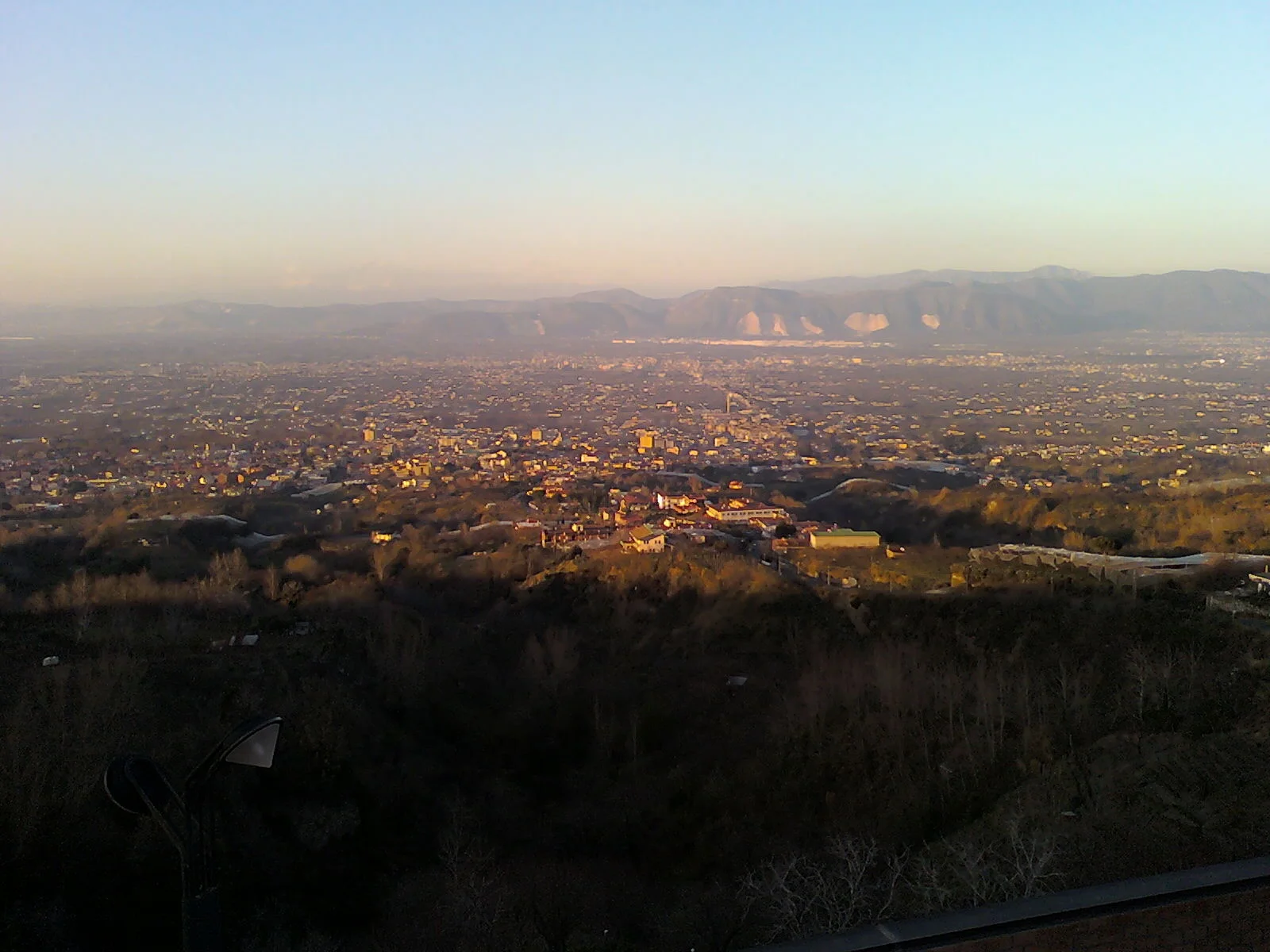
The so-called Villa Augustea, or Villa of Augustus, is a complex of Roman structures at Starza della Regina, in Somma Vesuviana, on the northern slopes of Somma-Vesuvius. The name comes from the possibility that the buildings were part of a property of the family of Octavian Augustus, who according to the ancient sources died in the neighbourhood of Nola. The first investigations date from the thirties of the twentieth century, after the chance discovery of a large mass of masonry that was getting in the way of the planting of trees; the structures were then abandoned and little by little buried. Since 2002 the University of Tokyo has been excavating the site, in collaboration with other Italian and foreign research institutes.
What to see
The excavations, still under way, are bringing to light a large complex laid out on terraces, buried in late antiquity by two eruptions that took place between 472 and the beginning of the sixth century. The structures are arranged around a large polygonal exedra of tuff and brick, with a white mosaic floor and walls faced with painted plaster and stucco. On the north it is closed by a Corinthian colonnade; it is crossed by a monumental structure of depressed arches, on piers of lava blocks, with cornices and architraves of white limestone. Along the sides run walls with niches, which were originally adorned with statues; around are other rooms, among them two apsed halls decorated with mosaics and frescoes.
This complex is not of the age of Augustus: the excavation data say that it is later and that it was occupied, with various transformations, until the second half of the fifth century; perhaps it was the vestibule of a large villa. But in the campaign of 2023 the dig went down into an older room, whose walls prove to have been demolished all at the same level by a sudden volcanic event: radiocarbon analysis has linked it to the eruption of AD 79, and the building to which the room belongs therefore already existed before. It had a complex heating system, with at least four furnace mouths.
Visiting
It is a still active excavation area: whether and when it is open to visitors should be checked with the town council of Somma Vesuviana before going.
Our editors' tip
Part of the finds, above all fragments of sculpture, is not here: it is displayed or stored at the Archaeological Museum of Nola, which is worth putting on the same trip.


