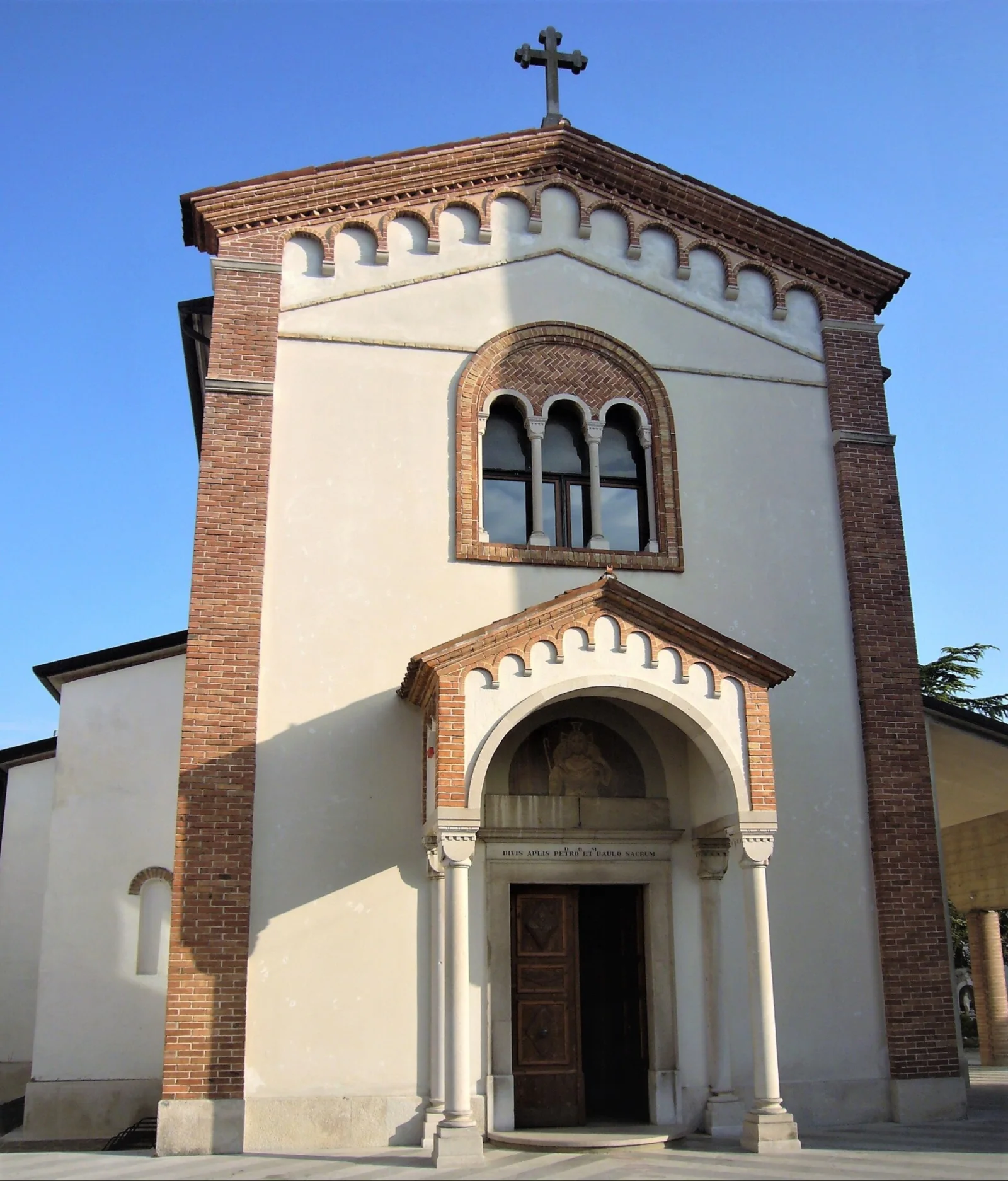
Staranzano

Province: Gorizia · Region: Friuli Venezia Giulia · Population: 7,199 · Postal code: 34079

The arms of Staranzano show a hackberry tree on a green hill, with a black falcon perched on top. The falcon never existed. During the heraldic study somebody was examining a stamp printed on a conscription record of 1922, took the top of the tree for a bird, and — since in those years Staranzano was joined to Monfalcone — concluded that it could only be a falcon. So a misreading ended up in the comune's arms, where it still is. The tree, on the other hand, is real and has a date: it is the Bobolar, a great hackberry, planted in the square in 1872, and it is the symbol of the town.

The name comes from a Latin estate name, Terentianus, that is from the land of a certain Terentius, and it is first attested in the fourteenth century in the form Stranzano. Staranzano obtained its communal independence in 1848, after the risings in Vienna; then it ran into money trouble and itself asked to be joined to Monfalcone, and it detached itself for good only in 1907, by a decree of the emperor Franz Joseph. Something similar happened to the language: Slovene, historically present all over the Bisiacaria until the slow venetization of the fifteenth and sixteenth centuries, had died out here completely, and it came back with the shipyards — work at Monfalcone and the devastation of the Great War on the Carso pushed people down from the plateau towards the plain of the Isonzo, and in the linguistic census of 1921 Slovene mother-tongue speakers appear again. Towards the sea there is the nature reserve of the mouth of the Isonzo, and out in the fields a Roman villa that carries the name of a freedwoman, Peticia.

🎉 Festivals and feasts in Staranzano 1

Patron saint festival In 256 days

Saints Peter and Paul the Apostles, patrons of the Sagra de le Raze

📅 Every year, on 29 June; the Sagra de le Raze has run for over 200 years, late August-early September

Staranzano celebrates Saints Peter and Paul the Apostles between late June and early July, in the church dedicated to them. For over two hundred years, between late August and early September, the traditional Sagra de le Raze has been held in the town centre.

What's around

Straight-line distances from the town centre. Tap a point to open its page.