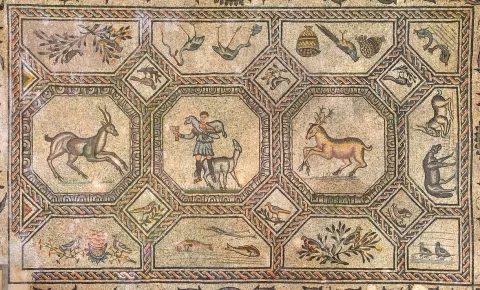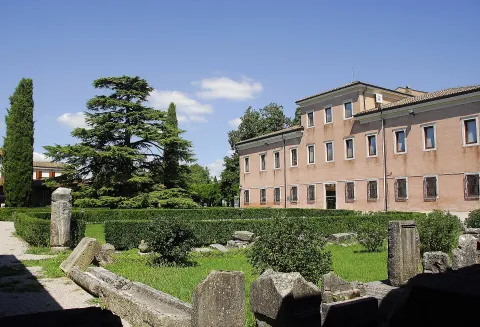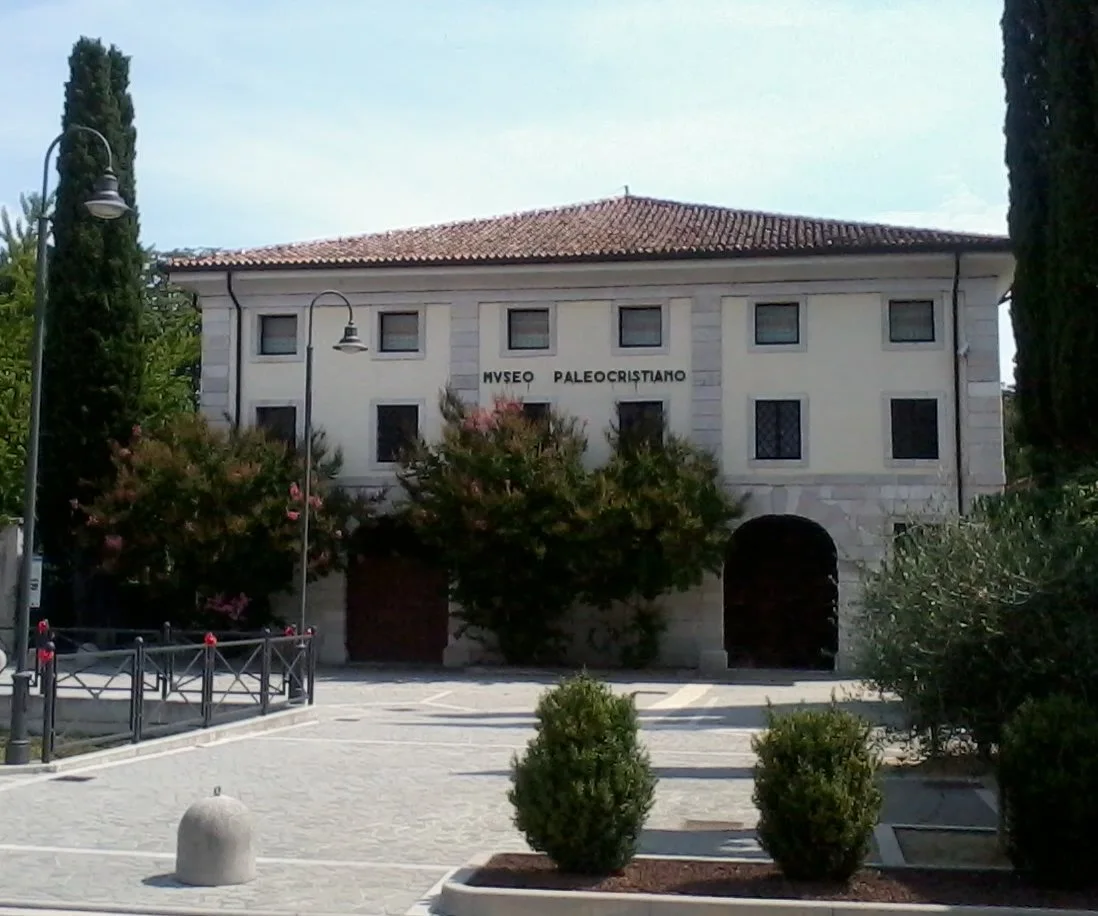
Under this museum lies a great Christian basilica built around 345, with mosaic floors. Over it, in the seventh century, rose a convent of Benedictine nuns; when the convent was suppressed, the church building was sold to private owners and turned into a folador, a room for making wine. The mosaics came back to light under that floor in 1895.
What to see
The museum gathers the Christian material of Aquileia from the fourth century to the patriarchal age: inscriptions, sarcophagi, architectural fragments and above all the floor mosaics, walked over on raised gangways. The funerary inscriptions are the most eloquent part, because they carry names, trades and formulas of ordinary people.
The complex became a museum in 1961, the last of a long series of transformations: basilica, convent, noble property, wine cellar, museum. Each use added and removed something, and the excavations have had to untangle the layers one from another.
Visiting
The museum is in the Monastero district, ten minutes on foot from the basilica of Aquileia; entry is free, with short hours to be checked, and it is less visited than the other sites of the town. An hour.
Our editors' tip
Think about the fact that those mosaics were saved because wine was made above them. Buildings survive when they are useful for something: a roof kept up by whoever uses it protects the floor beneath better than any protection order. Many of the ancient things we see exist for this reason, not out of respect.