Aquileia today is a village of a few thousand people among the fields of Friuli. Two thousand years ago it was one of the largest cities of the Roman empire: a river port, a bridgehead towards the Danube, the junction of the roads going north and the end of the amber route, which brought the fossil resin of the Baltic all the way here. The national archaeological museum keeps what a metropolis leaves behind when it stops existing.
What to see
The amber collection is the main reason to visit: here craftsmen worked the raw material arriving from the north and made from it portraits, amulets, lids of small jars, figurines a few centimetres high, yellow and transparent, among the most delicate things left to us from ancient craftsmanship. Beside them are the collection of engraved gems, the glass, the bronzes and the coins.
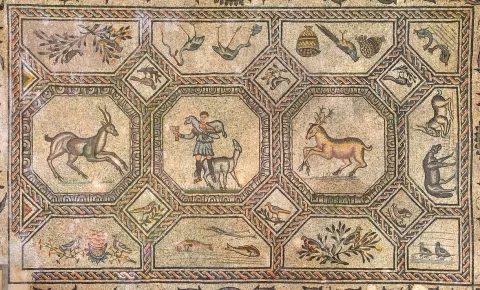
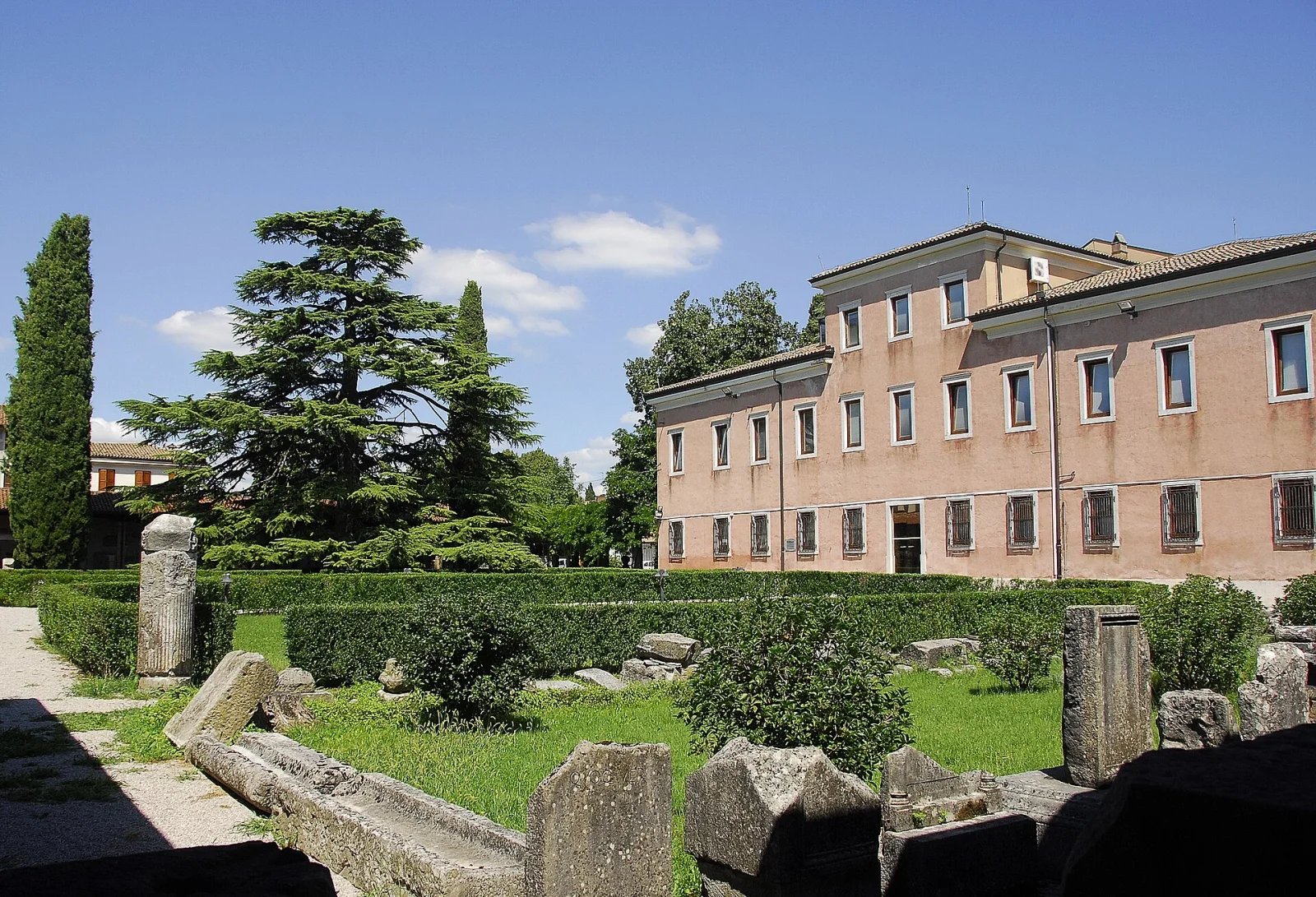
Then there are the sculptures: portraits of private citizens, with the real faces of people who did business in this city, and the great funerary reliefs. In the garden and in the lapidary gallery hundreds of inscriptions, altars and sarcophagi are lined up, read one after another like a list of names. And there are the mosaic floors, lifted from the houses, with their geometric patterns and sea scenes.
Visiting
The museum is on via Roma, a step from the basilica; ticketed, often combined with the other archaeological areas of the site, normally closed on Mondays. An hour and a half. The Roman forum, the river port and the other excavated zones are in the open air, free and a few minutes' walk away.
Our editors' tip
Do the museum before the basilica, not after: when you then go in to see the fourth-century mosaic floor, the largest in the Christian West, you will know who commissioned it and with whose money. And in front of the ambers go close to the glass: they are tiny objects, and you have to look closely to realise they are portraits.