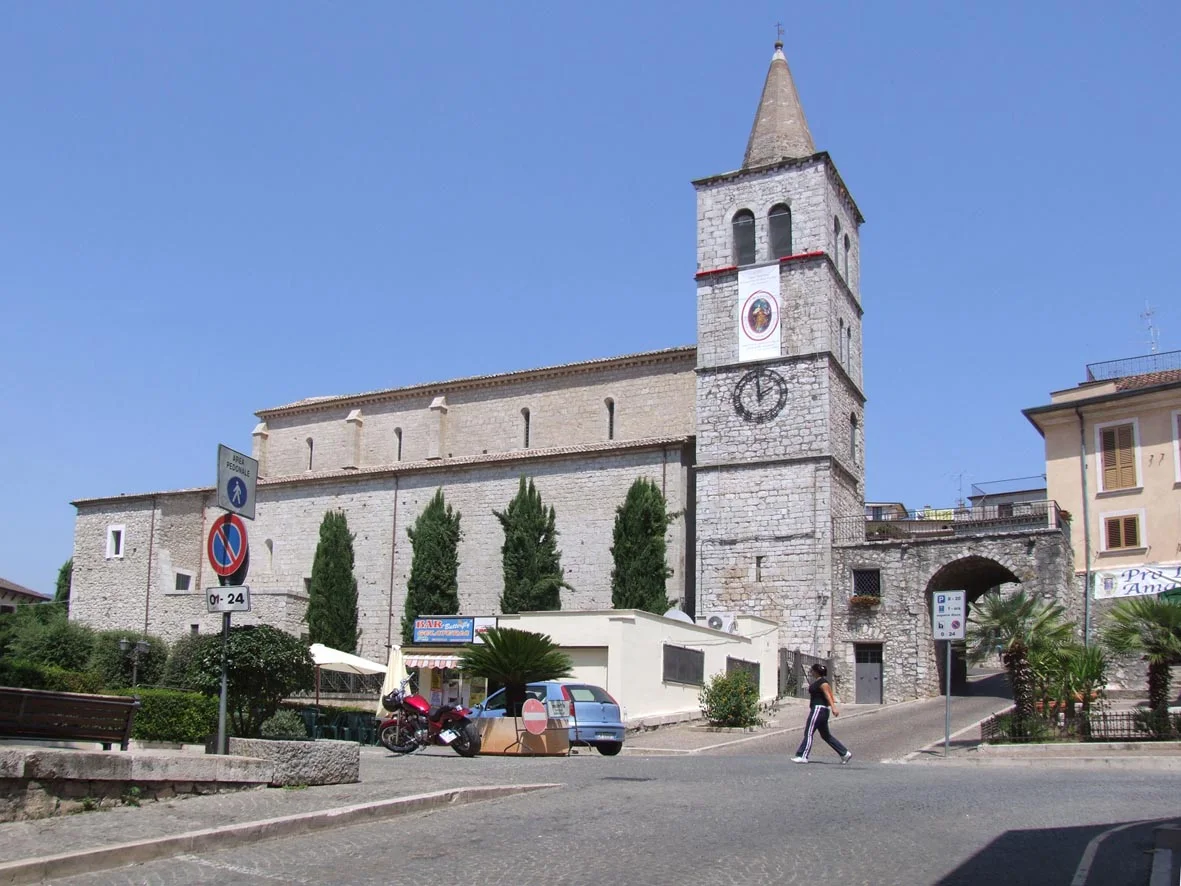
Until 1872 the village was called San Lorenzo in Campagna, and before that Castrum Sancti Laurentii; then it took the name of the river that runs in its valley, the Amaseno, which Virgil in the Aeneid addresses as «Amasene pater». Its first written record is of 1125 and stands in the Annales Ceccanenses: pope Honorius II led a military expedition in person, took Trevi and Maenza, burned Roccasecca, Giuliano, Santo Stefano and Prossedi, and took San Lorenzo from the counts of Ceccano, who, beaten, swore fealty to him. In 1165 the village was burned again, by the troops of the king of Sicily.
The wars between Ceccano, Caetani and Colonna lasted for centuries and fed the brigandage. The best documented case is that of Bartolomeo Vallante, called Catena, who alternated his own robberies with paid «services» — mostly killings — carried out on behalf of the local lords: besides money, they guaranteed him something more valuable, impunity within their own fiefs, and among his clients were Caetani. When Sixtus V set out to end it, twelve gallows were soon standing along the short stretch of road between Frosinone and Anagni. In the church of Santa Maria a phial is kept with the blood of Saint Lawrence, which by tradition liquefies every tenth of August.