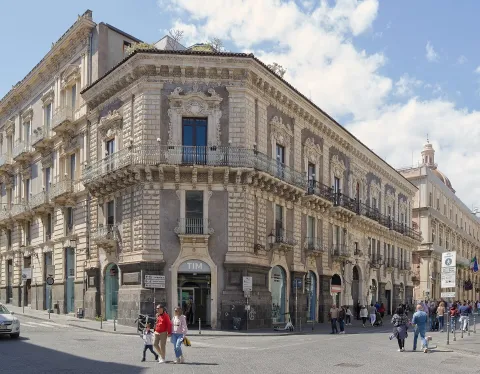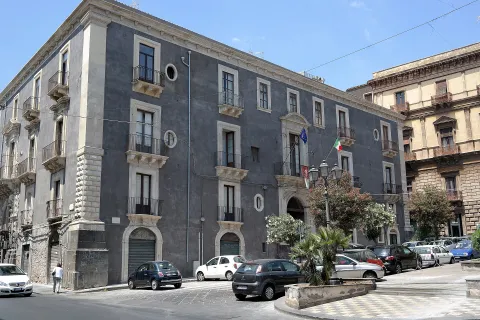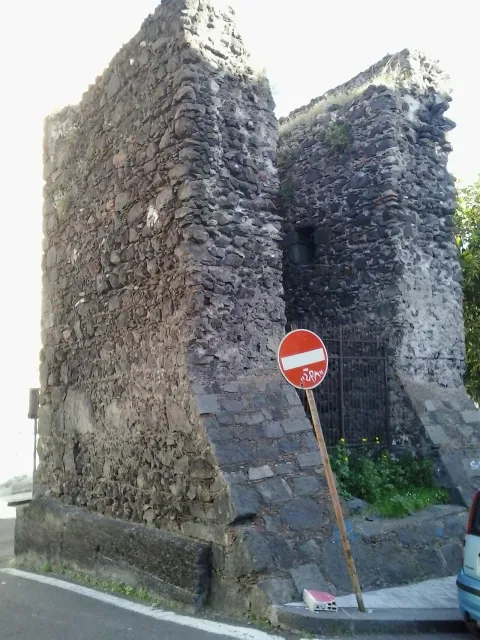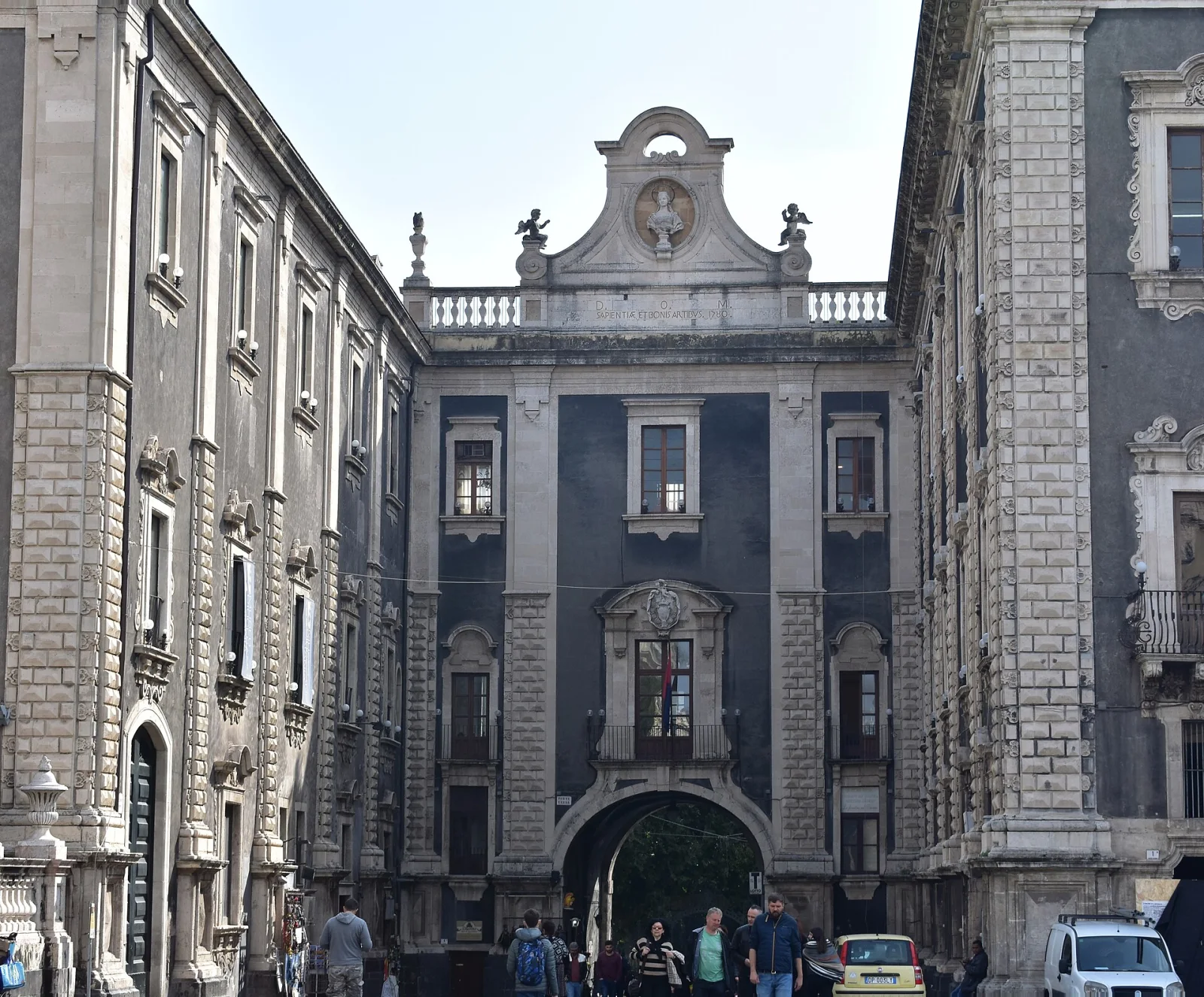
There was a time when the main street of Catania was not called via Etnea but via Uzeda, la rua Uceda. The name was that of a Spanish viceroy, and before him that of Uceda, a town of about two thousand inhabitants in the province of Guadalajara, in Castilla-La Mancha. Of that christening only this gate remains today.
What to see
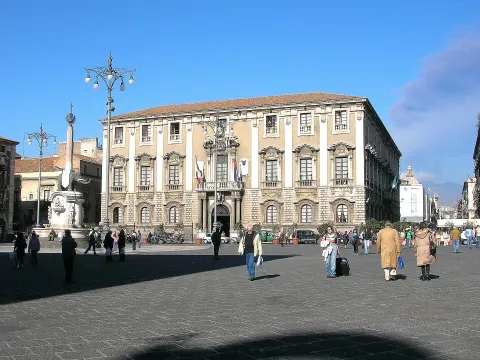
For anyone coming down via Etnea it is the exit south from piazza Duomo: it connects the seminary of the clerics with the archbishop's palace and the cathedral of Sant'Agata, and on the far side it opens onto via Dusmet, that is onto the low strip of the city towards the harbour. The less obvious point is that it opens in the sixteenth-century walls of Charles V. So it is not a gate born with the eighteenth-century Catania that surrounds it: it is a passage cut through an older fortification, which when the city was rebuilt found itself acting as the edge of the new square. The viceroy who gave it his name, Giovanni Francesco Paceco, duke of Uceda, governed the island in the years of the earthquake of 1693, the one that flattened eastern Sicily and out of which the city you see today was born.
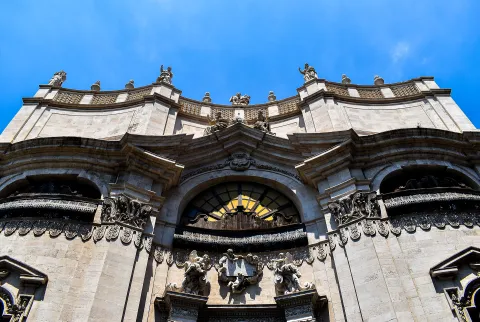
The façade does not play the part of the isolated triumphal arch. It repeats the design of the seminary of the clerics and works as a scenographic backdrop, holding together in a single frame all the buildings that face the square. It is architecture meant to be looked at from inside: a wall with a hole in it, treated like a stage flat so that whoever stands in the square does not notice that the square ends there.
Visiting
It is a passage, not a monument to visit: you walk under it, at any hour. On the via Dusmet side traffic and parked cars can be thick, so it is better to look at it from the square and cross it calmly. Five minutes, and it lies on the route of anyone going down via Etnea towards the harbour or the fish market.
Our editors' tip
Stop in the middle of the passage, under the vault, and count the paces it takes to get out: that thickness is the curtain wall of Charles V, and it is the only piece of fortification in this part of the city you can still cross with your body instead of reading it on a map. Then come out onto via Dusmet and turn round. From outside the gate stops being a backdrop and goes back to being what it was, a hole in a defensive wall: two faces of the same arch, a few paces apart.