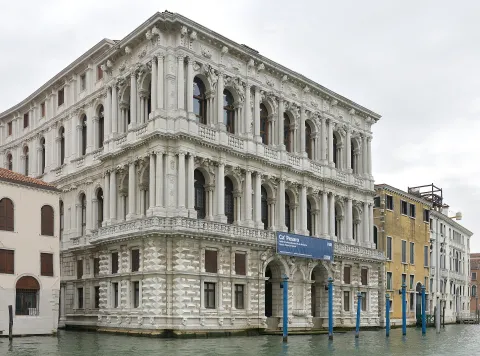
On the Grand Canal, just before the Accademia bridge, stand two joined palaces with the same name: the older part is of 1425, Gothic, with pointed windows; the one beside it was added at the end of the seventeenth century and holds a ballroom. Together they are the Venetian house that lodged more foreign writers and painters than any other, and so they weigh more than they seem to from outside.
What to see
From the water the difference between the two blocks reads clearly: on the left the flowery Gothic of Bartolomeo Bon, with its window groups and pierced stonework; on the right the large regular windows of the baroque, designed by Antonio Gaspari. The stuccoed ballroom is behind those windows, and in the nineteenth century it was the place people in Venice went in the evening.
When the Barbaro line died out the palace was bought by an American family, who lodged Henry James here: the writer worked in these rooms, and this house served him as the model for the Venetian palace of one of his novels. English-speaking painters, musicians and poets passed through as well, and the great room was portrayed in a famous painting by John Singer Sargent.
Visiting
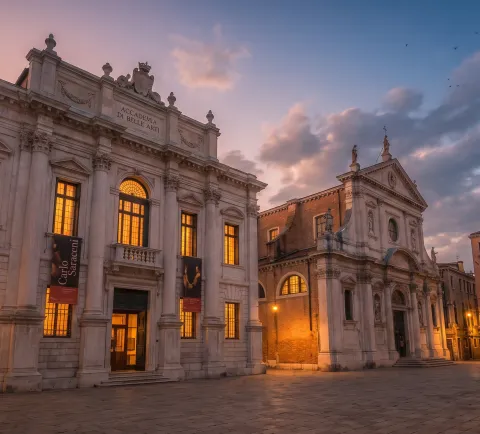
The palace is private and cannot be visited: you see it from the Grand Canal, best from the number one vaporetto or from the Accademia bridge looking downstream. On foot you reach it from campo San Vidal, but the good front is the one on the water. Ten minutes.
Our editors' tip
Take the vaporetto and stand at the bow on the stretch between San Samuele and the Accademia, watching the right bank: the two Barbaro go past one after the other and in three seconds you see the jump from one century to the next, the pierced stone and then the square windows. It is the right way to look at the palaces of this city, which were built to be seen from the water.