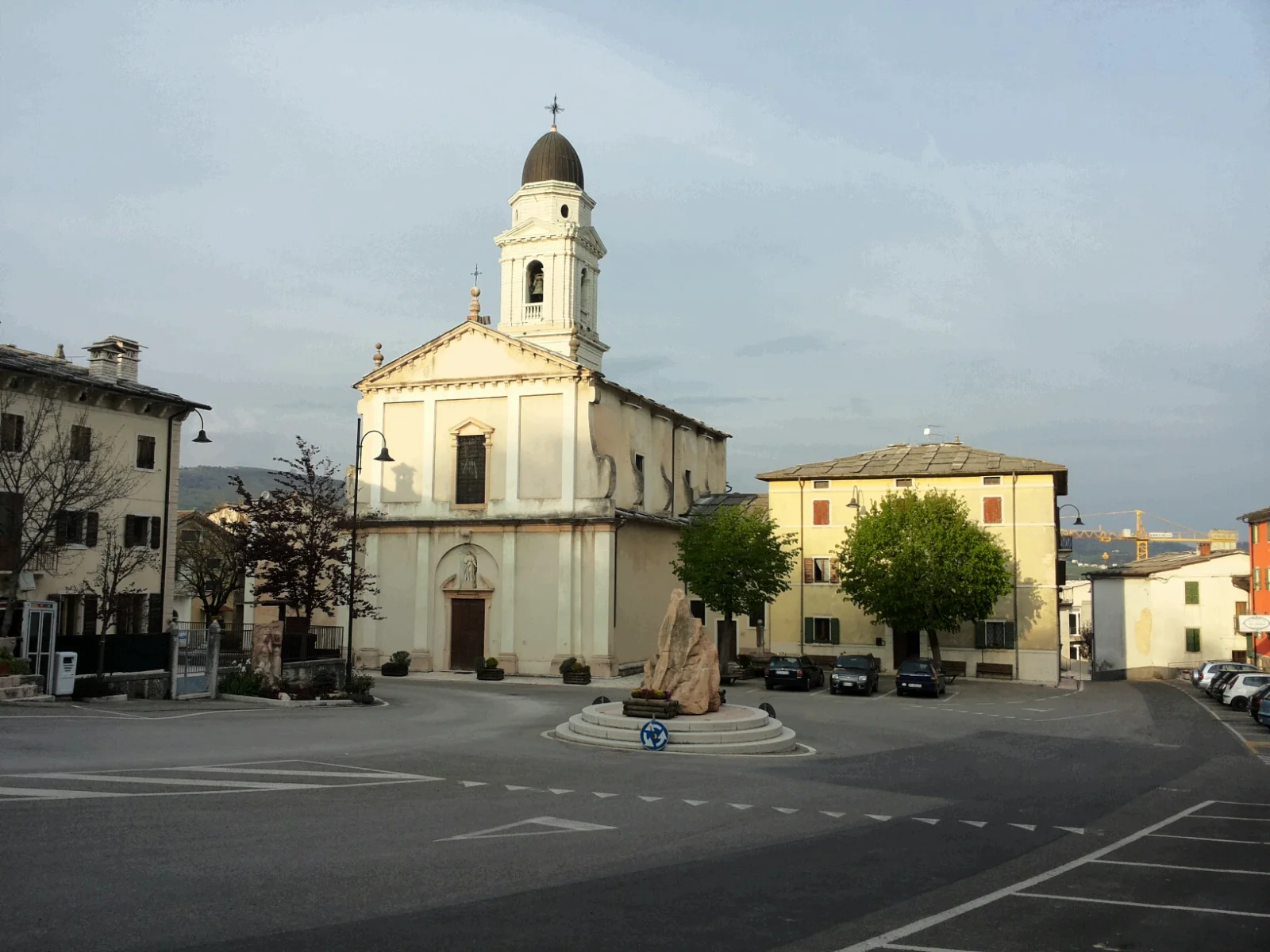
What makes this comune of the Lessinia famous lies almost entirely underfoot or inside the rock. North of the Corno d'Aquilio opens the Spluga della Preta, a system of karst caves explored to a depth of about a thousand metres, which for years was reckoned the deepest cave in the world. To the southeast, sheer above the vajo della Marciora, is the bridge of Veja: a natural stone bridge, what remains of the slow erosion of the back of a collapsed cavern. And in the quarries of scaglia rossa, worked here for centuries, they go on recovering fossils of a Cretaceous sea: sharks up to six metres long, rays, turtles, mosasaurs. To keep them together the comune has a palaeontological and prehistoric museum.
This very richness, however, also produced a memorable fraud. On Monte Loffa enormous quantities of worked flints were found, held to be genuine and distributed across half of Europe; then it turned out that they had been made by local people and planted on purpose in the sites where digging was going on. The village's name, fortunately, is simpler: Alfaedo means «at the beech wood» and is attested from 1285 as Faetum, while Sant'Anna is the patron saint. The first written rules of the area are in a parchment of 1246, kept in the state archive of Verona, which fixed the boundaries of the Valpolicella. And one modern thing: in the hamlet of Cerna is the seat of Telepace, the first Italian Catholic television, from whose experience, and in connection with it, the Vatican television later arose.