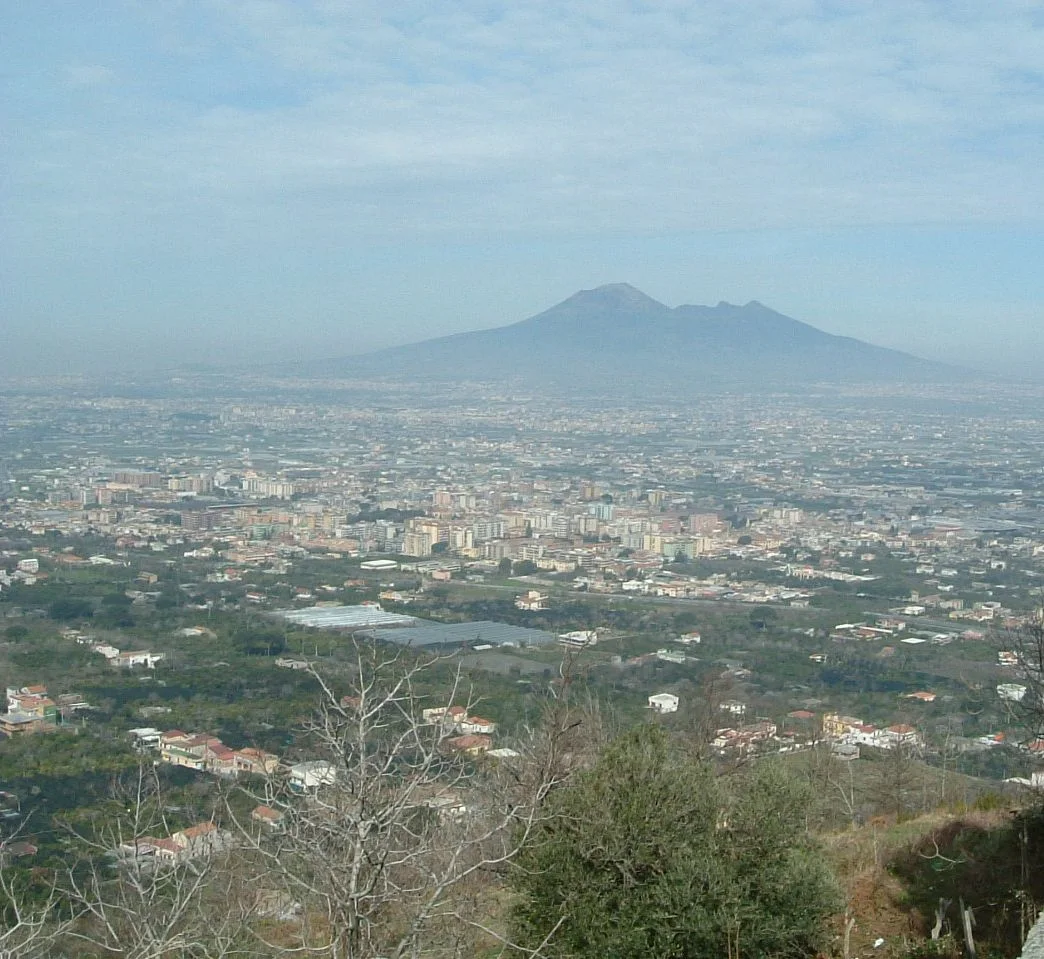
Angri means standing water: the ancient name was Angra, and it meant the marshes that formed along the banks of the Sarno — and a district on the edge of town is still called Paludicella. In the Tabula Peutingeriana the place appears as Ancra. Nearby, in October 552, the battle of the Monti Lattari was fought, the last act of the Gothic war: the Byzantine general Narses against Teia, the last king of the Goths, who lost the battle and his life with it. In a place they call Pizzauto, or the Goths' Well, the skeletons of some Gothic soldiers are said to lie, thrown there by the victors.
After that battle the people of Angri raised, at the centre of the fortified town, a watchtower that signalled to the others across the territory. It is still there, but you cannot see it: the Doria princes restored it, lowered it and in the end absorbed it into the keep of the castle. The Doria held Angri from 1613 until the abolition of feudalism, made it a principality and left it the castle in the Vanvitelli manner, with superimposed loggias and pincer stairs in black stone, the pavilions and the square that bears their name. There is also a quarter called borgo Risi, after the local nobleman who in 1321 took those lands and built a chapel on them. The rest is the Nocera and Sarno plain: here the San Marzano tomato built an industry, and the canneries of Angri filled for a century the larders of Italy and of the emigrants. Pompeii and the Amalfi coast are ten minutes away.