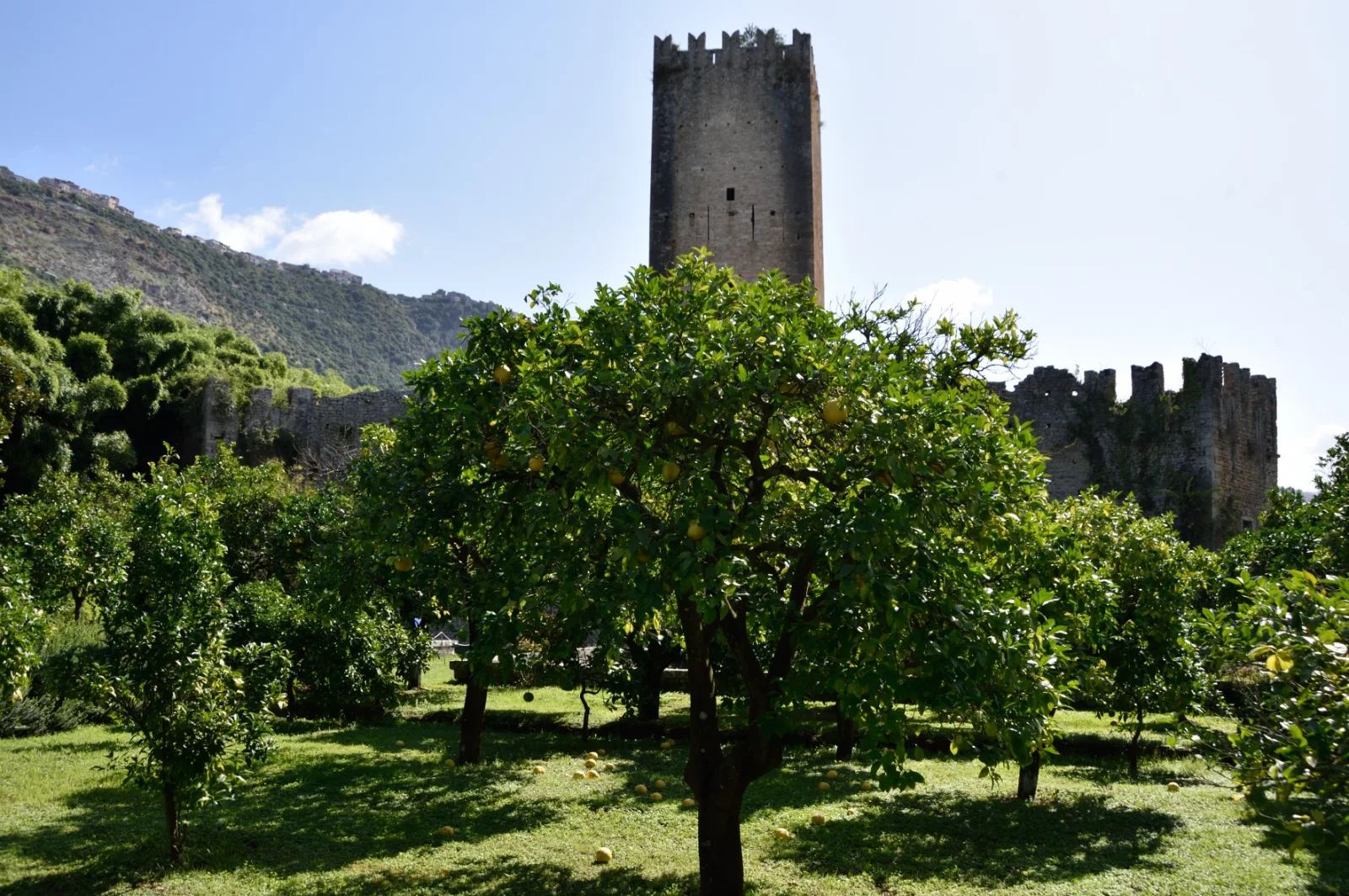
In 1921, Gelasio Caetani began planting botanical specimens among the malaria-ridden ruins of a 14th-century ghost town, laying the foundations for an English landscape garden. Located in Cisterna di Latina on the Pontine Plain, the Garden of Ninfa spans 8 hectares within a wider 105-hectare natural monument. The site takes its name from a classical nymphaeum on a small island in the lake, a temple dedicated to water nymphs documented by Pliny the Younger. Ninfa evolved from an agricultural Roman settlement into a wealthy medieval hub, profiting from tolls when the nearby Appian Way flooded. Its golden age came after 1297, when Pietro Caetani purchased the town for 200,000 gold florins, expanding its walls to 1,400 metres and building hospitals and mills. The town was completely destroyed by pickaxes in 1381 during a conflict sparked by the papal schism between Pope Urban VI and the Caetani family. Following an aborted 16th-century garden project by Cardinal Nicolò III Caetani and architect Francesco Perugino, the site was reclaimed in the 20th century. Gelasio, his mother Ada Bootle-Wilbraham, and eventually Lelia Caetani engineered the modern English layout, turning the ruins into a summer retreat that hosted writers like Boris Pasternak and Gabriele D'Annunzio.
What to see
The estate integrates medieval masonry with over a thousand plant varieties, all thriving in a highly humid microclimate created by frequent rains and the river Ninfa. Visitors encounter the 12th-century castle and the tower, infamous for the 1447 massacre when Onorato III Caetani threw prisoners from its height. Religious ruins include the 10th-century Santa Maria Maggiore—the exact site where Pope Alexander III was crowned in 1159—and the 11th-century Church of Saint John, which retains its semicircular apse and traces of original frescoes. The ruins serve as trellises for a massive collection of rambling and climbing roses, including the yellow Rosa hugonis, the pale pink 'Complicata', the apricot 'Gloire de Dijon', and the vigorous Rosa filipes 'Kiftsgate'. The main avenue is lined with cypresses, weeping cherry trees, Himalayan pines, banana trees, and lavender. In the rock garden, golden alyssum, Iberis, and pomegranates grow. Near the bridges and riverbanks, the flora shifts to purple-flowered Clematis armandii, climbing hydrangeas, Liriodendron tulipifera, papyrus, and Chinese bamboo, with Magnolia stellata planted directly in front of the castle.
Visiting
Administered by the Roffredo Caetani Foundation, established by the last heir Lelia Caetani, the garden receives approximately 70,000 visitors annually. It is open to the public only at set times between April and November. Independent wandering is not permitted; the garden can only be visited with a guide, following a strictly prescribed route.
Our editors' tip
Look closely at the river and lakes, which have functioned as a WWF wildlife sanctuary since 1976. The site sits on a major migratory flyway from Africa to Europe. The waters hold the rare Mediterranean trout (Salmo cettii), while the 15 hectares of reestablished native vegetation provide nesting grounds for 152 bird species, including lapwings, herons, and gadwalls.


