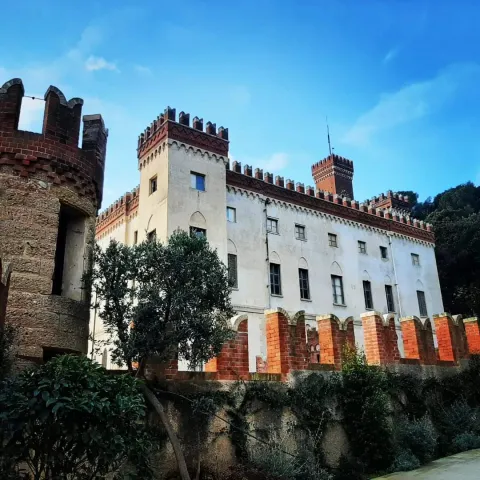
The Torrione went up between 1563 and 1564, under Genoese rule, right behind the beach: a circular bastion meant to serve as a lookout post and, if needed, as a first line of defence. On the night of 1 to 2 July 1637 it was not enough. Pirates under the Algerian commander Ciribì put the village to fire and sword, wrecked the early church of Saints John the Baptist and Eugene, killed about thirty inhabitants and loaded some 300 more onto ships bound for Algeria.
What to see
What is left to look at is the sixteenth-century coastal tower: circular in plan, planted on the shore where the coast is low and the horizon can be scanned with the naked eye. Genoa had taken direct control of Ceriale during the 14th century, after the bishops of Albenga and then the town of Albenga itself, and the Torrione was the answer to an exposed shoreline: a garrison built to raise the alarm rather than to withstand a siege, that is, to send people running inland in time.
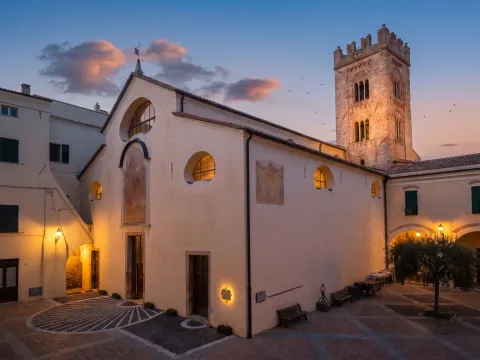
The parish church of Saints John the Baptist and Eugene, in the old centre, carries the same dedication as the church wrecked by the pirates and holds a 15th-century crucifix that Ceriale calls the «Cristo dei Turchi», the Christ of the Turks. The ransom of the deported was handled by the ransom confraternities on behalf of the families: the town of Albenga and the Genoese state, faced with the sums demanded, kept their distance.
Visiting
The Torrione stands on the seafront, next to the beach, within walking distance of anywhere in town; state road 1, the Via Aurelia, crosses Ceriale and links it to Albenga to the west and Borghetto Santo Spirito to the east. The panoramic pedestrian walkway towards Borghetto Santo Spirito also starts on this side: 467 metres, under construction from October 2016 to the beginning of 2025, and it came with a complete redesign of the seafront areas. It is the easiest way to see the bastion from the sea side, the side the ships came from.
Our editors' tip
Go in the first days of July if you can: the night of 1 to 2 July is the anniversary of the raid, and looking at the sea from that spot with that date in mind changes the view. We would not take access to the interior for granted: the Torrione reads well enough from outside, walking around it from the beach, in the low light of late afternoon. Then we would climb into the old centre as far as the parish church, in front of the crucifix: between those two buildings sits the history that matters in Ceriale, the alarm that was not enough and the ransoms that brought some of the captives home.