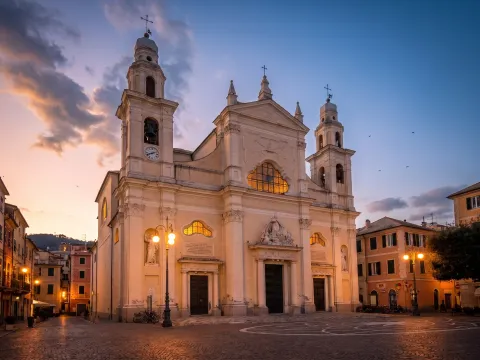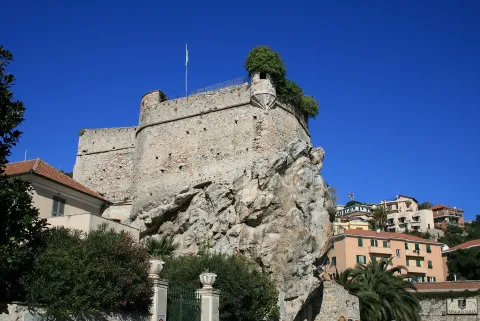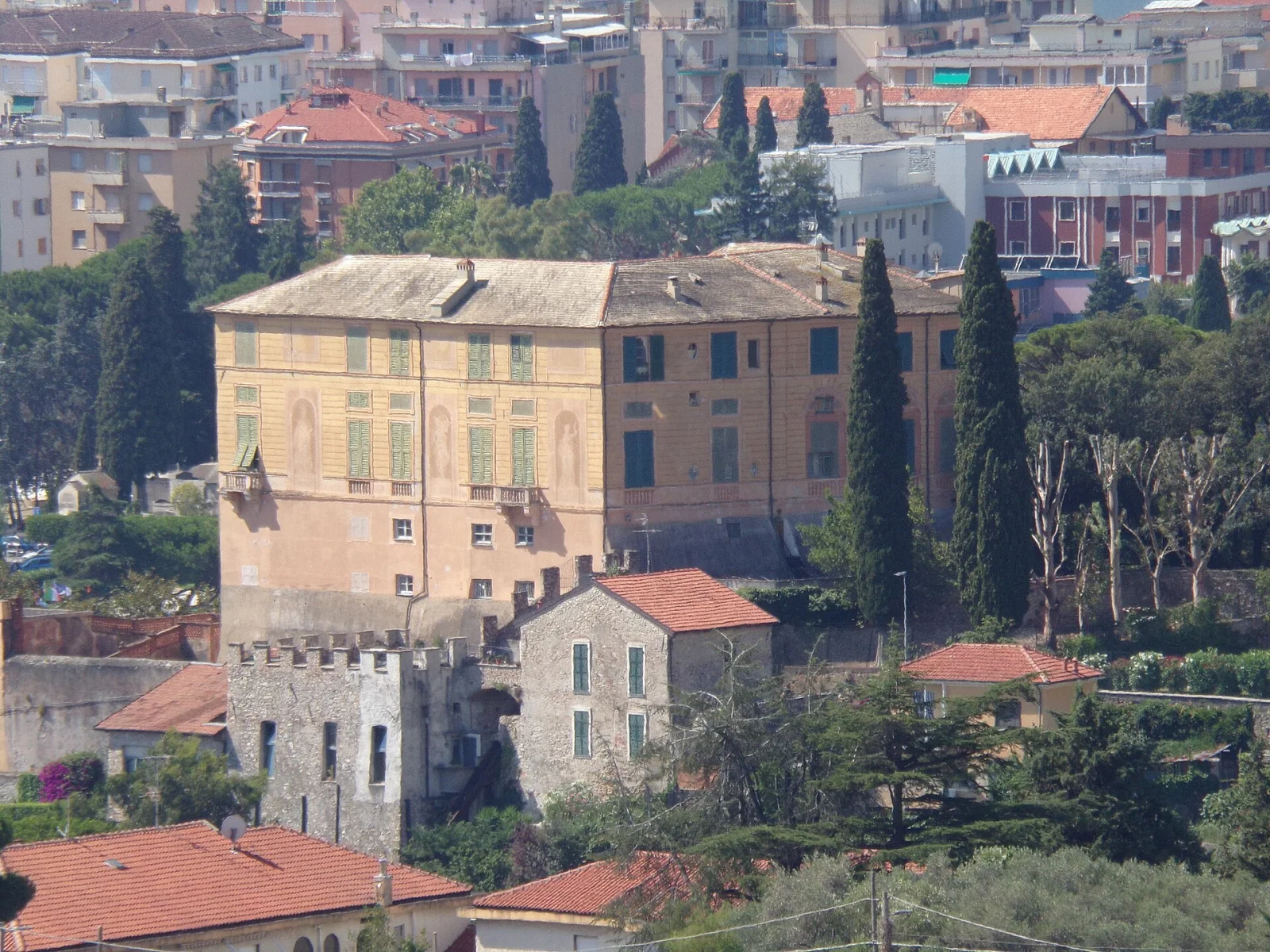
Anyone climbing up to Borgo Castello expecting arrow slits and battlements finds a lordly house instead: between the sixteenth and seventeenth centuries the Doria castle lost its military face and took on that of a Renaissance palace, and that is the shape it has kept.
What to see
It began as an outpost of the bishops of Albenga, a fortified stronghold set to watch the slope. On the date the sources part company: local tradition speaks of the twelfth century, while the national heritage record puts the first building at 1289. The Doria chapter opens in 1263, when bishop Lanfranco Dinegro invested Oberto Doria with the fief of Loano, which from then on stayed outside the direct orbit of the Republic of Genoa.
The castle then followed every turn of the family. It belonged to the Fieschi from 1505 to 1547; after the conspiracy of Gian Luigi Fieschi it returned to the Doria, who made it their residence in Loano just as the town was being redrawn as an imperial city. In 1736 ownership passed to the Kingdom of Sardinia. Its protection as a cultural asset is dated 6 March 1937.
Visiting
Borgo Castello is the medieval core of Loano, uphill from the modern centre: you walk up from the lower town through narrow paved caruggi, and the castle stands at number 4. From the town hall on Piazza Italia it is about ten minutes of climb. There are no published opening hours, so it is seen from the outside; for any special openings, ask at the tourist office before going up.
Our editors' tip
We would go up in the late afternoon, with the light low, and then look for the wider view from the San Damiano hill, from which the castle can be read as a whole. If there is time left, walk down into the centre to the pentagonal tower of 1602, raised to defend the town walls and linked to Palazzo Doria by a gallery: defence and display, the two faces of the Doria in Loano.