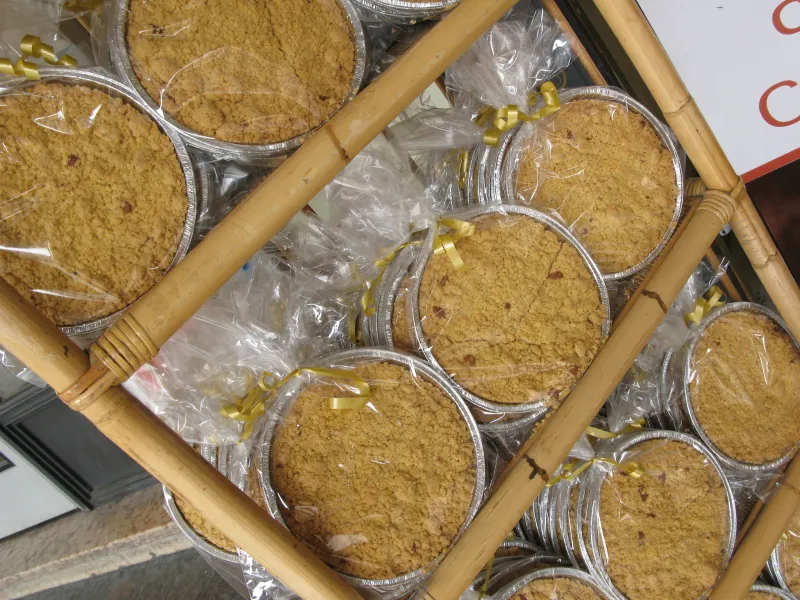
Sbrisolona crumbly almond and cornmeal cake, broken by hand
White and yellow flour, almonds, butter and sugar, broken by hand: sbrisolona is Mantova's cake, already served at the Gonzaga court.
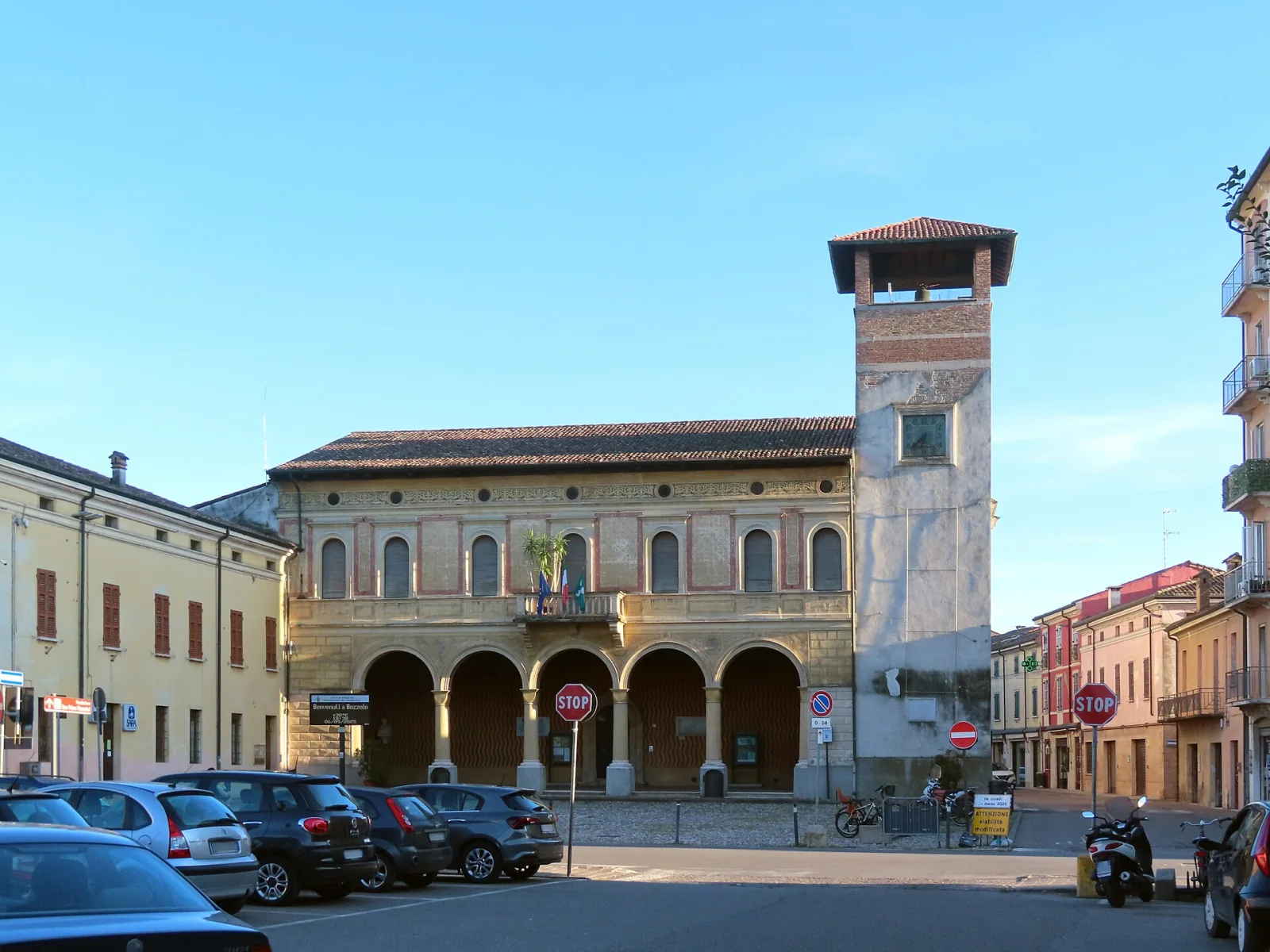
Read more →In 1594 Giulio Cesare Gonzaga obtained from emperor Rudolf II that the family's joint lordship become an imperial fief: for himself the title of prince, for Bozzolo the title of city and the role of capital. It was a sovereign state answering only to the Holy Roman Empire, and before that it had been run as a kind of condominium among the cadet Gonzaga, who from 1478 shared out the lands beyond the Oglio and administered them together. The principality lasted until 1746, when it passed to the Empire, which abolished its autonomy in 1771.
The population is four thousand one hundred and eighty-one, and it has been more or less the same for four centuries: by the end of the sixteenth century Vespasiano Gonzaga had already brought it close to four thousand, and it has not moved since. The arable land was never enough, and Bozzolo had to make things: the silk mill in the eighteenth century, crockery throughout the nineteenth, the hosiery works, and above all the light, fast carriages they called Baracchine, produced from the first half of the nineteenth century until after the Second World War. From 1932 to 1959 don Primo Mazzolari was archpriest here; during the German occupation he, together with the podestà Giovanni Rosa and the carabinieri marshal Antonio Sartori, sheltered Jews and political fugitives, among them the Tänzer family, helped to escape to Switzerland.
White and yellow flour, almonds, butter and sugar, broken by hand: sbrisolona is Mantova's cake, already served at the Gonzaga court.
Read more →Straight-line distances from the town centre. Tap a point to open its page.
The closest destinations covered by our editors, with straight-line distance.


