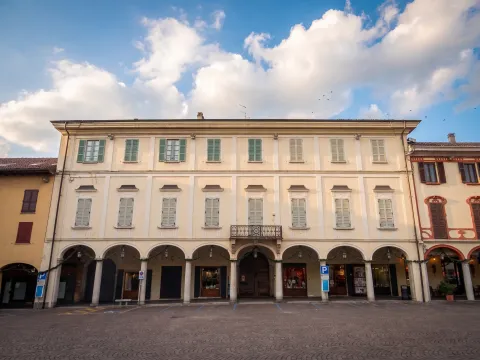
It is the largest ethnographic museum in the province of Novara: over 100,000 items and some forty reconstructed rooms, inside a municipal building that goes back to the seventeenth century. The collection was begun by Enzio Julitta, a writer and student of the local dialect, and on his death was carried on by his partner Caterina Palestrini.
What to see
The ethnographic section puts back together life of the late nineteenth and early twentieth century using the real furnishings of the period: the farmhouse kitchen, the bedroom, the middle-class parlour, the schoolroom, and then the shops and workshops of the craftsmen, with a rich display of clothing.
Visiting
The other half is archaeological, arranged with the heritage authority and the Egyptian Museum. From Pombia come finds of the Golasecca culture: funerary urns with their grave goods, brooches and ritual beer cups. From the necropolis of Loreto, a hamlet of Oleggio, come materials covering the second century BC to the fourth AD, that is the Celtic Vertamocori and then the Romanisation of the area.
Our editors' tip
The museum has carried this name since 1996, but the date to remember is 1969: that is when the collection came out of the drawers and became the permanent display of local mementoes. Everything inside it was brought by the people of Oleggio.