The castle of Volpiano is gone, but it is the reason the town enters the written record: the imperial diploma of 1014, by which Henry II took the property of the abbey of Fruttuaria under his protection, names «Vulpianum cum castellum et capella». For certain periods, up to 1300, the abbots of Fruttuaria lived in it.
What to see
What it looked like is known from a chronicler, Pietro Azario, who describes it as provided with a very high wall and then enlarged until it could hold five hundred armed men, perhaps meaning the whole fortified enclosure. Further rebuilding took place in the fifteenth century, when Volpiano belonged to the lords of Monferrato.
Visiting
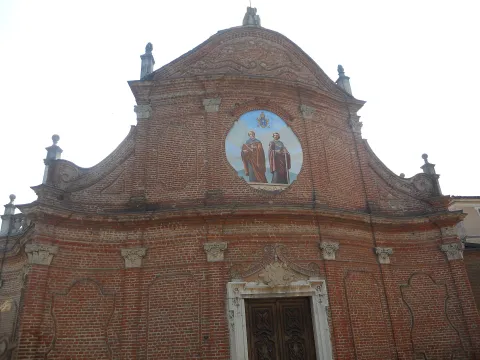
The military story ends in the mid-sixteenth century. In 1552 the French besieged Volpiano without success; in 1555 they came back, took it and destroyed the castle. Its stones, however, were not lost: with them, in 1731, the church of the Confraternita, the Gesia neuva, was built.
Our editors' tip
To understand what this castle was, go to the Gesia neuva and look at its masonry: it is the castle, taken apart and put back up in another shape. And every two years its capture in 1339 is staged again in the town.