An old tradition tells that this church was given to Padua by the people who were founding Venice. After 421 the communities colonising the islands of Rivoalto and Dorsoduro are said to have wanted to thank the Paduans, and the gift was a building dedicated to the fourth bishop of Rome. It is a legend, but one told by the oldest historians of both cities.
What to see
The church appears in documents in 1190 and in the fourteenth century became a parish; what made it grow were the guilds of the nearby markets, which commissioned private altars and restorations. From the end of the fourteenth century a victory of the da Carrara over the Scaligeri was commemorated here each year: a church of the square, tied to trade and to civic power.
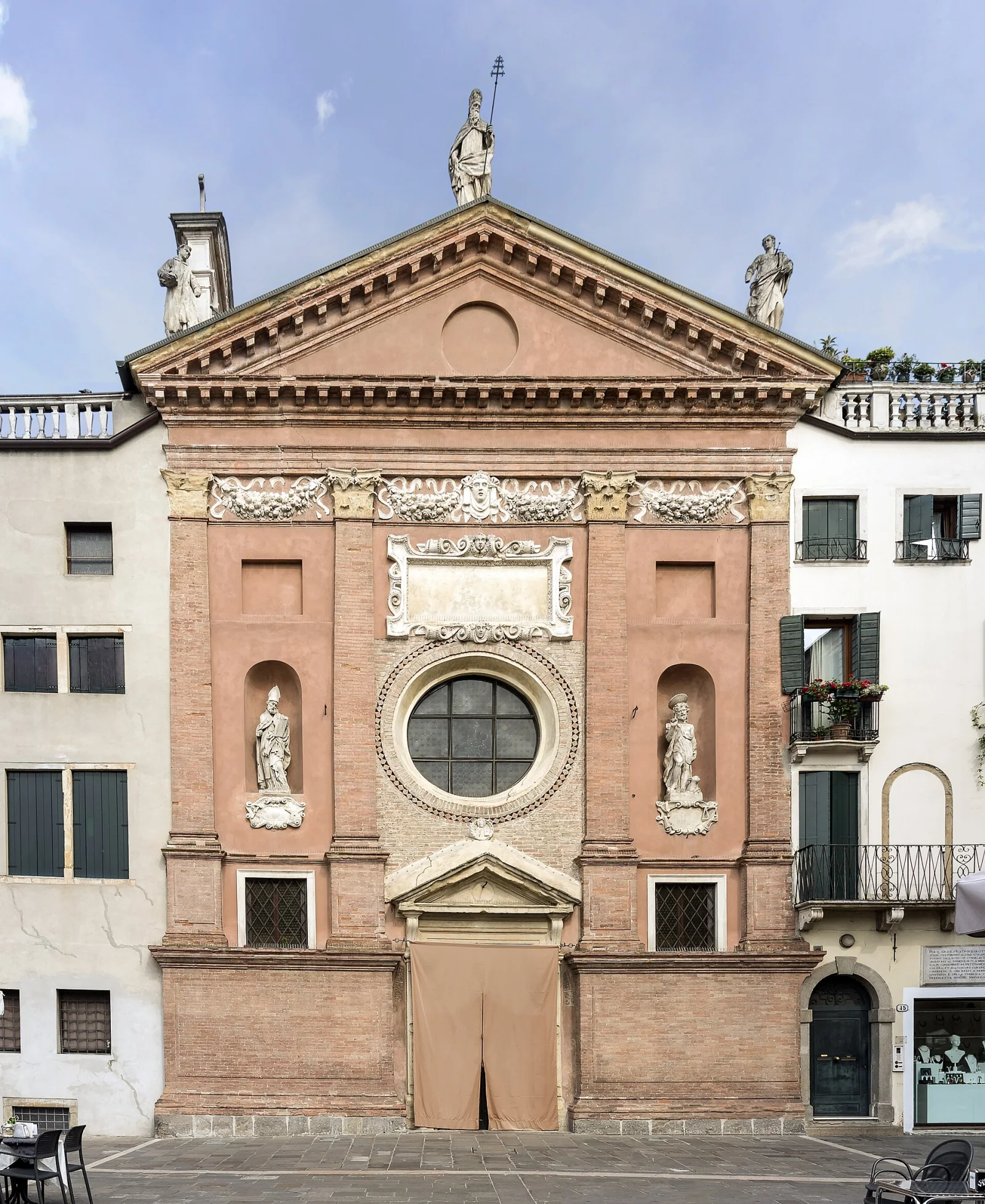
The medieval building was much altered in the sixteenth century, when the square in front was rearranged, and again in the two centuries after, so that little gothic is left in sight. Inside is buried Tiziano Minio, a Paduan sculptor of the Renaissance, and the altars keep the works paid for by the guilds.
Visiting
The church is in piazza dei Signori, under the clock tower, at the busiest point of Padua; free entry, with short hours tied to services, and you may well find it closed. A quarter of an hour.
Our editors' tip
Look at how the front lines up with the square: it is not the square that adapted to the church, but the reverse. When the Venetians remade this space to be the centre of power, the church was cut and realigned to fall into line with the other fronts. Cities reshape sacred buildings too, when it suits them.