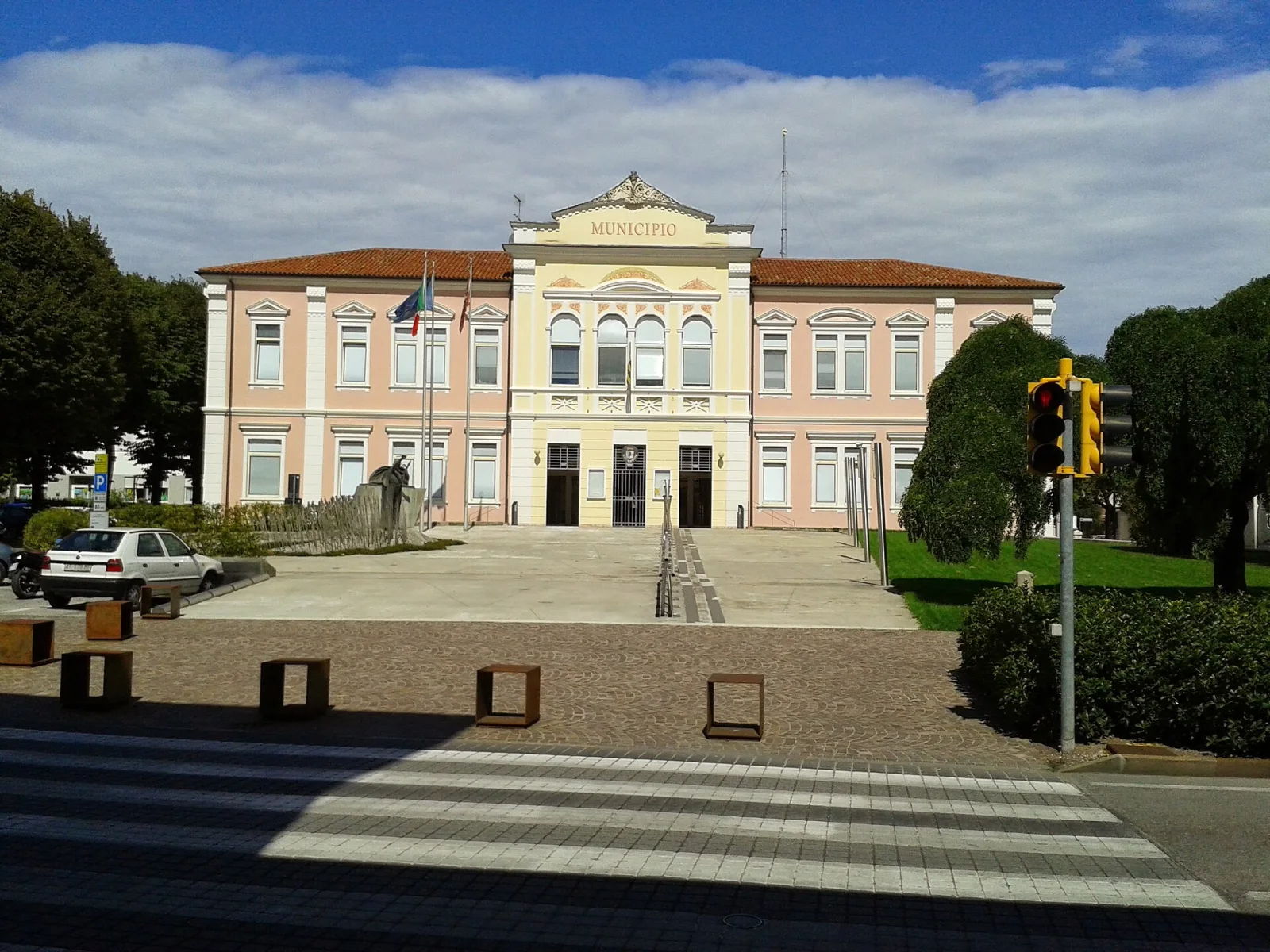
Rosà

Province: Vicenza · Region: Veneto · Population: 14,071 · Postal code: 36027

The name of Rosà is disputed between the water and the flowers. One explanation derives it from roxata, that is a roggia, an irrigation channel, and points to the canal that Francesco da Carrara had dug in 1336 to water the countryside south of Bassano; the other from rosada, from the roses flowering along that same channel. The comune has chosen the second: on the arms there are roses. The channels, though, remain the thing that made the village: dug between 1360 and 1370, they take their water from the Brenta at the Ponte Nuovo of Bassano and then divide into the Rosà, Munara, Dieda, Vica, Balbi and Moresca. Today their core is protected inside a rural park, the Parco Civiltà delle Rogge.

It was that land reclamation that gave birth to Rosà. Once drained, the countryside became a matter of dispute with Bassano, and the community formed first around the votive chapel of Sant'Antonio, in 1450, and then definitively as an autonomous comune in 1533. Earlier still, two Roman roads had passed through here: the via Postumia, ordered in 148 BC by the consul Spurius Postumius Albinus to link Genoa with Aquileia, and the via Aurelia, which ran from Padua to Asolo and Feltre. The Roman centuriation can still be read in the layout of the town's streets, which bear names like via Romana and via Colosseo.

🎉 Festivals and feasts in Rosà 1

Patron saint festival In 94 days

Saint Anthony the Abbot, patron of the land of the Palio delle Rose

📅 Every year, on 17 January; in summer the town districts compete in the Palio delle Rose

Rosà celebrates Saint Anthony the Abbot on 17 January. In summer, the town's districts, including Borgo Tocchi, Ca' Dolfin, Ca' Minotto, Carpellina, Lunardon, Nuovo Oratorio, Sant'Antonio and Tigli-Matteotti, compete in two amateur football tournaments and the Palio delle Rose.
🍝 The flavours of Rosà

Everything to eat in Rosà →

Main course

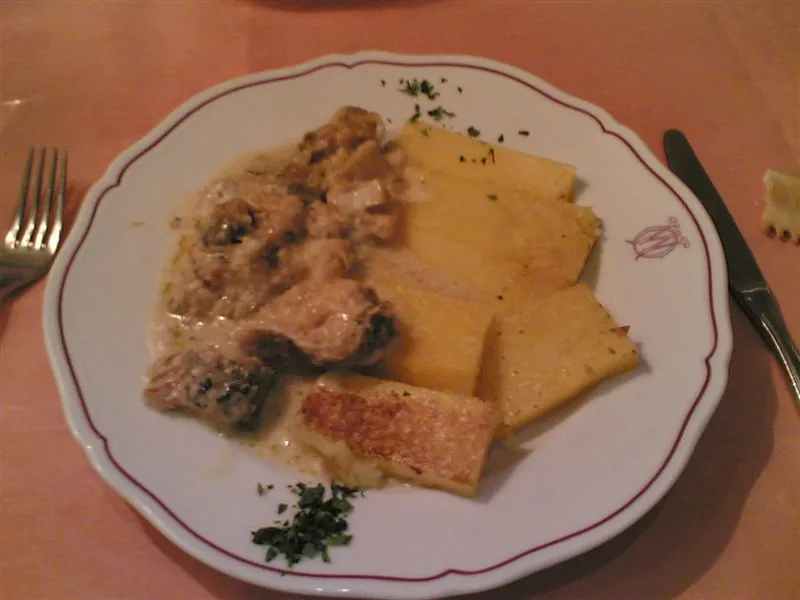
Baccalà alla Vicentina stockfish slow-cooked with milk, oil and anchovies

Stockfish, milk, oil and anchovies, cooked for hours over the lowest heat: baccalà alla vicentina arrived from Norway with a shipwreck in 1432.

Read more →
What's around

Straight-line distances from the town centre. Tap a point to open its page.