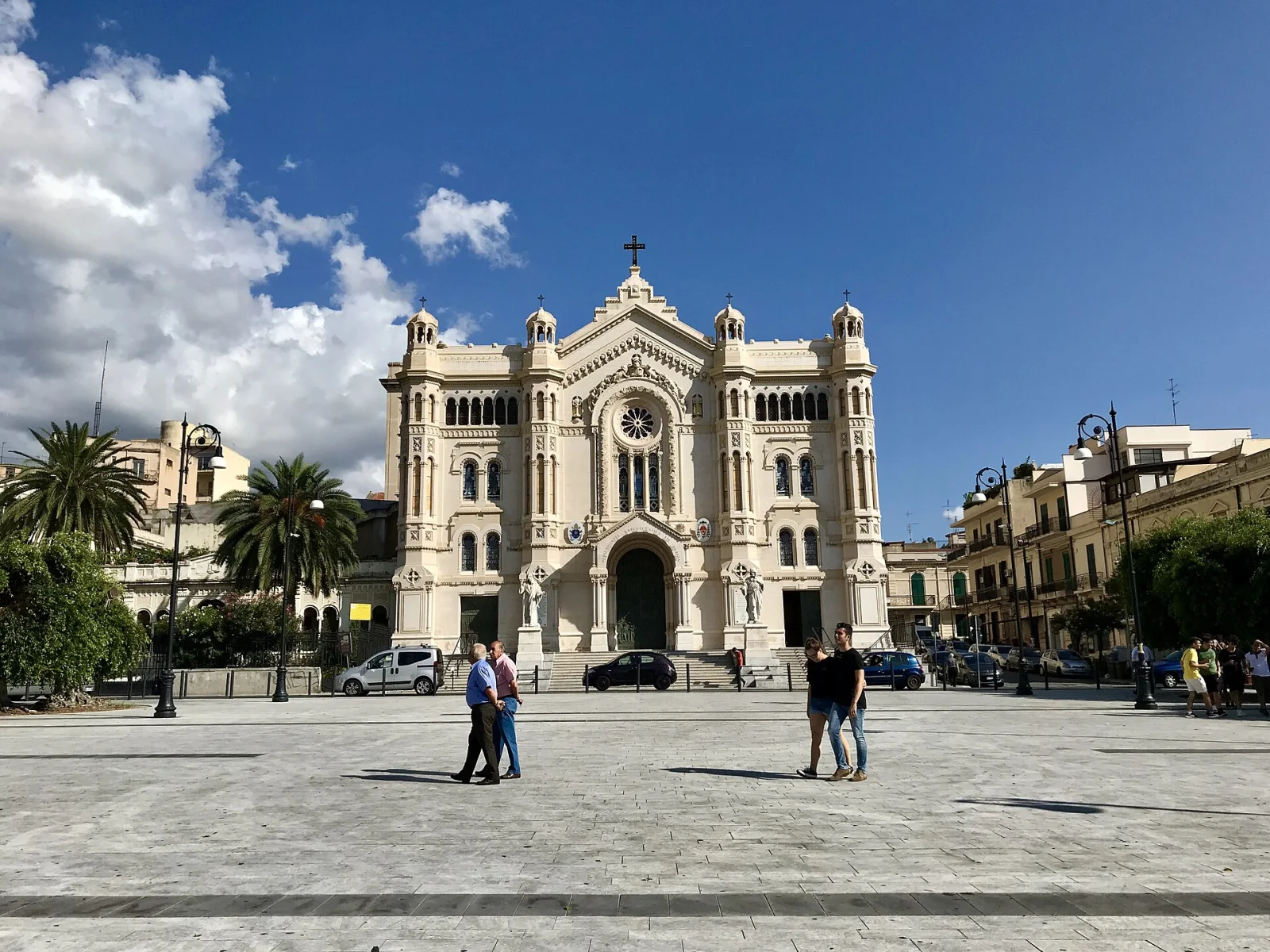
On 28 December 1908 an earthquake and the wave that followed wiped out Reggio Calabria and Messina: it was the gravest catastrophe in modern European history, and almost nothing in Reggio was left standing. Everything you see walking through the centre today was built afterwards, on a new plan with wide streets and low earthquake-resistant buildings. The cathedral is the building with which the city declared it was still alive: rebuilt from scratch and reconsecrated in 1928, it is the largest church in Calabria.
What to see
The front is early twentieth-century neo-Romanesque, with a stairway, three bronze doors and two large statues of saints at the sides; the interior has three naves, wide and light, with marbles and mosaics made in the decades that followed. It is architecture of reconstruction, not of centuries, and should be looked at knowing that: every stone is a choice made by people who had seen their own city flattened.
The most precious thing is the chapel of the Blessed Sacrament, opening off the right aisle: a baroque room of inlaid marbles, twisted columns and figures, which largely survived the earthquake and was reassembled inside the new building. In the cathedral is venerated the Madonna della Consolazione, patron of the city, carried in September in procession from the sanctuary on the hill down into the centre, on the day when Reggio stops.
Visiting
The cathedral is in piazza Duomo, on corso Garibaldi, right in the centre; free entry, closed at midday and during services. Half an hour. The archaeological museum with the Riace bronzes is five minutes away on foot, and the seafront three.
Our editors' tip
Go into the chapel of the Sacrament and stay a moment: it is the only piece of the city from before the earthquake that can still be touched, and it was taken apart, saved and put back together inside a new church. Then go out onto the corso and look at the houses: all of the same period, all low, all aligned. A whole city started again from scratch, and it shows.


