Of the three cylindrical towers raised in 1310, only one still stands whole, the eastern one. The southern tower was later turned into a private house; of the third, to the north, nothing is left, because the ground slid away beneath it. The castle of Campo Ligure reads that way throughout, by subtraction and rebuilding: dating it precisely is impossible, because every part tells of a different building site.
What to see
The masonry of the hexagonal outer structure looks medieval, datable between the twelfth and thirteenth centuries, while the main tower is probably a far later reworking of an earlier shaft. The three towers of 1310 were open on the inner side, a military habit that made them useless to an enemy who took them; in the fifteenth century they were altered with a battered base and fitted with openings for firearms.
From the same phase come the underground and overhead passages cut to link the castle with the borgo below. The manor belonged to the Spinola, lords of the fief, who chose it as a temporary residence in order to keep the town under control and, above all, the Valle Stura with its lines of communication. Before them the castle had paid dearly for the friction between Genoa and the Del Bosco marquises: between 1225 and 1273 it took heavy damage, up to the Genoese siege of the borgo.
Visiting
The castle stands in via del Rivale, above the houses of Campo Ligure, and is reached on foot from the historic centre with a short climb. After the Spinola abandoned it in the wake of the upheavals of the eighteenth century, the complex lay in ruin for years; it later passed to the town council and was restored in the 1990s, which is what makes it usable today. For opening times, ask in the village.
Our editors' tip
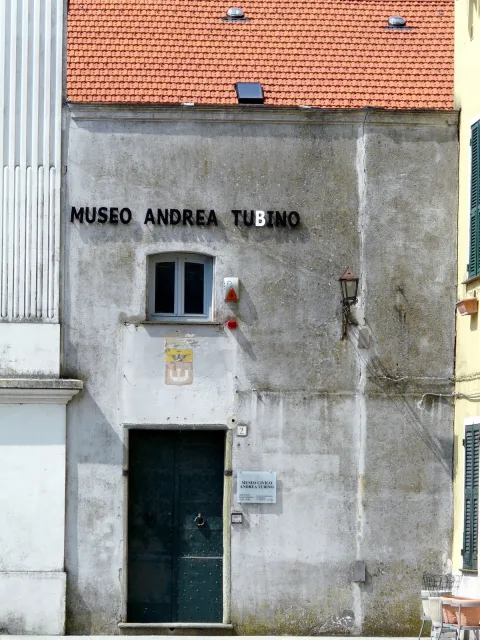
From the top, look at the valley rather than at the town: it becomes immediately clear why the Spinola sat up here and nowhere else, with the valley-floor road in view in both directions. Then plan the filigree museum as well, down in the centre: castle and filigree are the two things at Campo Ligure worth keeping together in the same morning.