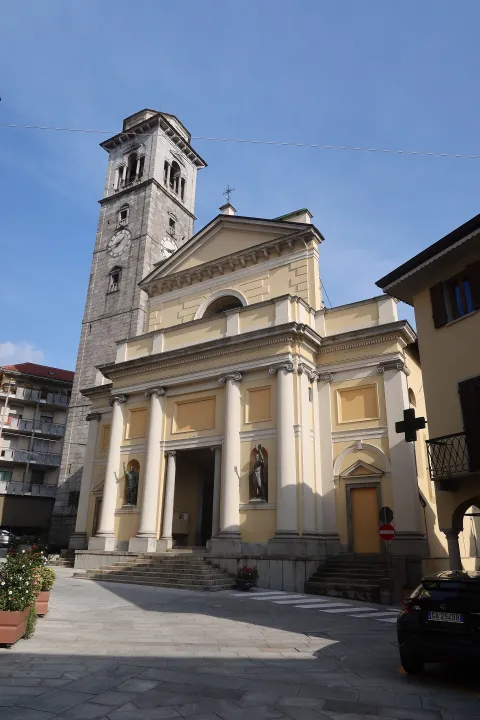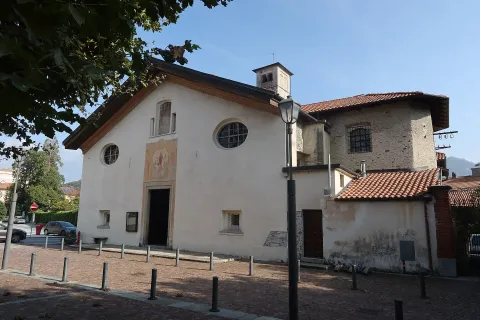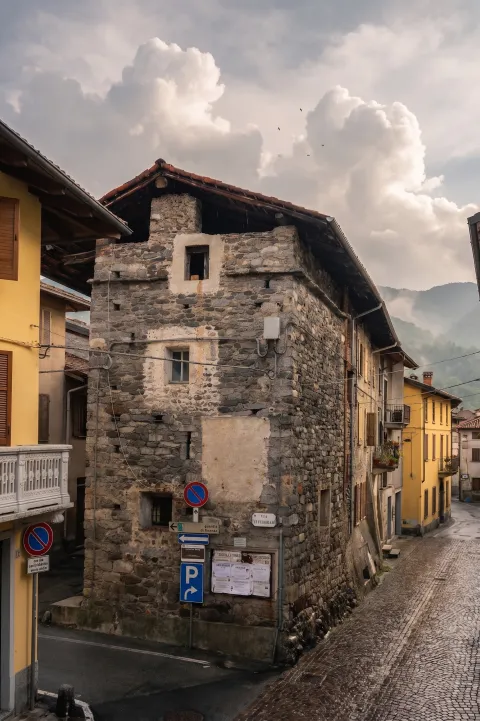
The museum occupies the former covered market of Borgosesia and opened in 2007, but the idea was far older: Carlo Conti had already announced it in his book Valsesia Archeologica of 1931, and the politics of those years sank the plan. Conti (1880-1974) was a local sculptor and from 1923 to 1954 served as honorary inspector of the Piedmont archaeological superintendency; the museum that carries his name arrived decades after the project he had in mind.
What to see
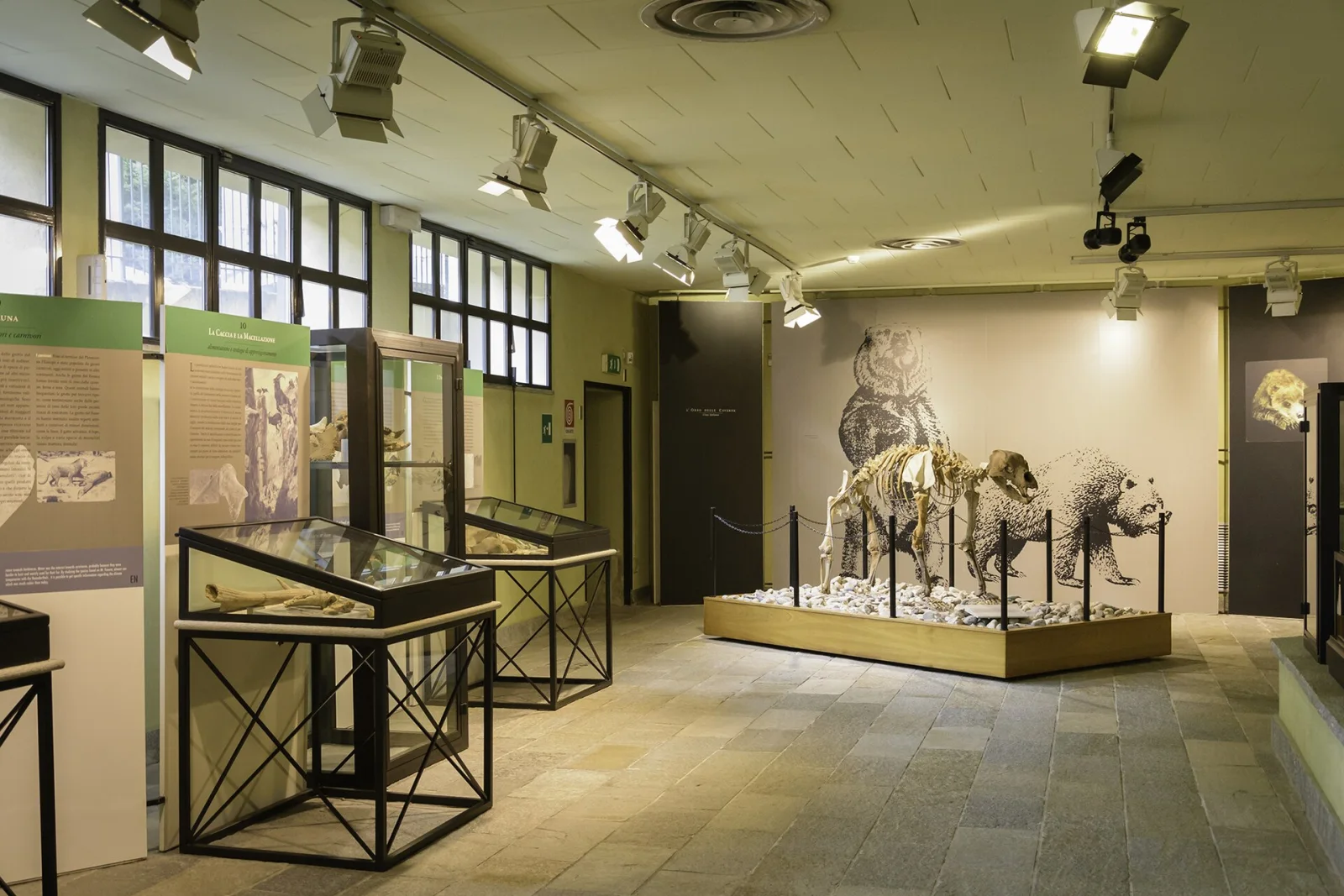
The core of the collection comes from the digs Conti began in the Thirties and that other scholars later continued, together with the Gruppo Archeologico e Speleologico di Borgosesia, founded in that same year, 1954, which ran a long series of expeditions into the caves of Monte Fenera. The most striking part is the Pleistocene fauna that came out of those cavities: cave lions, panthers, lynxes, rhinoceroses, aurochs and above all the cave bear, which is given particular prominence. Beside it are the traces of Neanderthal presence in the area, the only case found in Piedmont. The archaeological section lines up the square-mouthed pottery culture, a small stone head of a female deity that is the oldest stone statue found in Piedmont, Copper Age arrowheads and blades of flint and bone, Bronze Age pottery, the burials in the western part of town linked to the Golasecca culture and the early Iron Age, and the jewellery-rich women's grave goods of the later Iron Age. Roman finds close the sequence, along with material from the caves that were inhabited again after the empire fell apart and objects from the castle of Vanzone, spanning the late Middle Ages to the nineteenth century.
Visiting
The layout is designed above all for school work, so it stays orderly and readable even without any grounding in palaeontology: the cases explain the environment first and the animals that lived in it afterwards. A permanent display of panels produced by the University of Ferrara recounts the excavations and research at the Ciota Ciara cave, on the eastern flank of Monte Fenera, still the site from which the most interesting material keeps arriving. The museum belongs to a network of small local museums backed by the Unione Montana dei Comuni della Valsesia, set up to share opening times: these are not the hours of a city museum, so check them before setting out.
Our editors' tip
Come here before going up Monte Fenera, not after. Seen from outside, the Ciota Ciara is one hole in the rock among many; after half an hour in front of the cave bear's teeth and the Ferrara panels you grasp what those caves gave back, and why there is nothing else like it in Piedmont.