In 1806 Ferdinand III of Bourbon, on an official visit to Taormina, rewarded the town for its long loyalty to the crown by presenting the rocky islet of Santo Stefano to the mayor of the day, Pancrazio Ciprioti. Almost a century later Florence Trevelyan (1852-1907), an Englishwoman who settled in Taormina after years of travel and married Salvatore Cacciola — a professor of surgery who served as the town's mayor for more than twenty years — bought the islet and turned it into a garden that contemporaries described as an earthly paradise.
The name Isola Bella, 'beautiful island', is said to have been coined during a discussion between Trevelyan and Wilhelm von Gloeden, the German baron and photographer. Today the islet and nearby Villa Caronia together make up a regional natural history museum.
What to see
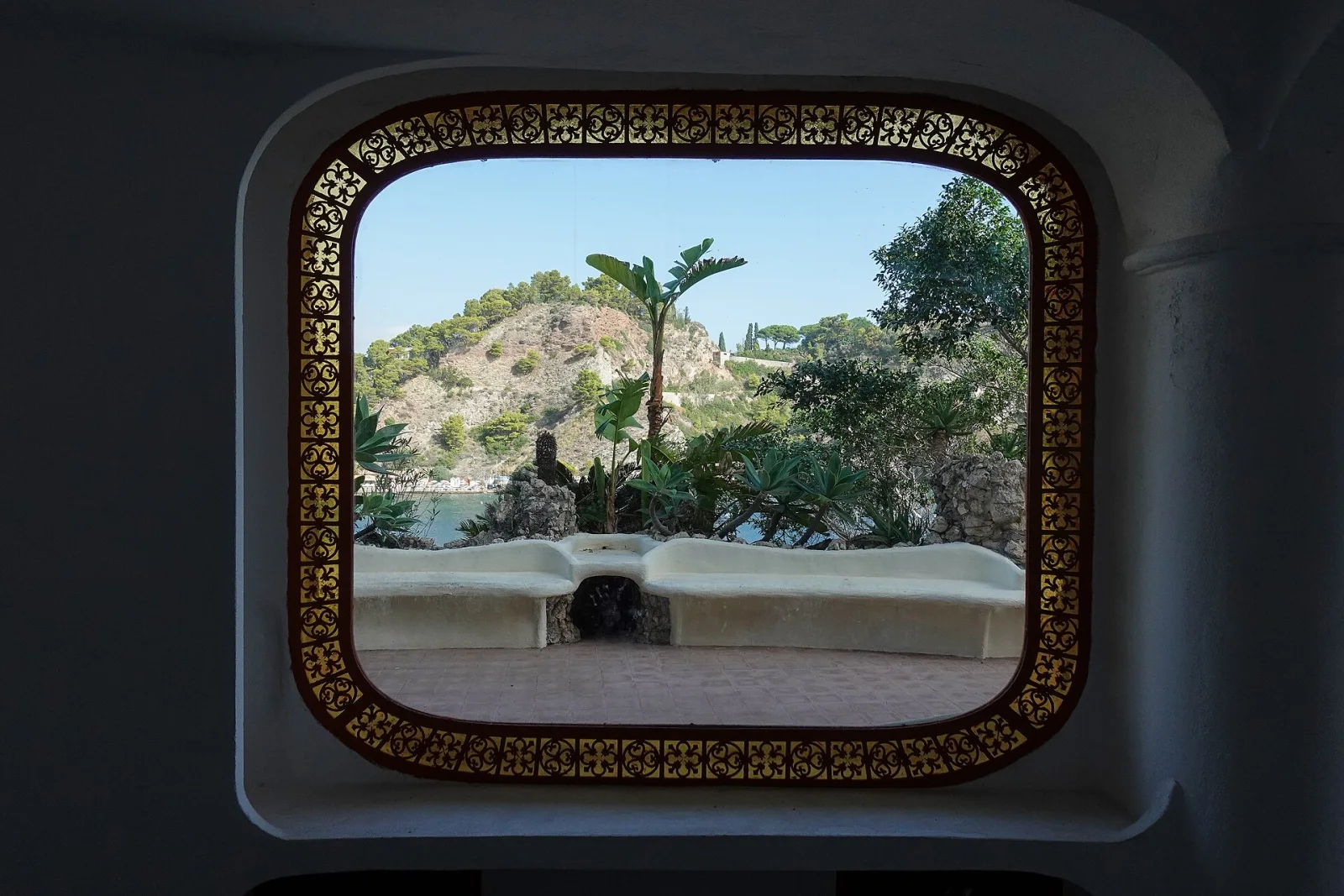
The museum is, first of all, the island itself: the garden Trevelyan planted at the end of the nineteenth century on what had until then been plain Santo Stefano rock. The small bay around it, with the beach facing the islet, is one of the most photographed spots on Sicily's Ionian coast, and the site keeps a double identity — natural monument and historic garden — bound up with the story of its eccentric English owner.
The museum's other half is Villa Caronia, which shares its name and management with the island; together they document the stretch of coast that the elite tourism of the late nineteenth century transformed for good.
Visiting
The island sits just off the beach that shares its name, in the bay below Taormina's old town. A cable car, built in 1992, links the town centre with the coast; the alternative is the hairpin road down. Once at sea level, access to the islet depends on sea conditions and on the museum's opening arrangements, so check before you go.
Our editors' tip
Look at the island from above before you descend: from the viewpoints along the road running down from the old town, the green outline of the rock and the curve of the bay read far better than from the shore. Go down early in the morning, when the light comes from the east and the beach is still quiet. And if Trevelyan's story catches your interest, seek out the large public park she created in 1897-98 by buying up 87 plots of land; she named it Hallington siculo after the English village where she had lived, and in 1923 it was expropriated by law so that it would remain in Taormina's hands.