Brendola

Province: Vicenza · Region: Veneto · Population: 6,722 · Postal code: 36040

Brendola is called the gate of the Berici because it stands exactly where the plain ends and the hills begin: from the 39 metres of the Palù, which before the twentieth century flooded continually, to the 375 of Monte Comunale. The name comes from water. The brendole were the basins and springs that surface here everywhere; Ottone Brentari instead traces it to the same Germanic root as Brenta, brunn plus tal, valley of the fountain, and from there come the old names of the village: Prúnntal in the Cimbrian language, Brünntal in German. Archaeology has confirmed the whole thing, yielding here a small bronze of the goddess Reitia, protector of waters.

The castle, on the other hand, was never the village. The emperor Otto I had it built in the second half of the tenth century around the most inhabited hill, to put an end to the Hungarian raids, and the Rocca dei Vescovi still stands on the summit; but the people of Brendola went up there only to take shelter. Real life went on below, in what is now piazza del Popolo, in front of the church of San Michele Arcangelo: so says the oldest original document of the municipality, dated 25 January 1197. On the slopes you can still see the terraces the Benedictines built to make the hills fit for cultivation.

🎉 Festivals and feasts in Brendola 1

Patron saint festival In 138 days

Saint Roch, patron for the escape from the plague

📅 Every year, on 3 March, with the ex-voto procession for the escape from the 1743 plague

Brendola celebrates Saint Roch, together with Saint Bertilla, on 3 March, with a procession through the streets of the centre. According to tradition, the town was spared the 1743 plague epidemic through the saint's intercession.
🍝 The flavours of Brendola

Everything to eat in Brendola →

Main course

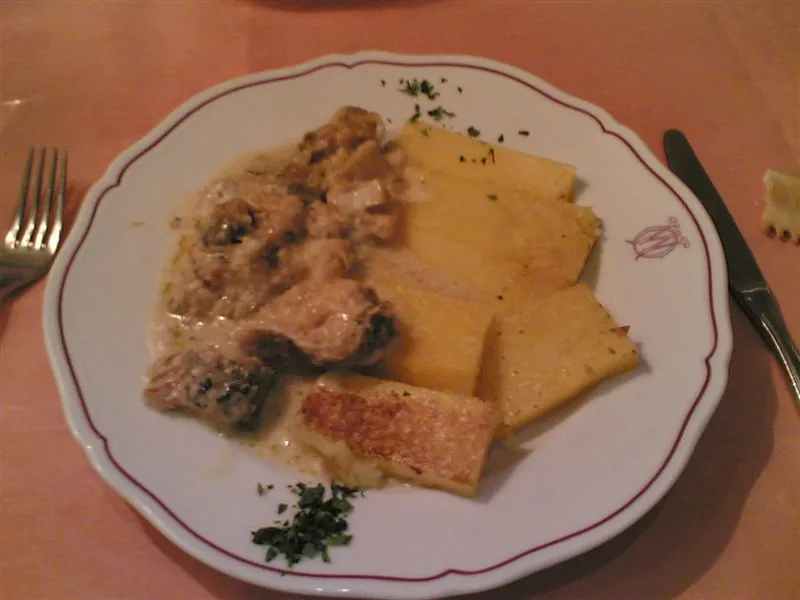
Baccalà alla Vicentina stockfish slow-cooked with milk, oil and anchovies

Stockfish, milk, oil and anchovies, cooked for hours over the lowest heat: baccalà alla vicentina arrived from Norway with a shipwreck in 1432.

Read more →
What's around

Straight-line distances from the town centre. Tap a point to open its page.