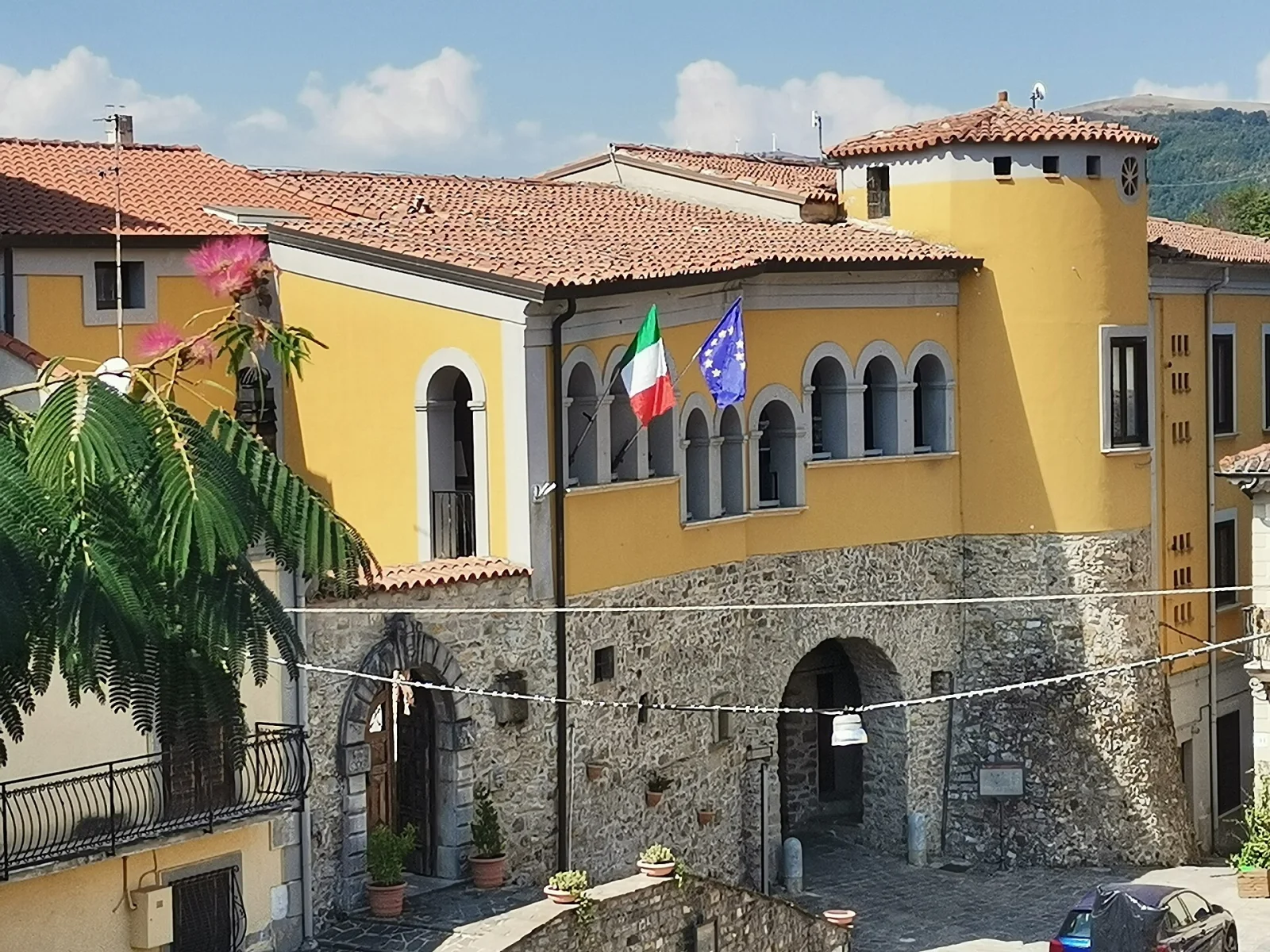
The town hall of Satriano di Lucania works inside a sixteenth-century palace that belonged to a wealthy eighteenth-century family, and the municipal rooms hold a number of ceramic finds from the medieval site of Satrianum: the ancient Lucanian town, long since destroyed, whose name the village took back in 1887, when it stopped being called Pietrafesa.
What to see
Two museums have been set up in the rooms next door, the Museo Archeologico “Satriano Antica” and the Museo della Civiltà Contadina: the archaeology of the area and work in the fields, the same work the three interlaced ears of wheat below the towers stand for on the town's coat of arms. The finds from the earlier phases of the Torre di Satriano area, however, are not here: they are shown at the Museo Archeologico Nazionale “Dino Adamesteanu” in Potenza. Anyone coming in search of ancient Satriano should count on two stops.
Visiting
This is the town hall, so the palace is walked through during office hours, while the two museums occupy the adjoining rooms: check the opening times beforehand. A short walk away, in the old town, stand palazzo Pignatelli, dated 1542 and with a fine doorway, and the former palazzo Abbamonte, rebuilt on what was left of the seventeenth-century building, its façade keeping two stone corbels, the old portal, two pilaster strips and two putti.
Our editors' tip
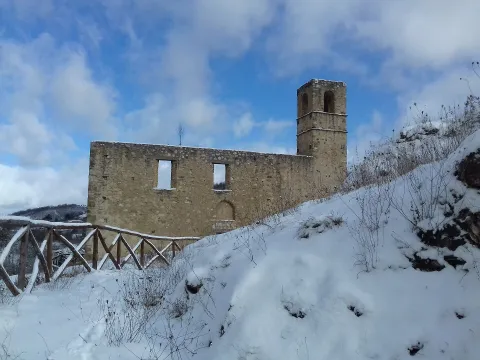
Look at the pottery and then go and see where it came from: the ruins of Satrianum — a Norman stronghold and a bishop's seat, with traces of occupation going back to the Bronze Age — lie on the height a short way from the village. Take the two visits in that order and the change of name in 1887 stops looking like paperwork.