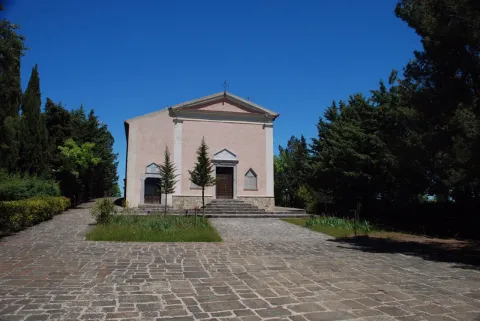
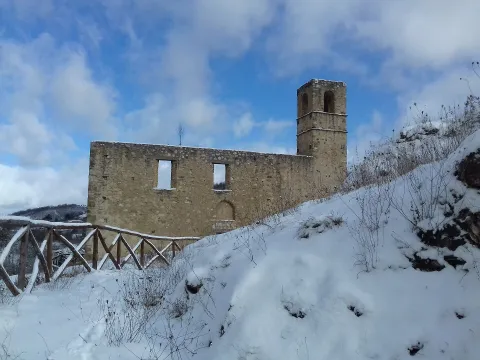
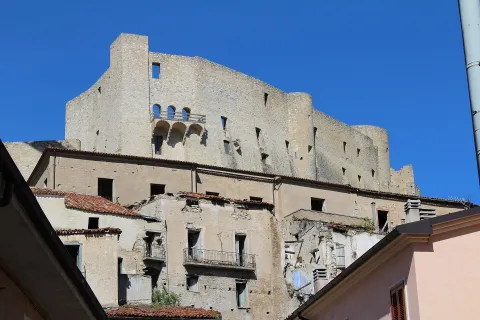
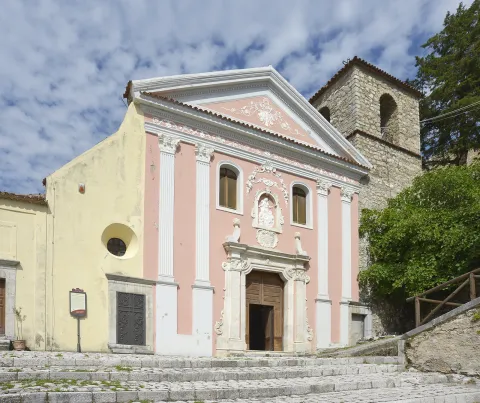
In Satriano di Lucania nobody uses the full name: the Rocca Duca di Poggiardo is simply the Castello for everybody. Castello is also the name of the rock on which ancient Pietrafesa stood in the 12th century, the first core of the town: one of three rocks — with the Piesco and the Madonna della Rocca — on whose slopes Satriano later spread down towards the river Melandro. At the foot of the Rocca stands the oldest church in the village, Santa Maria di Costantinopoli, built between the 12th and the 13th century.
What to see
Since August 2012 the Rocca has housed the multimedia museum “Il Palco dei Colori”, devoted to Giovanni De Gregorio, who was born in Pietrafesa around 1580, died in 1656 and signed his paintings with the town's old name: il Pietrafesa. Some rooms retrace his career as a painter; in others a digital book opens the archive papers concerning him and tells the lives and works of poets, writers, musicians, inquisitors, churchmen and artists of 17th-century Lucania.
The same building holds the municipal library “C. D'Araio”. There are no original paintings here, though: De Gregorio's works hang in the churches, starting with the Pietà of 1608 painted for San Francesco in Potenza, his first signed work.
Visiting
The Rocca is a public building in use, and opening depends on the hours of the museum and the library: worth checking before you climb up. The walk starts from below, at the old church at its foot — medieval tower on a square base, timber truss ceiling — and goes on among the murals of the centre, 410 of them in 2019, hand-painted by the artists of the “Arte per la Valle” association, who turned Satriano into the Italian capital of murals.
Our editors' tip
Leave the museum and go looking for the originals: in the church of San Giovanni Battista, repaired after the earthquake of 1980, there are frescoes De Gregorio painted in 1626. Then walk up to piazza Garibaldi, above the town theatre: in the middle lies a recent mosaic taking up the image of God by il Pietrafesa.