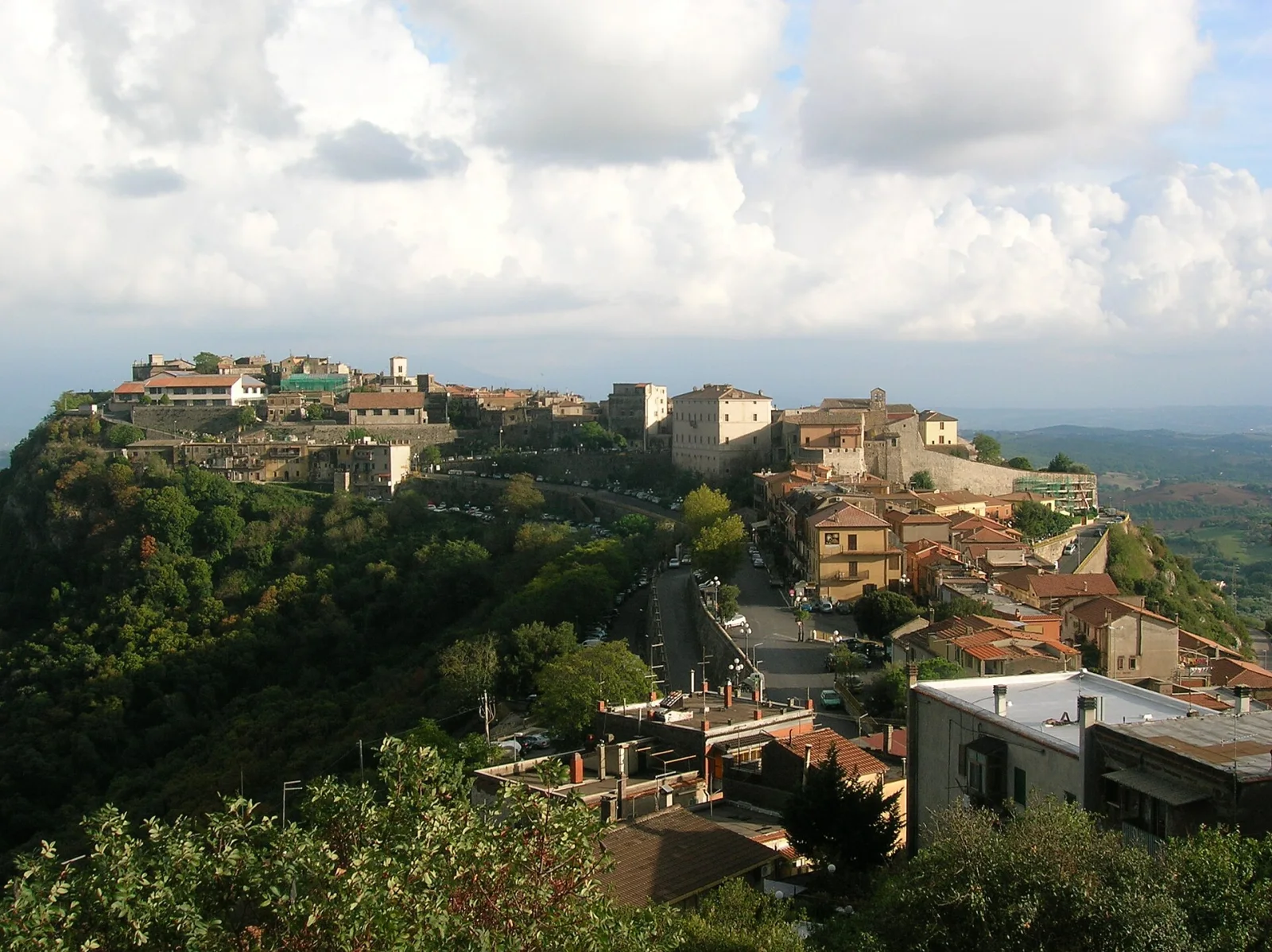
On Monte Soratte, before Rome, the god Soranus was worshipped. Pliny relates that his cult was kept by the families of the Hirpi Sorani, the wolves of Soranus, who walked on burning coals in the god's honour — and that for this very reason a decree of the Senate had exempted them from military service and from other obligations; Virgil too, in the Aeneid, has Apollo invoked as the guardian of holy Soracte and speaks of the same practice with fire. Later a legend of the fifth century had pope Sylvester take refuge on this mountain to escape Constantine, and a monastery dedicated to him was founded on the summit; it is to that episode that Dante refers when he names the Soratte, in the twenty-seventh canto of the Inferno.
The name of the village is a saint's name worn away by use. The Chronicon of the monk Benedict records, among Carloman's donations to the monastery, a Curtem Sancti Heristi, that is the court of Saint Edistus, a martyr of the first century: from Sanctus Edistus the name passed through Sanctus Heristus, Santo Resto and San Tresto until it became Sant'Oreste. The Castrum Sancti Heristi dates from 747, and Carloman himself — who had just left the office of mayor of the palace to his brother Pepin the Short — spent a year on this mountain before moving to Montecassino. In 1546 Paul the Third joined Sant'Oreste and Ponzano, with their monasteries, into a single commenda for his nephew cardinal Alessandro Farnese: after that the village grew, the abbatial palace was built, the walls were rebuilt in 1554, and in 1576 the cardinal had the statute of the community drawn up.
Straight-line distances from the town centre. Tap a point to open its page.
Near Sant'Oreste
The closest destinations covered by our editors, with straight-line distance.


Places to see within 25 km
Outside Sant'Oreste, but an easy day trip away.